
Categories
Wellness

How to Be Your Own Best Friend

Are you a better friend to others than you are to yourself? I bet you are. 

Imagine your best friend calls you up needing to talk. She’s not feeling very good about herself. You can hear in her voice and in her words that she’s beating herself up about something.

You know that she’s still lovable, even if she did kind of mess something up. 

You remember her essential goodness quite easily, even if she can’t. And when she tells you what happened, the words to make her feel better come effortlessly out of your mouth.

See? You know perfectly well how to be a friend. So you might wonder why you don’t treat yourself with the same kindness? 

Maybe you think you don’t deserve it. If you’re like most women, you have a double standard. Your friend deserves the benefit of the doubt, second chances, room to be imperfect and time to get better. You deserve none of these things. You are to be treated with suspicion, criticism, and cynicism at all times.

Do you treat yourself like some kind of dangerous, reprehensible criminal, likely to do something bad at any moment? If so, what exactly are your crimes? Are they really so terrible that you should punish yourself permanently for them? Even if you have done some truly selfish, cringe-worthy things – most of us have – what type of attitude towards yourself actually makes you behave better: kindness or meanness?  

My opinion is we’ve all been trained to believe that lightly abusing ourselves psychologically is necessary to be “good”. In actual fact, maintaining a background level of self-hatred and withholding approval from ourselves hurts us and makes us behave less well. It is counterproductive.

So I think it’s high time that all of us good Best Friends stop cooperating with this outdated idea, that we’ll spoil ourselves if we are too nice to ourselves in our own heads. How about we start treating ourselves like members of the human race. 

To start: I vote we get rid of the idea of deserving. Many say to themselves, I will be kind to myself only if I deserve it. I will first review the facts, judge myself, and then grant myself kindness or meanness based on the quality of my behavior and character. 

Who are we, Judge Judy? Is life a court of law? 

I don’t think love should be withheld as a way to motivate behavior. That is just abuse. When kindness is a reward for good behavior, instead of a basic human right, we get what we have now in our society. A very ill, very hurt, very traumatized version of humanity. 

The truth is, it is not necessary, ever, to shame, blame or punish ourselves or anyone else. Shame, blame and punishment are not at all helpful; they are abusive. 

Abuse harms the human spirit, and contrary to what authorities have told us our entire lives, it does not create positive behaviors. Across the board, abuse only creates the temporary appearance of goodness (obedience due to fear of punishment), which is not the same thing as voluntarily choosing positive behaviors because of a true recognition of our shared humanity. Abused people, time has shown, spread their abuse. Loved people spread their love. 

Here’s my invitation to you: 

Write out a definition of how a Best Friend behaves. For example: A best friend helps you laugh it off. A best friend listens without judgment. A best friend helps you feel the feelings. A best friend gives you space and time. A best friend looks past your failings and highlights the good within you. 

Now start treating yourself that way. Here are two effective ways to practice this behavior until it becomes second nature (which can take some years, but makes a difference even after just one time, like learning anything new):

  1. Record your own voice saying very nice, loving things to you, as though you are leaving a voice message for friend. Address yourself using your own name, and speak to yourself in a loving tone of voice. Then listen back to these nice things. The more you do it, the easier it will be. 
  2. Write it out in your journal as a dialogue, where you go back and forth, being your own friend. Like this: 

Holly: I can’t believe I messed up like that…

Inner Best Friend: Want to tell me how you feel? 

It might be hard at first, but I have 100% confidence that you can learn to treat yourself humanely. If you’re having a “what would people think?” reaction to this, I assure you, no one even has to know you’re doing it. You can be secretly quite decent to yourself, in your own head. This will help everyone, everywhere. You got this 🙂

 

Categories
Nutrition

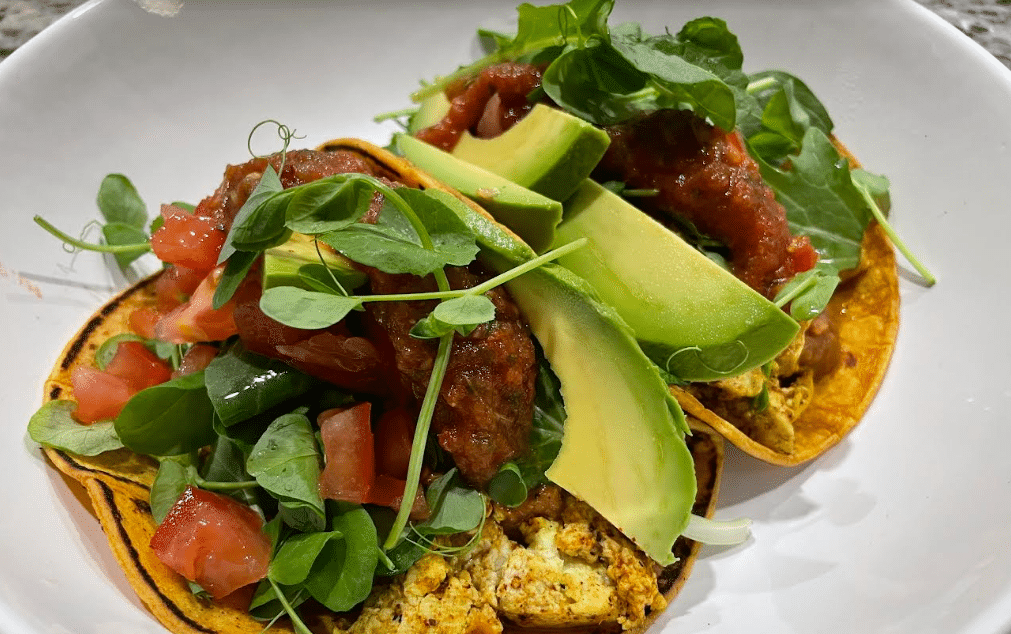
10 Minute Vegan Tacos

These tacos are fast, easy and delicious!

Many people I know have very busy lives and they tell me they just don’t have time to cook for themselves. They want to eat healthy, but they just don’t have the time it takes to prepare a meal, or they are too tired after a long day to spend an hour in the kitchen making dinner. I sometimes feel the same way, and when I do, I throw together these simple tacos that only take about 10 minutes to make. This is a great way to eat healthy without too much effort!

Here’s a suggested list of ingredients but feel free to add or subtract depending on your preference. I always buy organic and local to get the freshest ingredients possible:

Extra Firm Organic Tofu

  • 1 Can of Amy’s Organic Refried Beans (I like the one with mild green chili)
  • 1 sm. Organic Tomato
  • 1 sm. Organic Avocado
  • 1 sm. Box of Organic Greens (I used Organic Girl Protein Greens)
  • 1 container of fresh Organic Salsa (not from a jar)
  • Organic Tortillas (I used Potapas brand Gluten Free Sweet Potato Tortillas)
  • Chili Powder
  • Cumin
  • Garlic Powder
  • Salt & Pepper

Optional Addition Ideas: Canned Sliced Black Olives, Cilantro, Vegan Sour Cream, Jalapeño, etc.

INSTRUCTIONS:

This recipe will make 2 tacos. You will have leftovers of all your ingredients so if you want, you can make them again for breakfast or lunch the following day. 

First prepare your fresh ingredients. I used a quarter of my avocado by cutting it in half, then removing the skin and then cutting it in half again and making slices. Set aside and then dice half of the tomato. If you are using cilantro you can wash and remove stems from the amount you would like to use. All of this should only take about 5 minutes.

Now, empty the can of refried beans into a small saucepan, stir it and then place on a burner on medium heat. Go back and stir it every few minutes. 

Place a small sauté pan on a burner on medium heat and sprinkle ¼ tsp of salt over the pan. Take about 4 oz of your Tofu, wrap it in a paper towel and them a kitchen towel and squeeze the water out with your hands. Then add 1 tablespoon of olive oil to your pan and allow about 15 seconds for oil to heat, then swirl the oil around to make sure all of the pan in coated, even the sides. Now crumble your tofu into the pan and sprinkle with your desired amount of the spices. Shake the pan and coat the tofu with the spices. Let cook for about 1 minute, stirring a couple times. Then shut off the heat and remove the pan.

I use the same hot burner to heat my tortillas. I place them right on the burner for about 30 seconds on each side. You can use whatever method you are used to. 

Now build your tacos! Place the beans, tofu, tomato, avocado, greens and salsa on the tortillas and enjoy!

Categories
Trauma

How to Heal from Childhood Trauma

If you’re like me, you’re a little scared of your feelings. Scared because once a bad feeling gets ahold of you, you’re not fully sure how to get that feeling out of you. 

Can you relate to this? If so, it might be because of your childhood trauma. 

Oh no, not childhood trauma, you think. Do I have to go into my past again

Well…Yes! But maybe not in the same old way. Let me explain. 

What happens in childhood has long-lasting effects on us, leading to a pile-up of negative emotion that haunts us and affects our behavior now. 

These emotions are variations of fear and anger. Fear and anger are two sides of the same coin, and that fear-anger coin is how mammal biology responds to overwhelming threats. 

Nature wired us to respond to the situations we were in as children with fear-anger. We are calibrated to respond to bad situations with bad feelings. 

Trauma is what we call it when the fear-anger doesn’t have a way to leave our system as nature intended, but instead gets stuck in us and becomes a chronic pattern. 

There’s good news in that sentence: trauma isn’t the events themselves, it’s what’s in us, in our bodies. 

Why is that good? Because we can let the trauma, the activation, out of us, if we can find the door. Whereas we can’t change external events that happened to us long ago, we can change our own insides, now. 

The problem we face now is not so much the feelings themselves – which are normal and natural, just pent up within us – but in the fact that we never learned how to let these feelings subside.

So, yes, we need to revisit the past, specifically the felt-sense experience that our bodies had back then. But the revisiting of these feelings is only temporary, as a part of a process of letting these sensations move out of us for good. 

Here are the steps for healing your childhood trauma:

Here is how to heal from childhood trauma step-by-step:

How to Alleviate from Childhood Trauma

Step 1: 

Master the practice of generating feelings and sensations of safety in your body. The trauma response, also known as stress, is the opposite of safety. So look for the opposite of stress. 

You can do this by activating the parasympathetic branch of your nervous system. Activities like breathwork, yoga, singing and chanting, gardening, cooking, time in nature, creative expression, hugs, and pets all help activate the parasympathetic system. 

You might be happy to hear that the parasympathetic branch is what’s dominant in your body when you’re feeling good! So essentially, this step is: learn how to feel good and to sustain that state as best you can. 

Here is an assignment you can do to help in taking this step: Write out one long description (1 page or more) of a time you can remember feeling really relaxed, safe, and good in your body and being. Read what you wrote and really focus on the feelings you have as you read. This is the type of experience you’re looking for (the clue is how you feel, not so much the details of the circumstances themselves). 

Do this assignment again and again, until you have 12 pages of 12 different times when you felt safe and wonderful. 

Step 2: 

While maintaining the softest, safest state you can in general in your life, look out for those old trauma feelings when they show up, which they will on their own (a clue is: they feel bad to the body). 

When the events come back to you in the form of bad feelings, do your best to let them just be there. Observe them, knowing they are temporary, and that they will exit if you manage to stay relaxed. Open the door for them, and they will go. Your job is mainly to notice them and not react to them.

Step 3:

Witness your trauma feelings as they exit your system. Allow the body to do whatever it wants to naturally do (within the bounds of safety) as these energies exit. Typical are trembling, shaking, moving, wanting to do something vigorous like a brisk walk or suddenly needing to run or do something energetic. Do pretend karate moves or real karate. Get physical. The trauma leaves through spontaneous physical release.

This is a simple explanation of a complex topic. In truth, it is enormously helpful to work with a trauma-informed healer of some kind. But I want you to know that trauma healing is not rocket science. It’s actually biology 101. Make it safe for your body, and your body will do it for you. 

Categories
Addiction Treatment

Coping Skills for Addiction 

Addiction impacts everyone differently. Whether you are experiencing it for yourself or someone you love has a damaging relationship with a numbing agent, the impact extends into every facet of your being. From past to present and stretching well into the future, addiction has a way of lingering. For each of those instances, we want to ensure you’ve got a starting point to cope with what you’re going through and find healing when you’re ready. 

Discover the coping skills for addiction needed to successfully find healing on your journey.

When you’re addicted

There is a single most important skill, strategy, and reminder you deserve to have offered, today and every day until it is as innate as drawing breath and it is only one sentence long:

You are not your addiction, and it does not define you. 

Regardless of the space you’re in on your journey of stability and recovery, this is the truth. Addiction may define the choices you make or the actions you take, but it will never be the sum of your parts or the beat of your heart. You are a whole person, worthy of healing and compassion just as much as you are accountable for your hurt. 

In the thick of it 

Is it a daily battle to keep your tumultuous relationship with alcohol or other substances in check or under wraps from those around you? Are you actively denying your risky behaviors but still feel that twinge of discomfort reading this? 

Take a moment and read the paragraph above once more because even if it speaks true, you are still not defined by your addiction. When you’re in the middle of a raging storm, it may feel dangerous to take the first step toward safety- and it may well be. However, as you work toward that step of owning your struggle and seeking the support you deserve, there are steps you can take to cope with the space you’re in now. 

Wait. When you feel a strong reaction coming on or the urge to use, take a moment. It doesn’t matter if you use this moment to meditate, breathe, or listen to a favorite song but putting a pause between impulse and action can make a big difference.

Open up. Whether it’s to your journal, a friend, or a medical professional, telling someone you trust about the fears and worries you have about your use can begin to build a support system you’ll rely on as you move through the following stages of healing. We’re happy to be a part of that system if you’re ready, and you can reach us here

Throughout recovery 

Spending time in recovery can help you feel confident in the skills needed to maintain your sobriety and continue walking a path of holistic healing. Even in those times of recovery, you may find yourself drifting with old temptations nudging against your new lifestyle. You can move through them, and while your support network is the best place to turn to combat those things, there are small skills that will support your agency in your own recovery: 

Addiction Stay busy. Find a hobby, a task, or a skill that interests you and commit to learning it. Maybe it’s a single hobby like reading or a niche interest like knitting. Indulging in a consistent activity to keep the mind and body busy and engaged can circumvent the risk of restlessness. 

Talk. It’s that simple. Talk to a loved one, your counselor, a sponsor, or other recovery guide. Talk to your cat, or a song, or your journal. Just purge the silence of your uncertainty into a space you trust. 

Ground in gratitude. Start a gratitude journal that you carry with you, and every time something happens to make you feel unsettled, triggered, or doubtful, jot down something you’re grateful for. It doesn’t have to be big—maybe you’re particularly charmed by the shape of the clouds or that small moment of clarity during the morning’s meditation—but the act of focusing on joy and gratitude can change the focus of your emotional energy. 

Coping with a loved one’s addiction 

When someone you love is struggling or has struggled with a tumultuous relationship with substance abuse, it can be challenging to refocus the relationship and all the emotions that go along with that. Perhaps you’re supporting someone through their early detox, or you’re years in recovery with someone dear to you. Maybe you’ve got a new friendship with someone who has an old relationship with substance abuse. Having a collective of coping skills for addiction to support your loved one while caring for yourself is key. 

One particular skill you can develop is refocusing your social time together. Find activities that don’t include the focus of your loved one’s addiction- and that doesn’t just mean making sure they aren’t exposed to triggers during your time together. Try new hobbies and hangouts to avoid old feelings while they’re feeling vulnerable. 

There is a myriad of coping skills for addiction that we can focus on learning together at any stage of recovery.  Whether you are looking for ongoing support alongside your life or a residential reset to renew your commitment to your healing, we have options that will help you to strengthen not just your coping skills but your flourishing power as well. 


Categories
Trauma

12 Signs of PTSD in Women

There are several common signs of PTSD in women. However, trauma impacts each woman differently and requires a personalized approach to trauma therapy

Post Traumatic Stress Disorder, or PTSD, is a mental health disorder that develops after someone experiences a traumatic, albeit terrifying, event either directly or indirectly. For example, a few of the events that can have a long-lasting impact on mental health include the following:

  • Sexual or physical assault
  • Child sexual or physical abuse
  • Observing violence or death
  • Combat or military experiences

In this article, you will discover several of the most common signs of PTSD in women. 

Signs of PTSD in Women

How someone experiences, reacts and handles the entire traumatic event will be different for each person. Two people may undergo similar experiences, and yet only one of them shows signs of PTSD. But, while the experience itself can vary from woman to woman, the resulting signs and symptoms of PTSD can be very similar.  

Here are several of the most common signs of PTSD in women.

1. Intrusive and Distressing Thoughts

Having thoughts about the traumatic event can pop up seemingly out of nowhere. This is one of the most frequently reported signs of PTSD. A woman may be moving freely through her day when all of a sudden memories about the event appear. This can lead to feelings of panic, unease, anxiety, discomfort, etc. They could come when in a similar situation – such as being at the same party with someone who caused your pain – or they may just appear out of nowhere. 

2. Nightmares

Getting a good night’s sleep is essential for overall health and wellbeing. But this can be hard for those who suffer from nightmares thanks to PTSD. These awful dreams can be very real and lead to physical pain and feelings that can disrupt sleep – and even impact daily life. 

3. Avoidance

Avoidance of particular places, events, people, situations can be a huge sign of PTSD. Those who are traumatized by a car accident, for example, may find it hard to get back in a car. Or, they may avoid a specific part of driving, such as certain roads or making left turns. Those who were sexually abused as a child or assaulted as an adult may find it hard to be intimate with a partner. This avoidance behavior can be debilitating. 

4. Negative Thoughts

Whether it is about oneself or the world around them, women who have PTSD will often possess a negative, pessimistic view of life. This leads to feelings of hopelessness and doom. They may have an ailing self-image and confidence, requiring therapy and tools to overcome it. Leaving these negative thoughts alone may fester and grow into potentially dangerous thoughts. 

5. Inability to Focus

When your mind just went through something that it perceives as horrific, returning to normal, everyday life seems impossible. It is not uncommon for there to be difficulty focusing on mundane tasks when the mind is elsewhere. As a result, those with untreated PTSD may struggle to achieve success in school or in the workplace. 

6. Missing Memories

Certain bits of memory loss are expected when traumatic events happen. This is because the brain’s ability to function properly is impacted by its desire to protect itself from what just happened. It is our own natural defense mechanism. Without any recollection of what happened, there are no unpleasant or distressing reactions – or intrusive thoughts. 

7. Always on High-Alert

Hypervigilance is another prevalent sign or symptom of PTSD. Someone who has been through a harrowing experience always wants to be prepared for the next thing. They never want to leave themselves vulnerable to acts of violence, terror, abuse, etc. Therefore they stay active and maintain extreme vigilance – perhaps even overreacting – in an attempt to keep the trauma from happening again.

8. Intense Flashbacks

Intrusive thoughts can be bad enough, but flashbacks can take things to a whole new level. These flashbacks can happen out of nowhere or can be triggered due to encountering certain things/people/smells/sounds. These sensations are vivid and feel very real, and the response they elicit is very visceral, too. Flashbacks lead to panic and may even warrant an aggressive, physical response. 

9. Easily Startled

Many people living with PTSD are easily started, whether by movements or by sounds. And their response is usually wildly exaggerated. Think of the combat vets who hear fireworks. PTSD often triggers a very real flashback, or it can cause an exaggerated startle.

10. Self-Isolating

After trauma, victims dealing with PTSD often find it hard to relate to others. They may change their personalities and behaviors, and they may even begin to feel like an outsider. Isolating themselves during this time is not a healthy way to process the trauma. Speaking with a therapist is highly recommended. 

11. Acting Carelessly

After going through something that has caused PTSD, some women find that they care less. They may have thought they did everything right and still ended up hurt, so why bother? Some engage in compulsive behaviors for the adrenaline or thrill — it allows them to feel. Or, what happens quite often, is women will turn to substance abuse to reduce the pain and suffering caused by the trauma. 

12. Assigning Blame

It often goes back to those negative thoughts, but blaming oneself is a common – and dangerous – sign or symptom of PTSD. It is not uncommon for the victim of a traumatic situation to blame themselves for it happening in the first place. This is especially the case when it involves losing a loved one. Or, less commonly, blaming others may occur. Assigning blame is something to look out for. 

If you or someone you love is exhibiting signs of PTSD, whether you recognize the trauma or not, it is important to seek professional guidance and treatment. When trauma leads to addiction, it requires the help of both a mental health therapist and an addiction specialist. Finding a way to do this in a whole-body, holistic healing method can prove lifelong success.

Categories
Mental Health

Diet and Mental Health

When I was small, my favorite food was mandarin oranges. At least once a day, but as many times as they were offered, I’d tuck into my oranges with all the delight of a child with a bag of candy. I loved them then (and still do), so much that my mother used to regularly hand them to me with a smile and say, “If you’re not careful, you’re going to turn into a mandarin orange”.  I’d picture myself turning orange, becoming spherical like Veruca Salt in Willy Wonka, and rolling into the grocery store for more mandarin oranges. 

“You are what you eat,” she’d say, and I think it was a warning, or maybe a joke, but she wasn’t entirely wrong… 

In many ways, we are the things we eat. Not literally, of course. I was never going to turn into a mandarin orange any more than you’ll turn into your kale salad or that banana bread you can’t resist. Even still, our nutrition is integrally tied to the way we fuel not just our bodies but our minds too. Tailoring your nutrition to your body’s needs won’t lead to a mental health miracle but it will support your journey toward mental wellness in a variety of positive ways.  

Pay attention to how your diet makes you feel

Have you ever noticed how your snacks and meals make you feel? The thoughts and feelings you have after eating can help you demystify the way your body responds to those foods. As we pay attention to them, we can begin making those fundamental connections about what our body needs to operate at its best. Sometimes those connections are obvious but if nothing becomes apparent quickly, try keeping a food journal to draw connections between the input of your mouth and the output of your mind. 

What does a healthy relationship between diet and mental health look like? 

There are a couple of prominent names for the connection between the way we think and feel, and the food we eat. 

Gut-Brain 

The Enteric Nervous System (ENS) is the name for the pathways in your gastrointestinal tract that send messages back to your brain. Over 100 billion cells are responsible for navigating the way your brain processes the food you put into your gut. The communication between these two systems is called the Gut-Brain Connection. While this moniker may not be very eloquent, the ENS is capable of letting your mind know how your body is feeling through things like big shifts of mood, or alternatively, responding to shifts of mood with feelings of nausea or abdominal pain.  The awareness of this means we can use your gut’s responses to alter the way your brain receives information and cultivate a more positive relationship. 

Food-Mood 

Find yourself craving particular foods for comfort when you are feeling overwhelmed or upset? Stressors to our mood can trigger changes in our diet and oftentimes, those changes don’t do us many favors. Instead, they perpetuate a vicious cycle of low nutrient foods reinforcing the low-energy moods we’re feeling and the association becomes ever-stronger. The food we consume alters our body chemistry, which alters our brain chemistry and can signal patterns of behavior that may not be right for you in the long term.

The food-mood connection is both a theory and a book that uses research to examine the ways that the things we eat influence the way we feel. 

Reviewing the nutritional profile of many whole foods can help you select foods that complement your goals. For example, foods rich in carbohydrates help you feel full and energized for brief periods of time while protein-dense foods help balance the carb slump with a more stable slow-burn energy release.

Balanced Diet; Balanced Mental Health 

Balancing your diet is an important facet of your mental health but worries about getting started can present as a huge barrier. If you are feeling the strain of potential cost or finding the things you need to make these elaborate “good mood” meals, you don’t have to be. Extravagance appears in every nutritional space but it isn’t required to have a diet that establishes a solid foundation for your mental health. 

There are a number of diets and nutritional profiles you can tailor to your needs at every level of accessibility. Whether you are considering going vegan or tracking your macros to get a balanced level of mental energy for whatever comes your way, there are options to try.

Much like recovery, the process of meeting your mind and body in a healthy space will be trial and error. Don’t be afraid to try something new, or to admit a new thing works better- or worse- than you anticipated. Plans change and that flexibility in listening to your body will be the key to your success in a supported and successful healing of your relationships inside yourself. 

Categories
Substance Abuse

Substance Abuse and Depression

Are you struggling with both substance abuse and depression? Neither are pleasant diagnoses on their own, but what happens when you’re dealing with both at the same time? Maybe your addiction is in the past, but you still feel that temptation to drink when new hurts arise. Or maybe you’ve been walking the path of recovery for some time, and a sudden loss or an unexpected life change is threatening to knock you off the wagon. 

When you’re caught between the struggles of two different diagnoses, it can be hard to see the forest for the trees. While substance abuse and depression are different difficulties, the overlap between them can be significant. It may feel foreboding to take on multiple challenges at once when they feel so different but there is hope in those shared spaces. When you are experiencing overlapping struggle, knowledge is imperative in garnering that hope and utilizing it to move toward healing.

Want to learn more about the relationship between substance abuse and depression, and more importantly, what you can do to take back your life? 

Where Substance Abuse and Depression Connect

The relationship between substance abuse and depression goes both ways, meaning that having one increases the risk factors for developing the other- and it doesn’t much matter which comes first. Using substances can decrease the acuity of feelings of sadness or hopelessness, and those feelings can attribute to a desire to turn to substances. The cycle is vicious. 

Substance abuse and depression often share a root cause. Whether it’s in trauma, repression, or it’s something you’re predisposed to, both are tools used to numb the experience of vividly feeling what’s beneath. 

How They’re Different 

The most glaring difference between substance abuse and depression is that depression is a struggle with something you feel, while substance abuse is a struggle with something you consume. Depression begins inside of you: an internal force of strife often sparked by something beyond your control. Substance abuse is external: it symbolizes the active engagement with bringing something into your body to change your cognitive or emotional awareness. 

Depression is often linked to a reduction in feel-good chemicals, while substance abuse is considered a depressant and can actively contribute to a reduction in those chemicals. While the impact to you is similar, it paints a mirror once more- one is cause, the other is effect. 

Healing Together

Everyone moving through this life will experience pain. Each person will feel sad, and have times of struggle. Maybe those things will consume them, briefly. 

Most people will consume alcohol or other substances and experience intoxication. They will feel the dizzying highs and changes of a mind-altering substance and it may feel really really good. 

While these experiences may be common, they are not the same as substance abuse or depression. Recognizing the difference in having an experience and needing help because those experiences have become an inhibiting part of your life is the key in finding your way out of the depths of substance abuse and depression. 

That recognition is your golden ticket toward recovery- beginning with detoxing from your substance of choice and giving voice to the vices that have controlled you. Your healing is in your grasp when you take the first step toward accountability and awareness. If you’re here right now, you’re doing that and we are already so proud of you. 

Tools You Can Use to Support Your Recovery 

While there are a myriad of things you can ask for or work with alongside qualified experts in rehabilitation and healing, you do not have to wait for anyone to begin with small steps for big impact. 

Feel your feelings instead of avoiding them. Burying your emotions is a slippery slope on its own but if you struggle with co-existing substance abuse and depression, avoiding what you’re feeling is akin to hitting turbo charge on an avalanche. 

To feel your feelings, you don’t have to talk about them but you do need the space and language to give words to what you’re experiencing when you feel it. Whether you choose to do that through your own self awareness or with a trusted support network, it’s important. 

Journaling has been proven to provide relief from the pressure of bottling up your emotions and can be a constructive addition to acquiring the language to feel your feelings instead of suppressing them. There are a myriad of journaling styles to choose from- the most important thing is that you select something that feels good to you. 

Make change a priority in your day to day routine. It doesn’t need to be a big change, but ensure that it’s one you can stick to. Developing new habits and routines can be a great tool to build on bigger, more powerful changes that keep you from falling back into old ones. 

While substance abuse and depression are scary and difficult things to manage on your own, there is something we hope you always remember: 

You are never alone. 

We are here, to add to or help spark the start of a support network that will carry you from detox to the future of your dreams. Your recovery starts with recognition but the power is in you now. 

Categories
Wellness

How to Value Yourself

The ways in which we are encouraged to think about—and care for—ourselves can feel innumerable. Each year, the “self-fill in the blank” trends seem to expand and contract, folding in on one another to encourage you to create a whole scope of spaces where you ensure you are getting what you need to exist in this world. Over the past year we’ve shared quite a few ideas ourselves about what to focus on in your pursuit of wellness: 

Self- Confidence   Self- Kindness   Self- Forgiveness

Self- Love   Self- Care   Self- Nurture

 Just like you, each of those facets of self are unique in the way you acknowledge them, in the care they need and the work they require. While all aspects of self are valuable, there is one inherent to the way you can engage with them all: how you value yourself

What does it mean to value yourself? 

Your self-value is built on the foundation of your self worth. Much like currency, a unit of measure must be established in order to begin exchanging it for things. Your energy is your currency and to use it effectively, you must determine its worth. What is your time worth to you? How about your love? Your laughter? Your tears or pain? 

Your worth is the currency, and your value is found in how you spend it. Your value is what takes the wheel when you turn away from something and say I can’t spend my worth on this. I owe myself more. Your value is what you honor when you look at something new with a lightness in your chest (and maybe a little fear too) and say I am investing in this part of me with my excitement and energy. 

Your value is rooted in your worth, your self-esteem and your own commitment to honoring them both. To value yourself means you must compassionately acknowledge your worth actively and relentlessly in the choices you make and the way you think. 

Banish the just

Do you struggle to recognize your skills and give them the merit they deserve? If you’re quick with the self-criticism, ready at a moment’s notice to review the ways you want to improve, you should work toward applying that same speed to validating your skills. It’s easy to dismiss the things you’re good at as just who you are or just a small thing. 

But that’s not true. 

Your skills are a part of who you are. Even if you enjoy them, they have taken work. You’ve honed them, spent time on them, developed their use and application. 

Just good with words? Just speedy with math? Just organized? 

Those skills are important and inherent parts of who you are. Valuing them for being exactly that is a huge part of not only valuing yourself, but expressing your value for others to recognize. 

Being, not doing 

Valuing yourself will come much more easily if you can tabulate and recognize the things that make you feel confident in your ability to take up space. While there is much value in the things you can do (and they deserve not only your recognition but your celebration as well), you are not a sum of your abilities. 

Doing the work of recognizing your skills is important but the key to valuing yourself will be found in the emotional experience of recognizing yourself. You are a whole person, full of valuable and precious thoughts, ideas, experiences and expressions. Spend time with those things. Piece them out, pick them up, hold and inspect them. See how uniquely you each part of your being is in the same manner you inventory the things you can do. 

Variable but constant 

How you experience your own value will change from moment to moment and profoundly across the span of your life. Through your recovery journey, you will encounter moments where it’s difficult to value some parts of who you have been as you move into yourself now. Even those struggles bring value, if not in what they were, then at least in what they taught you. Not everything happens for a reason but that doesn’t mean there isn’t reason to be found in everything. 

In every transformation there is variation. What parts of yourself you value you most, or the ways you express that value, will change. The constant in this process is the unshakeable truth that you deserve to feel valued not just by those around you, but by yourself first and foremost. If you’re looking for guidance on finding it, on finding you, and in learning to not just see but celebrate your own value, it can be found inside you. If you need a little support from the outside as you journey inward, we’re here for you.

Categories
Addiction Treatment

Addiction Recovery Steps for Women

Addiction recovery is definitely not something that will happen overnight. And you cannot just know that you have an addiction, wish that it will go away – and sit back to watch it happen. If overcoming addiction were that easy the term addiction probably wouldn’t even exist. 

Addiction recovery is tough. It is a struggle. There will be days when getting out of bed and facing the world will feel like the hardest thing you have ever had to do. The work and dedication you have to put into overcoming your addiction may even have you questioning if it is all worth it. Wouldn’t it be easier to just give up and continue to live this new life of addiction, pain, and heartache? Never. 

In this article, we’re sharing the essential addiction recovery steps for women so you can begin to plan your recovery journey.

Dependence Recovery Steps for Women

Letting go of the woman you once were is not an option. You have to fight for yourself. You have to give everything you’ve got to fight through your addiction and get to the other side. Will it ever be easy? Well, not actually – even though it may feel like it gets a little easier with time. Why? Because you get stronger! 

As you begin your recovery journey, there are certain steps you will likely take. 

Here are seven addiction recovery steps you will need to take on your journey.

1. Admit There is a Problem

When it comes to anything in life, you can’t begin fixing something if you don’t believe there is a problem. The same holds true for your addiction. Until you are willing to accept that you may need help and are able to verbalize that to your friends and family – and most importantly yourself – you can’t get started. You have to truly know you have a problem before you can address it – and find freedom from it. 

2 . Have a Support Team

Overcoming addiction is not something you do on your own. You need professional help throughout the recovery process, helping you prepare for all the ups and downs and tough challenges you will face. Friends and family can be great beacons of support, but also be sure to invest in those who have dedicated their lives to helping people in your situation. From addiction to mental health and all that goes with the recovery process, seek help. It will give you the greatest opportunity for success. 

3. Make it Through Detox

Before you can get to the real work of recovery, you have to join a detox program for women. This will take place during the first few days of the recovery process. You have admitted you have an addiction and you have surrounded yourself with supportive people – now this is where you take the first step toward getting yourself on the other side. Detoxing is the process of going through withdrawal and removing all the drug’s harmful properties from your body. 

Detoxing can be scary, leading to many unpleasant physical symptoms. But it is important to remember that it is all temporary. And, every moment you spend detoxing is one more moment closer to finding freedom from addiction. 

You can do this. 

4. Approach Daily Life In A New Way

If you continue to do the same thing, you will get the same results. If you want to make positive changes in your life, then you need to change your daily routine and begin approaching life in a new way. Take note of times when your thoughts would turn toward your addiction or any triggers you may encounter. And start turning things around. Quash isolation and loneliness with the support of others and change your habits to be more productive at caring for yourself. 

5. Celebrate Your Accomplishments

Recovery Road is a long, treacherous one. There will be a lot of struggles and tough moments. But when you get through them, you need to celebrate it. You need to acknowledge that you made it through something really tough and challenging. And that you are going to be ok. 

The more you focus your attention on your victories, rather than just the challenge, the stronger you will begin to feel — and the more victories you will have. 

Celebrate along the way. You deserve it. 

6. Don’t Allow Relapse to Take Over

You may be walking through life entirely free, feeling strong and over your addiction. And then something happens — you find yourself getting a little sad or feeling a little lonely. Or maybe you have reconnected with some old friends because you feel like you are strong enough to be friends since you are recovering successfully. Then again, maybe you are dealing with a huge life-altering situation such as the death of a sister. 

Just because you feel free, doesn’t mean relapse isn’t real. In all that you have learned, you must recognize your triggers and symptoms so that you can take the necessary actions and keep yourself from relapsing. Admit when you are feeling vulnerable or weak and seek support. It is the only way you will stay out of the dangerous cycle of addiction. 

7. Keep On Keeping On

When you find freedom in recovery, you can exhale. You know you have worked hard to get here and you wouldn’t do anything to compromise that. Let the new routines and habits you formed become permanent ones. Do not allow yourself to fall back into old habits — always, always be aware of your triggers. And, most importantly, learn to practice gratitude for all that you have, all that you have been through, and all the good things that are to come. 

The above steps are not part of a formal program, but instead, offer you guidance in the steps you can take to pull through. Of course, having the help of a women’s holistic treatment center is always a positive step in the right direction, too.

Recovering from addiction is one of the toughest things you will ever have to do. And even if it doesn’t seem like it is possible for you, it is. Seek help today, my friend. You are so worth it. 

Categories
Mental Health

Mood and Anxiety Disorders

We all have days when we feel sad and tired and we just don’t want to get out of bed. And we all have days when we encounter something that gets us anxious and all worked up. But for those dealing with mood and anxiety disorders every day, it goes beyond that one day or that one time. These conditions are very real, disruptive to life, and may even lead to substance abuse and addiction without proper treatment.

Being told to smile or relax just doesn’t cut it. Women who face each day with a mood or anxiety disorder usually aren’t equipped with the skills and tools necessary to overcome the harsh, crippling symptoms. And those around them just don’t understand what the big deal is. 

The more we talk about it, the more accepting and understanding we become, and the more women will step up and seek treatment. 

If you find yourself turning to substances to ease the discomfort caused by mood and anxiety disorders, consider exploring the benefits of treatment for co-occurring disorders.

What are Mood and Anxiety Disorders?

Mood and anxiety disorders are often lumped together, but they are two different types of mental health conditions. Both, however, have a high prevalence among women – and they usually both appear together. 

Mood Disorders

Mood disorders can make it hard to get through a day. Just going through the motions is a reason to cheer because many women who deal with mood disorders have a hard time just showing up to life. These disorders can impact your moods,  your thoughts, your actions, your emotions, and even your reactions. Below are the 3 most common mood disorders: 

  • Depression – incredibly strong feelings of hopelessness and sadness. 
  • Bipolar Disorders – characteristic of extreme mood changes, from one extreme to the other. Includes depressive episodes and very high-energy manic episodes. 
  • Seasonal Affective Disorder (SAD) – this is a depression that results from the seasons. It occurs during the fall and winter months when the days get shorter and the sunlight is not as prevalent. 

Anxiety Disorders

Anxiety disorders usually contain feelings of intense worry, fear, or unease. And they may appear in different situations. This could be due to unrealistic expectations, high levels of stress, fear of the unknown, substance use, having poor coping skills, or even physical problems that lead to worry and fear. 

Anxiety disorders greatly impact one’s life and functioning in the day-to-day processes of it. But those who have anxiety disorders may differ from one another. One person may have a gigantic fear about being in crowds or large social situations while someone else may not even want to leave the house! Still, others may have a generalized version that affects all different aspects of life.  Here are the most commonly diagnosed anxiety disorders: 

  • Generalized Anxiety Disorders (GAD) – this is the stress and worry about everyday life. 
  • Panic Disorders – these are sudden, very strong but short-lived bouts of fear and anxiety, but with strong symptoms. 
  • Social Anxiety Disorder – as its name suggests, it is the increase of anxiety when around people. 

How to Recognize Mood and Anxiety Disorders

Certain symptoms are commonly present with mood and anxiety disorders. Though it is important to know that these will vary from person to person. And not every woman will experience every symptom. Nonetheless, below you will find a list of the most common symptoms of mood and anxiety disorders. 

For mood disorders, one may feel: 

  • Sadness, hopelessness, empty
  • Low self-esteem
  • Feelings of inadequacy
  • Physical pains and complaints
  • Fatigue
  • Aggressive and irritable
  • Loss of interest
  • Disrupted sleep and eating patterns
  • Relationship struggles

As for anxiety disorders, this one can be broken down into both mental and physical symptoms. One may feel:

  • Racing thoughts
  • Inability to concentrate
  • Over-thinking
  • Irritability
  • Feeling on heightened alert
  • Feelings of wanting to escape
  • Disrupted sleep patterns
  • Appetite changes
  • Dissociation
  • Increased heart rate
  • Feeling hot and flushed
  • Dry mouth
  • Sweating
  • Dizziness or faint
  • Shaking
  • Muscle tension
  • Uncontrollable breathing

There is something worth noting that everyone needs to be aware of. Not all people who are sad have depression, but if you notice someone showing some signs, then pay attention. Just as if you notice someone struggling with anxiety that makes it hard to function throughout the day, pay attention. 

Many people who have either of these conditions do a very good job of hiding it. Many will smile and pretend as though life is fine — even when they feel like dying inside. And both mood disorders and anxiety have had reports of suicide ideation before seeking treatment. 

Suicide is real. And it can be prevented when the signs are caught and help is available. If you suspect that you or someone you love may be suffering from a mood or anxiety disorder – and suicide ideation is present – then call the National Suicide Prevention Lifeline at 800-273-8255.

What Causes Mood and Anxiety Disorders?

Mood and anxiety disorders can occur for all sorts of reasons, but most commonly, they stem from: 

  • Genetics/family history
  • Previous mood disorder diagnosis
  • Trauma, stress, major life changes (especially relating to depression)
  • Physical illness
  • Certain medications
  • Brain structure/function (relating to bipolar disorder)

It is very common for environmental factors to play a large role in mood and anxiety disorders. That is why treatment situations will often work to uncover and remove any aggravating factors. When this happens, symptoms can clear up and the individual will begin to feel better. 

Treatment for Mood and Anxiety Disorders

Mood and anxiety disorders can be treated rather simply using a combination of medication and psychotherapy. You may, of course, try one or the other, but most professionals agree that a combination of the two yields the best results. 

If substance abuse is also a factor, then that needs to be treated at the same time, as well. It is not uncommon for women dealing with these conditions to turn to drugs and alcohol as a means of self-medicating rather than seeking treatment. Unfortunately, this can quickly lead to dependence on the substance and, eventually, addiction. 

In order for someone to find healing and lead a successful recovery, all aspects of mental health and substance abuse need to be treated. Seeking this in a holistic environment that promotes whole-body healing is the perfect option. 

Accessibility Toolbar

Exit mobile version