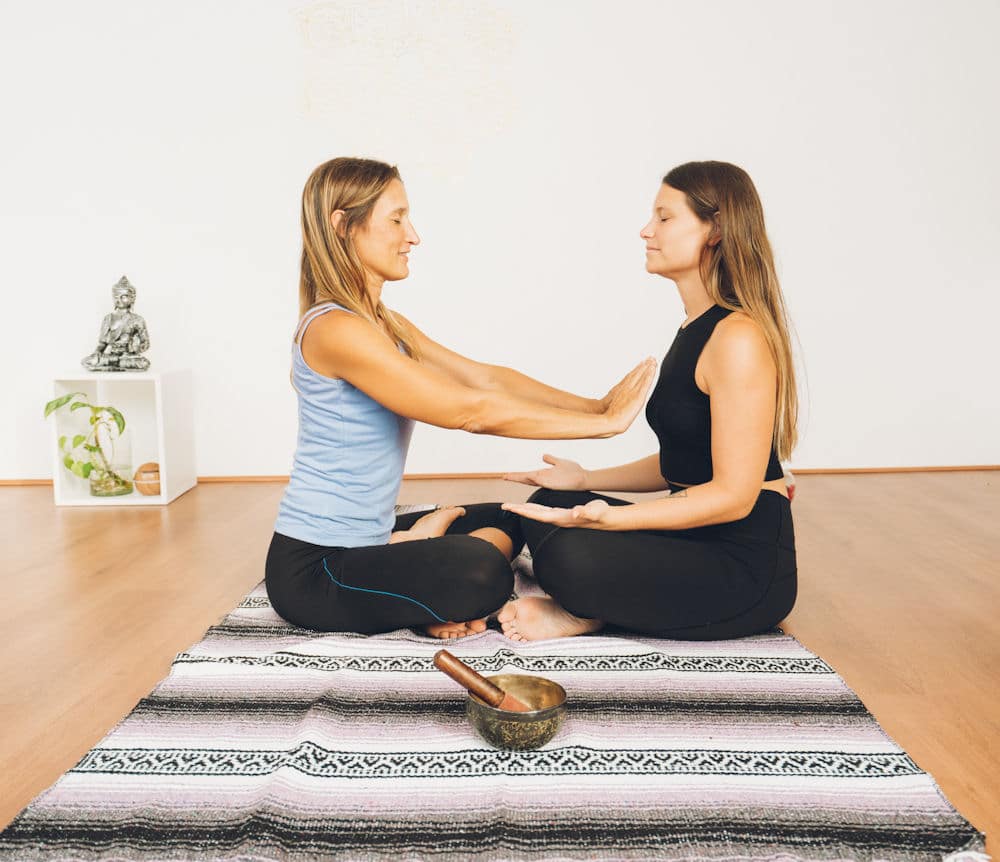
What happens during a Reiki session?
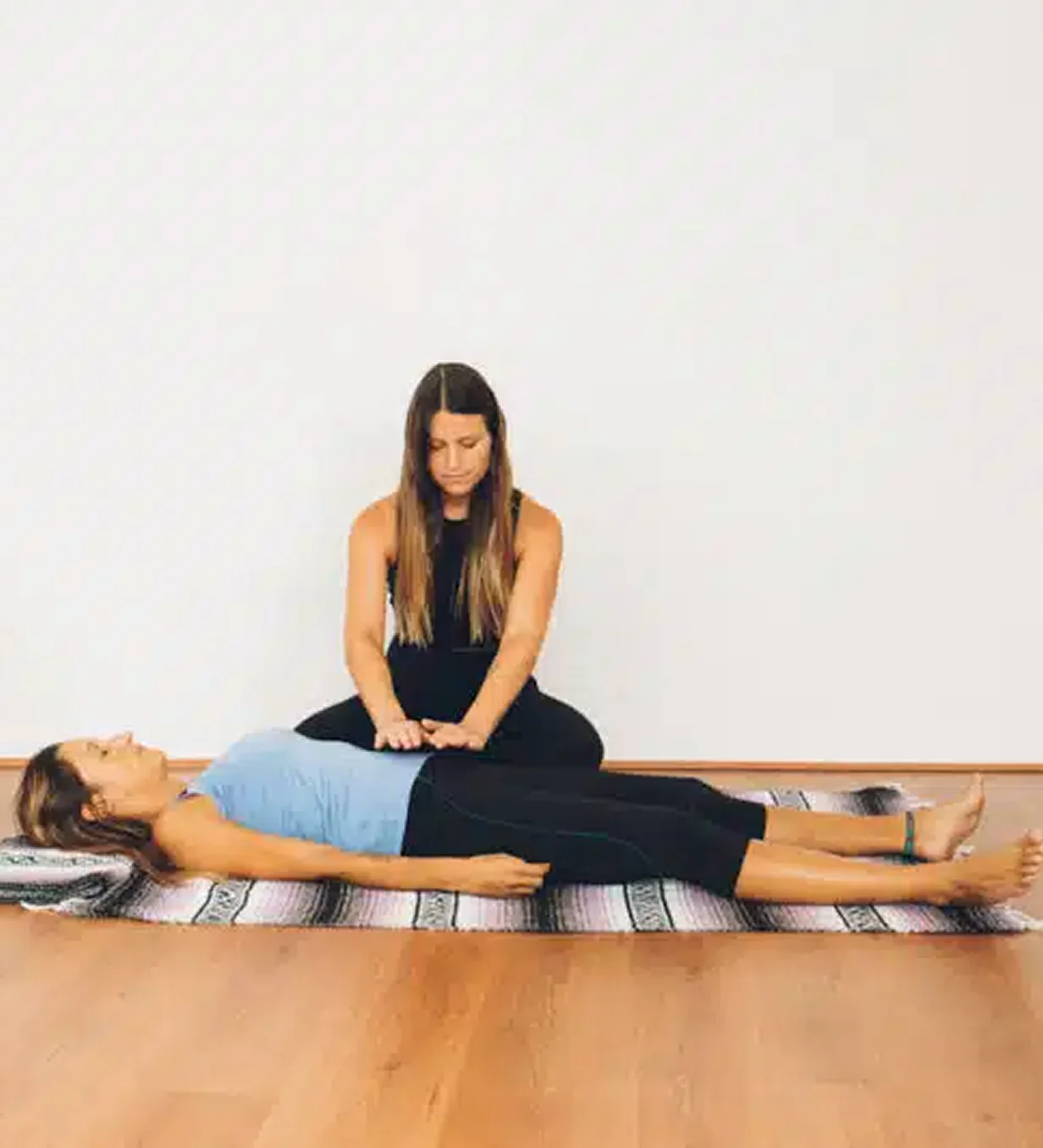
You stay fully clothed for the entire session — nothing is removed except shoes. You’ll lie down on a treatment table, usually on your back, though a practitioner can adjust positioning for comfort. A session typically runs 45 to 60 minutes.
The practitioner places their hands lightly on or just above specific areas of the body — head, shoulders, torso, feet — moving through a sequence over the course of the session. You’ll always know where their hands are, and you can ask for adjustments or more space at any time.
Most people describe the experience as deeply relaxing. Common sensations include warmth, tingling, heaviness, or a wave-like feeling of release, though some people feel very little physically and simply notice their mind slowing down. It’s common to feel sleepy, emotional, or unusually clear-headed afterward. Many women say their first Reiki session is the first time in months they’ve felt fully still.
How Reiki supports trauma and addiction recovery
Women in our program describe Reiki as one of the few therapies that helps them feel calm in their body, not just in their head. Early recovery often comes with a kind of physical restlessness — a nervous system still learning how to settle without a substance to regulate it — and many women tell us Reiki is where that restlessness finally quiets, even briefly.
Reported benefits include:
- Deeper, more restful sleep, especially in the first weeks of treatment
- A noticeable drop in anxiety during and immediately after sessions
- A greater sense of being present in their own body, rather than braced against it
- Relief from the physical agitation and restlessness common in early sobriety
These are the experiences women consistently describe to us — not a guarantee of a particular outcome, and not a substitute for clinical trauma or addiction treatment, but a genuinely valued part of how our residents tell us they’ve come to feel calmer in themselves.