
Categories
General

Nervous System Dysregulation in Women: Signs, Causes, and How to Heal

Some women describe it as being tired and wired at the same time. Others say they feel like a phone stuck at 3% battery, or like their body is bracing for something that never arrives. They are doing everything right on paper, and their body still won’t settle.

There is a name for this. Nervous system dysregulation is what happens when the body’s stress response stops switching off the way it was designed to. It is not a character flaw, and it is not “all in your head.” It is a body doing exactly what it learned to do in order to keep you safe.

What Is Nervous System Dysregulation?

Your autonomic nervous system runs the things you don’t consciously control: heart rate, breathing, digestion, sleep, and your response to danger. It has two main branches. The sympathetic branch speeds you up so you can meet a challenge. The parasympathetic branch slows you down so you can rest, digest, and repair.

A regulated nervous system moves between these states as life requires. You feel stress before a hard conversation, and then you come back down. Nervous system dysregulation means that flexibility has been lost. The system gets stuck on high alert, collapses into shutdown, or swings between the two with very little in between.

It helps to be clear about what the term is and isn’t. Nervous system dysregulation is a descriptive phrase that clinicians use, not a formal diagnosis. It overlaps with recognized conditions, including the arousal and reactivity symptoms of PTSD described by the VA’s National Center for PTSD, as well as anxiety and depression.

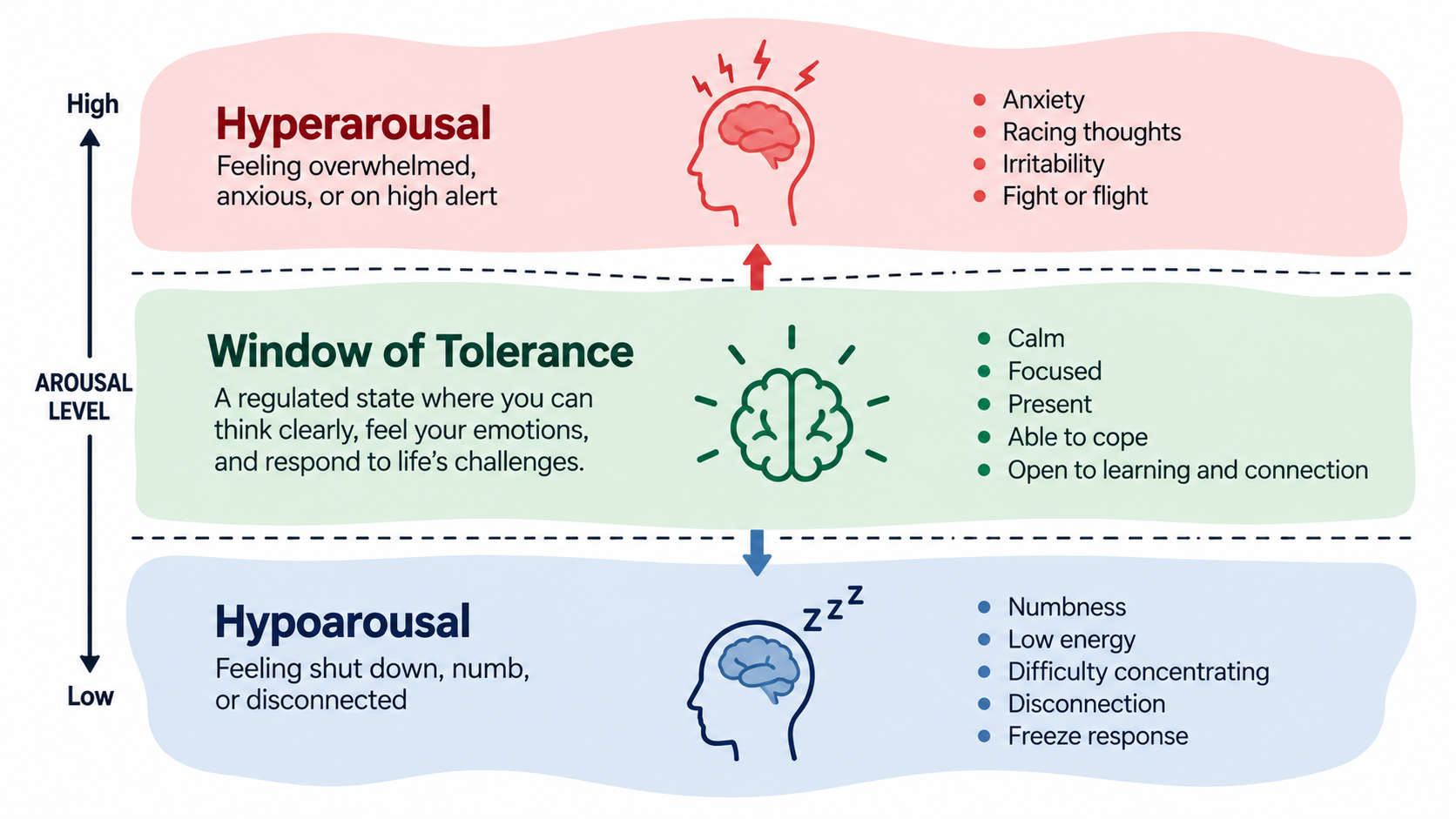
Many therapists explain it using the “window of tolerance,” a concept introduced by psychiatrist Dr. Dan Siegel in 1999. Inside your window, you can feel strong emotions and still think clearly. Above it, you are in hyperarousal. Below it, you are in hypoarousal. Chronic stress and trauma narrow the window, so it takes less and less to push you out of it.


Signs of a Dysregulated Nervous System

A dysregulated nervous system does not look the same in every woman. Most recognize themselves in one of two patterns, and many move between both.

Signs of hyperarousal (stuck “on”):

  • Feeling constantly on edge or unable to relax, even when nothing is wrong
  • Startling easily at sounds, touch, or sudden movement
  • Racing thoughts and trouble falling or staying asleep
  • Irritability or anger that feels out of proportion
  • A tight chest, clenched jaw, or shallow breathing
  • Scanning rooms, faces, and tones of voice for signs of danger

Signs of hypoarousal (stuck “off”):

  • Feeling numb, flat, or disconnected from your own life
  • Heavy fatigue that sleep does not fix
  • Brain fog and difficulty making simple decisions
  • Pulling away from people you love
  • Going blank or “checking out” during conflict

The body often speaks first. Digestive trouble, tension headaches, a racing heart, and feeling run down are common companions. Because these symptoms can also come from thyroid conditions, anemia, hormonal changes, and disorders of the autonomic nervous system itself, it is worth seeing a medical provider to rule those out.

Why Nervous System Dysregulation Is So Common in Women

Dysregulation is an adaptation. A nervous system that has lived through danger, or through years of pressure with no recovery, learns to stay ready. For many women, there has been a great deal to stay ready for.

  • Trauma. According to the National Center for PTSD, about 8 of every 100 women will have PTSD at some point in their lives, compared with about 4 of every 100 men.
  • Childhood adversity. CDC data show that 19.2% of women report four or more adverse childhood experiences, compared with 15.2% of men. Early stress shapes a developing nervous system, which is one reason complex trauma in women so often shows up in the body.
  • Chronic stress without recovery. Caregiving, work, and carrying the emotional weight of a household can keep the stress response switched on for years. If you want the physiology, we cover it in how stress affects your body.
  • Coping that backfires. Alcohol, sedatives, and stimulants change how the nervous system feels in the moment. Over time they make it harder for the body to regulate on its own.

How to Regulate Your Nervous System: What the Research Supports

You cannot think your way out of a nervous system state. Regulation is learned through the body, in small doses, repeated often. These are the practices with the most evidence behind them.

Slow breathing with a long exhale. A Stanford trial published in Cell Reports Medicine found that five minutes a day of breathwork improved mood, and that “cyclic sighing” (two inhales through the nose followed by a long, slow exhale) did so more than mindfulness meditation. A 2022 meta-analysis of 223 studies found that slow breathing increases heart rate variability, a marker of parasympathetic activity.

Trauma-informed movement. In a randomized trial of 64 women with chronic, treatment-resistant PTSD, 52% of those who took ten weeks of trauma-informed yoga no longer met criteria for PTSD, compared with 21% of the control group.

Deep rest. A nervous system that has been running for years needs practice at stopping. Guided rest practices such as yoga nidra teach the body what settling feels like.

Safe connection. Human nervous systems regulate in the company of other regulated people. A calm voice, steady eye contact, and unhurried time with someone you trust do real physiological work.

Rhythm. Regular meals, consistent sleep and wake times, daylight, and time outdoors give the body predictable signals that it is safe.

For tools to use in a hard moment, see our guide on what to do when you’re triggered.

One note on the science. Much of the popular language around this topic comes from polyvagal theory, introduced by Dr. Stephen Porges in the 1990s. It is widely used in trauma therapy, and parts of it are still debated by researchers. The practices above stand on their own evidence either way.
When Self-Regulation Isn’t Enough

Breathing exercises can widen your window. They cannot, on their own, resolve what narrowed it. When dysregulation is rooted in trauma, the body keeps returning to its old settings until the trauma itself is processed.

It may be time for professional support if:

  • Symptoms have lasted for months and are not easing
  • Sleep, work, parenting, or relationships are suffering
  • You rely on alcohol, medication, or food to come down or to feel something
  • You feel numb or disconnected much of the time
  • You have thoughts of harming yourself

If you are in crisis, call or text 988 to reach the Suicide and Crisis Lifeline, available 24 hours a day.

Treatment that addresses the root usually combines trauma-processing therapy, such as EMDR, with body-based work like Somatic Experiencing, so that the mind and the body heal together.

How Villa Kali Ma Helps Women Heal a Dysregulated Nervous System

At Villa Kali Ma, nervous system regulation is not an add-on to therapy. It is built into every day of treatment. Our programs are women-only, and they pair evidence-based clinical care with practices that teach the body to feel safe again.

Alongside individual and group therapy, women in our care practice TRE and neurogenic yoga, breathwork, trauma-informed yoga, acupuncture, massage, and mindfulness-based stress reduction.

For women who need time away from daily life to reset, The Retreat, our residential trauma program in Rancho Santa Fe, offers a 30 to 90 day stay with up to 45 hours of clinical and holistic therapies each week. For women who need support while living at home, our outpatient program offers the same trauma-focused approach in Del Mar.

Frequently Asked Questions

Is nervous system dysregulation a real diagnosis?

No. It is a descriptive term, not a formal diagnosis. It describes a pattern that shows up in diagnosable conditions such as PTSD, anxiety disorders, and depression. A clinician can assess which, if any, apply to you.

How long does it take to regulate your nervous system?

There is no fixed timeline. A single slow-breathing session can shift how you feel within minutes. Lasting change takes consistent practice over weeks to months, and longer when trauma is involved. In the yoga study above, change was measured after ten weeks.

Can nervous system dysregulation cause physical symptoms?

Yes. Digestive problems, muscle tension, headaches, a racing heart, and fatigue are common. Because these can have other medical causes, see a medical provider to rule them out.

What is the difference between anxiety and nervous system dysregulation?

Anxiety is one way a dysregulated nervous system can feel, usually the hyperarousal side. Dysregulation is broader. It also includes the shutdown side: numbness, exhaustion, and disconnection.

Your Body Is Not Broken

If you recognize yourself here, please hear this: your nervous system learned these patterns for good reasons, and what was learned can be relearned. With the right support, the body does come back to rest.

Villa Kali Ma offers residential and outpatient programs for women in San Diego County. We provide free, confidential consultations and accept most PPO insurance plans. Call (760) 350-3131 or reach out to our team to talk about what you are experiencing.

Sources

Categories
General

High-Functioning Depression in Women

The Signs No One Sees

She meets her deadlines. The kids get to school on time. She remembers birthdays, answers texts, and shows up to the dinner with a smile. And every night she lies awake wondering why none of it feels like anything.

From the outside, nothing looks wrong. That is exactly what makes high-functioning depression so easy to miss, and so lonely to live with.

What Is High-Functioning Depression?

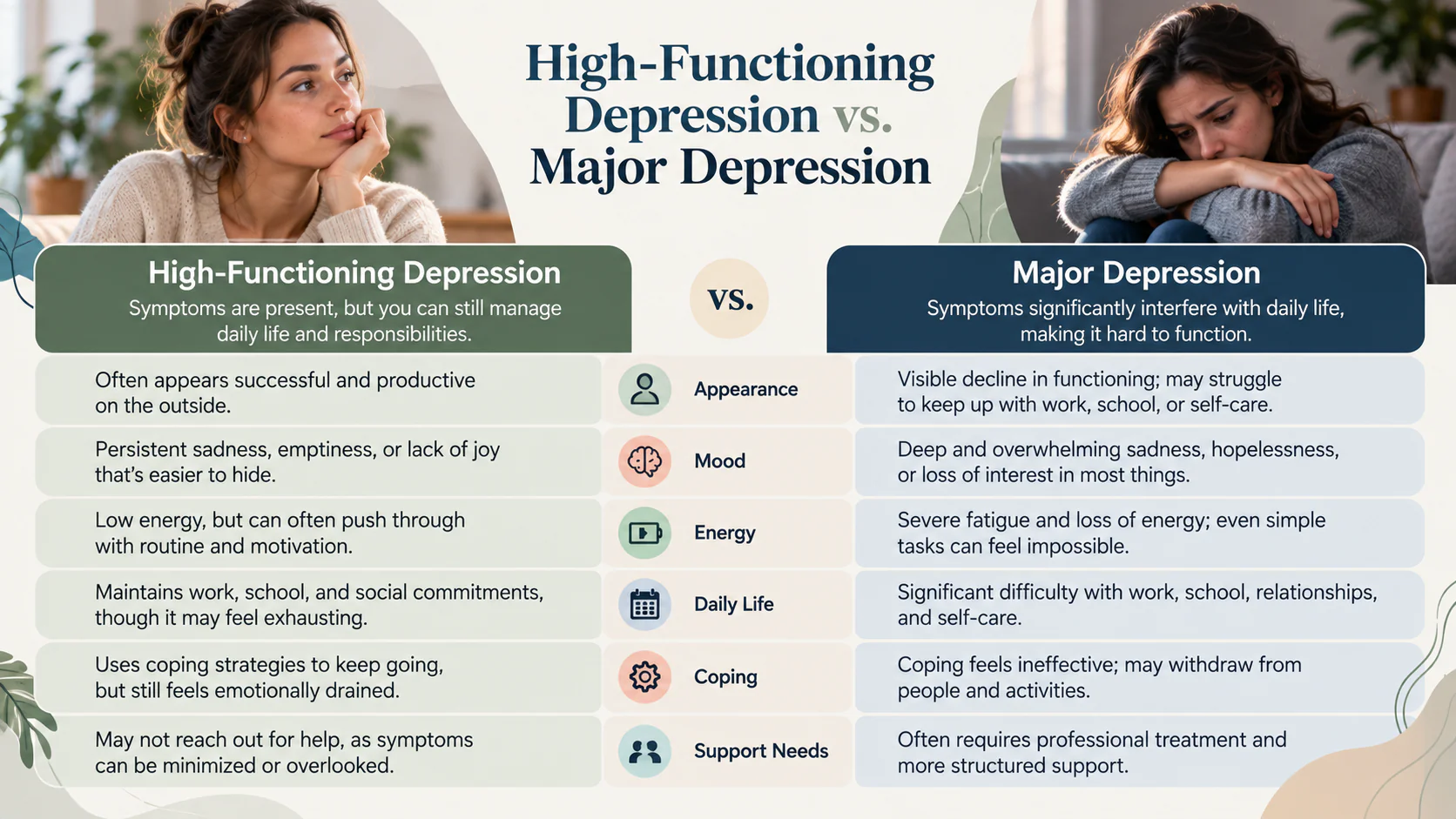
High-functioning depression is a term for living with symptoms of depression while continuing to meet the demands of daily life. As the Cleveland Clinic notes, it is not a formal medical diagnosis. It is a description of how depression can look in someone who keeps going.

The closest clinical diagnosis is often persistent depressive disorder, which used to be called dysthymia. It is defined by a depressed mood most of the day, on more days than not, for at least two years, along with at least two of the following:

  • Poor appetite or overeating
  • Sleeping too little or too much
  • Low energy or fatigue
  • Low self-esteem
  • Trouble concentrating or making decisions
  • Feelings of hopelessness

Other women who describe themselves this way are living with major depression that they have learned to mask. Either way, the “high-functioning” part describes what other people can see. It says very little about how much a woman is carrying.

Signs of High-Functioning Depression in Women

Because the usual markers are missing (she is not staying in bed, not missing work), the signs of high-functioning depression tend to be quieter.

  • Going through the motions. Life gets done, but it feels like watching yourself from a distance.
  • Loss of pleasure. Things that used to bring joy feel flat. In a 2025 study of high-functioning depression, this loss of pleasure, called anhedonia, was closely tied to the experience. The study was small and relied on self-report, but it matches what many women describe.
  • Exhaustion behind the performance. Holding it together all day leaves nothing for the evening.
  • A relentless inner critic. Achievements bring relief, not satisfaction, and the bar keeps moving.
  • Irritability. A short fuse with the people you love most, followed by guilt.
  • Quiet withdrawal. You still show up, but you share less and cancel more.
  • Needing something to get through. The nightly glass of wine, the extra hours at work, the scrolling until sleep.
  • Guilt about feeling this way. “I have a good life. I should be grateful.”

Why It Goes Unnoticed in Women

Depression is common in women. In the most recent CDC data, 16.0% of females ages 12 and older had depression in a given two-week period, compared with 10.1% of males. Federal survey data show that about one in ten adult women has a major depressive episode in a given year.

Yet the high-functioning kind slips past nearly everyone, often including the woman herself. There are reasons for that.

  • Competence is rewarded. Women are praised for coping, for holding everything together, for being “so strong.” Nobody checks on the one who seems fine.
  • It does not match the picture. If depression means not being able to get out of bed, then a woman who runs a household or a department assumes she does not qualify.
  • There is always another explanation. Stress, a busy season, hormones, not enough sleep. Each one is plausible, so the pattern goes unnamed for years.
  • Slowing down feels unsafe. For many women, staying busy is what keeps the feelings at a distance.

How High-Functioning Depression Differs From Major Depression

  High-functioning depression (often persistent depressive disorder) Major depressive episode
Duration Long-lasting: two years or more At least two weeks
Intensity Often less severe, but constant More severe, with more symptoms present
Daily life Responsibilities are met, at a high personal cost Work, home, and relationships are visibly disrupted
How it feels “This is just how I am” “Something is wrong”

The two are not mutually exclusive. A woman living with long-term, low-grade depression can also develop a major depressive episode on top of it. And it is different from ordinary exhaustion: tiredness from overwork tends to lift with real rest, while depression follows you on vacation.

The Hidden Risks of Holding It Together

“Functioning” is not the same as being well. Left untreated, high-functioning depression carries real risks.

It can deepen. Persistent depressive disorder is long-lasting by definition. Waiting for it to pass on its own rarely works.

Drinking can creep in. Research published by the National Institute on Alcohol Abuse and Alcoholism finds that women more often drink in response to negative emotions. The institute also reports that among people with major depression, 27% to 40% will have an alcohol use disorder at some point in their lives. We explore that loop in depression and substance abuse.

Thoughts of suicide can be present even when life looks fine. Functioning does not protect against them. If you are having thoughts of ending your life, call or text 988 to reach the Suicide and Crisis Lifeline, any time of day.

How High-Functioning Depression Is Treated

High-functioning depression responds to treatment. The first step is an honest assessment with a clinician. You may be asked to complete the PHQ-9, a nine-question screening tool. A screening score is a starting point for a conversation, not a diagnosis.

From there, treatment often includes:

  • Therapy. Cognitive behavioral therapy helps loosen the harsh, automatic thoughts that keep depression in place. Acceptance and commitment therapy helps reconnect daily life with what matters to you.
  • Self-compassion work. For women whose depression is wrapped up in perfectionism, mindful self-compassion can be a turning point.
  • Looking underneath. In the 2025 study mentioned above, people with more signs of high-functioning depression also reported more trauma. When unresolved trauma is driving the depression, trauma therapy is part of the answer.
  • Medication, when appropriate. This is a decision to make with a prescriber who knows your history.
  • Care for the body. Sleep, movement, nutrition, and time outdoors support recovery.

How Villa Kali Ma Can Help

Many of the women who come to Villa Kali Ma were the last ones anyone expected to need help. We understand what it costs to keep up appearances, and we offer a place to set that down.

Our approach to depression treatment for women is both clinical and holistic, in women-only settings. For women who need to keep working or caring for family, our intensive outpatient program in Del Mar offers three hours of programming per day. For women who need to step away and reset, The Retreat in Rancho Santa Fe offers residential mental health and trauma treatment.

Frequently Asked Questions

Is high-functioning depression a real diagnosis?

No. It is a descriptive term, not a formal diagnosis. A clinician may diagnose persistent depressive disorder or major depressive disorder, depending on your symptoms and how long they have lasted.

Can you be depressed and still be successful?

Yes. Many women with depression hold demanding jobs and care for families. Meeting your responsibilities does not mean you are not depressed. It often means you are working much harder than anyone can see.

How do I know if it is high-functioning depression or just stress?

Stress usually eases when the pressure lifts or when you get real rest. Depression stays. If low mood, loss of pleasure, or exhaustion have lasted most days for two weeks or more, talk with a professional.

Does high-functioning depression go away on its own?

Usually not. Long-term, low-grade depression tends to persist without treatment and can deepen into a major depressive episode. It does respond to treatment, including therapy and, when appropriate, medication.

You Do Not Have to Fall Apart to Deserve Help

If you saw yourself in this, you do not need to wait until you cannot function. Struggling quietly is still struggling, and it is reason enough to reach out.

Villa Kali Ma offers residential and outpatient programs for women in San Diego County. We provide free, confidential consultations and accept most PPO insurance plans. Call (760) 350-3131 or reach out to our team today.

Sources

Categories
General

What Is a Single Case Agreement? How to Get Out-of-Network Treatment Covered in California

You have finally found a program that fits: women-only, trauma-focused, the right level of care. Then you learn it is not in your insurance plan’s network. For many women, the search stops there.

It does not always have to. A single case agreement is one of the least-known tools in health insurance, and in California the law gives you more leverage than most people realize. This guide explains what a single case agreement is, when insurers approve one, and how to ask.

What Is a Single Case Agreement?

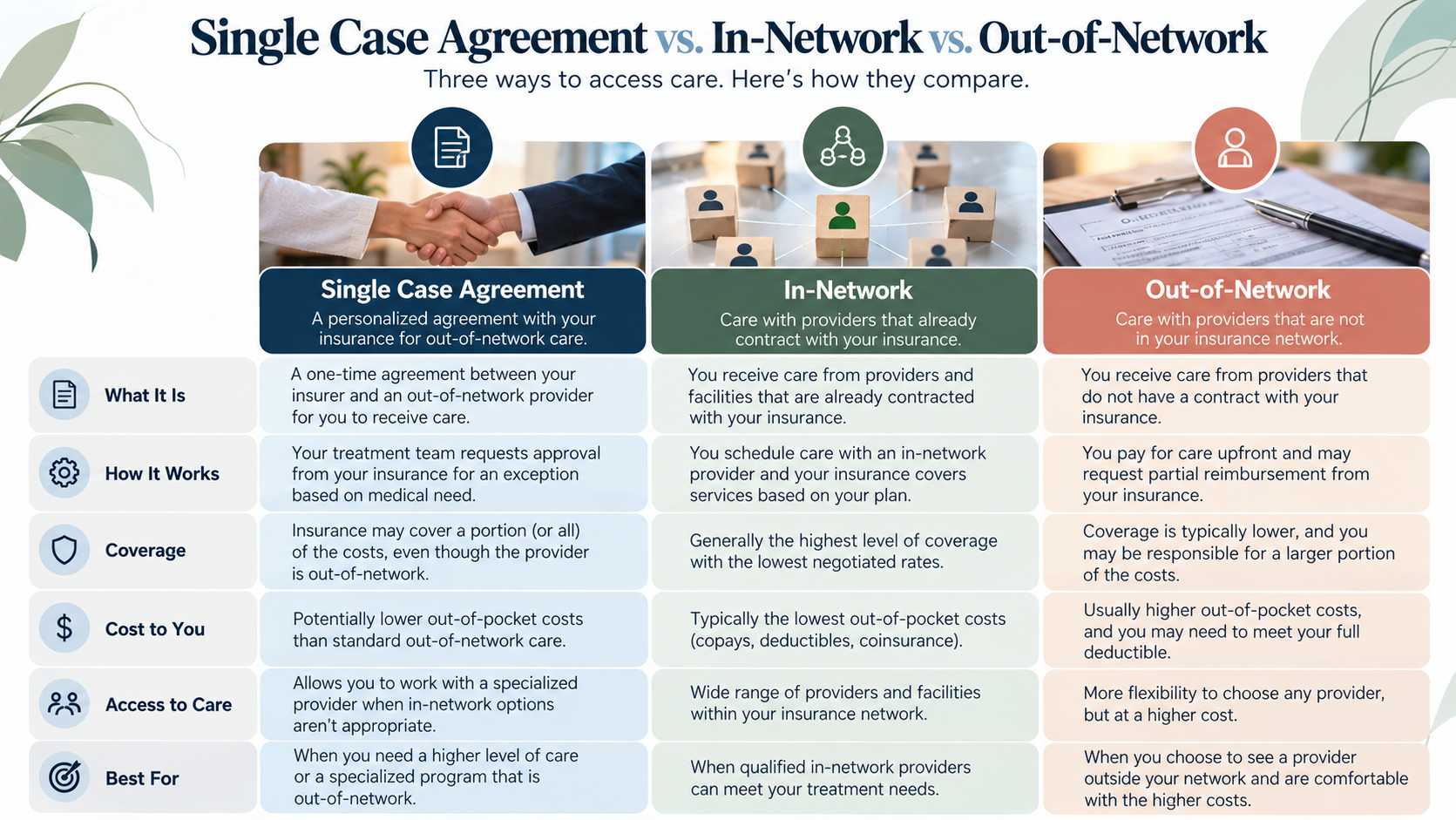
A single case agreement, or SCA, is a one-time contract between your health insurance company and a provider who is not in your plan’s network. It covers one patient, for one course of treatment.

The agreement usually spells out:

  • Which services are covered, such as residential treatment or a partial hospitalization program
  • The dates or number of days authorized
  • The rate the insurer will pay the provider
  • What you will owe

The point of a single case agreement is that you pay what you would have paid in network. That is different from using out-of-network benefits, where deductibles and coinsurance are often much higher.

When Will an Insurer Approve a Single Case Agreement?

Insurers do not grant SCAs because a member prefers a certain program. They grant them when the network cannot deliver the care that is medically necessary. The most common grounds are:

  • No in-network provider offers the level of care you need. For example, your clinician recommends residential treatment and no contracted facility provides it.
  • No in-network provider offers the specialty you need. Women-only trauma treatment is one example of a service that may be hard to find in a network.
  • In-network providers cannot see you in time. Waitlists count.
  • In-network care is too far away. Plans must meet geographic access standards as well as timing standards.
  • Continuity of care. You are already in treatment and a change of provider would set your recovery back.

An SCA is never guaranteed. But when one of these situations applies, you are not asking for a favor. You may be asking for something the law requires.

Your Rights Under California Law

California has one of the strongest mental health coverage laws in the country. Under Senate Bill 855, if medically necessary treatment for a mental health or substance use disorder is “not available in network within the geographic and timely access standards set by law or regulation,” the health plan “shall arrange coverage to ensure the delivery of medically necessary out-of-network services.” The law goes on: “The enrollee shall pay no more than the same cost sharing that the enrollee would pay for the same covered services received from an in-network provider.”

A few details make this concrete:

  • Timely access has numbers attached. For plans regulated by the California Department of Managed Health Care (DMHC), the standards are a non-urgent appointment with a mental health provider within 10 business days, a psychiatrist within 15 business days, and urgent care within 48 hours (96 hours if prior authorization is required).
  • Your plan cannot stall. The DMHC has told health plans that they “may not delay an enrollee’s care beyond the applicable timely access standards due to a lack of a single case agreement or other arrangement with a noncontracting provider.”
  • Your payments count. The same guidance says what you pay under such an arrangement applies to your in-network deductible and your in-network out-of-pocket maximum.

Which plans does California law cover?

These protections apply to plans regulated by California: health plans overseen by the DMHC and insurance policies overseen by the California Department of Insurance. A parallel provision in the Insurance Code covers the latter.

They generally do not apply to self-funded employer plans, where a large employer pays claims itself. Those plans are governed by federal law, and the U.S. Department of Labor oversees them. Federal mental health parity law still applies, and single case agreements are still possible, but the California requirements above do not bind those plans. Your HR department or your plan documents can tell you which kind of plan you have.

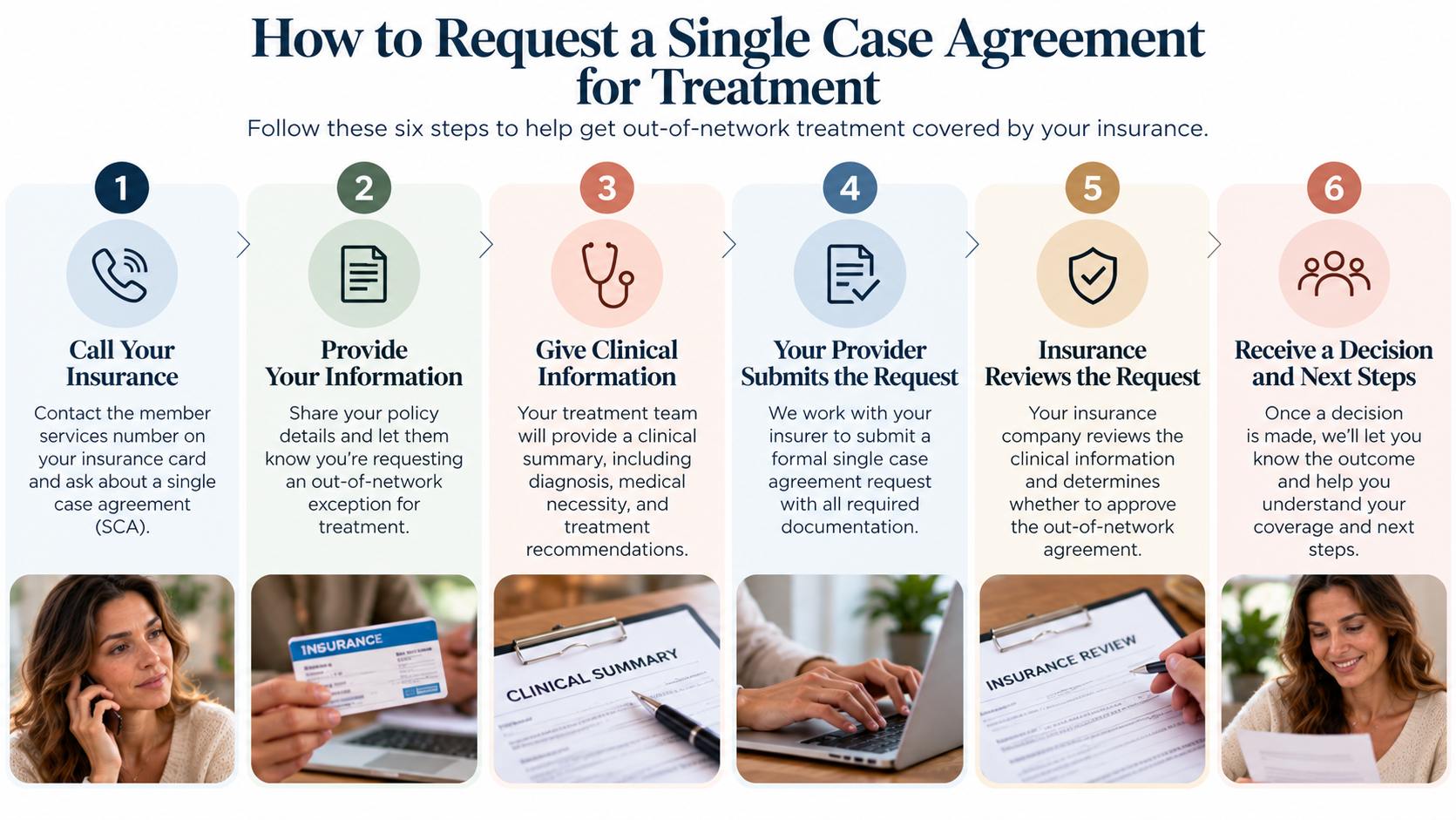
How to Request a Single Case Agreement, Step by Step

  1. Verify your benefits and your plan type. Find out whether the program is in network, what your out-of-network benefits are, and whether your plan is state-regulated or self-funded.
  2. Get a clinical assessment. An SCA rests on medical necessity. You need a clinician’s documented recommendation for a specific level of care.
  3. Ask your insurer for in-network options. Request a list of contracted providers that offer that level of care and specialty. Call them. Write down names, dates, and wait times. A documented gap in the network is the strongest case you can make.
  4. Make the request. Ask your insurer for a single case agreement with the provider you have chosen. In practice, the treatment program’s admissions or utilization review team usually handles the negotiation, including the rate and the authorization.
  5. Get the terms in writing. Confirm the services covered, the dates or number of days, and your share of the cost before you admit, whenever your situation allows.
  6. Expect ongoing reviews. Insurers typically authorize a set number of days and then review clinical updates before approving more.

If your need is urgent, say so, and ask for an expedited review.

What to Do If Your Request Is Denied

A denial is not the end of the road.

  • File a grievance with your plan. Ask for the denial and the reason in writing.
  • Go to the regulator. For DMHC-regulated plans, contact the DMHC Help Center at 1-888-466-2219. You generally need to go through your plan’s grievance process for 30 days first, unless your case is urgent.
  • Ask for an Independent Medical Review. When a plan denies care as not medically necessary, an Independent Medical Review puts the decision in the hands of outside doctors. It is free and is usually decided within 45 days, or within 7 days for expedited cases.
  • For insurance policies regulated by the Department of Insurance, call the consumer hotline at 1-800-927-4357.
  • For self-funded employer plans, contact the U.S. Department of Labor’s Employee Benefits Security Administration at 1-866-444-3272.

Single Case Agreement vs. Out-of-Network Benefits

  In network Out-of-network benefits Single case agreement
Contract with your insurer Standing contract None One-time contract for you
What you pay In-network cost sharing Usually a higher deductible and coinsurance In-network cost sharing
Approval needed Authorization for the level of care Often authorization for the level of care A specific request, negotiation, and written agreement
When it applies The provider is contracted with your plan Your plan includes out-of-network coverage, as most PPO plans do The network cannot provide the care you need

How Villa Kali Ma Helps With Insurance

You should not have to become an insurance expert while you are trying to get well. At Villa Kali Ma, our admissions team offers free insurance verification and will explain your options in plain language.

Villa Kali Ma is an in-network provider with Anthem BCBS, MultiPlan, First Health, and Health Net, and accepts most PPO plans with out-of-network benefits. When a plan’s network cannot offer what a woman needs, we can pursue a single case agreement on her behalf. We do not accept Medi-Cal, Medicare, or other state-funded plans.

For a broader overview of coverage, see does insurance cover rehab. To understand the levels of care an agreement might cover, read about residential addiction treatment at The Villa, residential trauma treatment at The Retreat, and our partial hospitalization program.

Frequently Asked Questions

Who requests a single case agreement, me or the treatment center?

Either can start the process, and it works best when both are involved. You can ask your insurer directly, and the treatment program’s admissions or utilization review team usually negotiates the terms.

How long does a single case agreement take?

It varies by insurer and by how urgent the need is. Ask your plan for its timeline at the start, and request an expedited review if waiting would put your health at risk.

Does a single case agreement cover the full cost of treatment?

Not usually. It means you pay in-network cost sharing, such as your deductible, copays, and coinsurance, instead of out-of-network rates. Confirm your share in writing before treatment begins.

Can I get a single case agreement for residential treatment?

Yes, when residential care is medically necessary and your plan’s network cannot provide it within access standards. Approval is decided case by case and usually comes with a set number of authorized days.

You Have More Options Than You Think

If the right program is outside your network, do not assume the answer is no. Ask the question, document the gap, and let people who do this every day help you.

Villa Kali Ma provides free, confidential consultations and free insurance verification. Call (760) 350-3131 or reach out to our team, and we will look at your coverage with you.

This article is general information, not legal or insurance advice. Coverage depends on your specific plan. Laws and regulations change, so confirm current rules with your plan or the regulator.

Sources

Categories
General

The Connection Between Trauma and Addiction in Women—and Why Treating Both Matters

For many women, substance use doesn’t begin as addiction. It begins as survival.

When anxiety is constant and nothing quiets it. When sleep becomes impossible because the nights are full of memories that won’t stay in the past. When the emotional pain of what has happened—what was done—becomes too heavy to carry sober. In those moments, a drink or a pill that finally makes the noise stop can feel less like a choice and more like the only option left.

This is not a moral failure. This is not weakness. This is what happens when trauma goes untreated and the nervous system has been operating in a state of dysregulation for so long that the body will reach for anything that brings relief.

Understanding this connection—between trauma and addiction, between what happened to a woman and what she reaches for to cope—is at the heart of effective treatment for women in recovery.

How Trauma Leads to Addiction in Women

The relationship between trauma and substance use is not coincidental. It is neurological, psychological, and deeply human.

Trauma—particularly the kind of complex, relational trauma that many women carry—dysregulates the nervous system. The brain’s threat detection system becomes hypersensitive. The body lives in a low-grade state of fight, flight, or freeze even when there is no present danger. Stress hormones that are meant to spike briefly in response to real threats instead become a chronic background condition.

Substances that dull emotional pain, reduce anxiety, promote sleep, or create a temporary sense of calm can become neurologically reinforcing very quickly in this context. Alcohol suppresses the activity of the nervous system. Opioids activate the brain’s reward and pain-relief pathways. Stimulants can mask dissociation and emotional numbness by creating a sense of energy and aliveness. For a nervous system that is chronically overwhelmed, these effects are not recreational—they are regulatory.

Research consistently shows that the majority of women entering addiction treatment have significant trauma histories. Studies estimate that between 55 and 99 percent of women in substance use treatment report trauma exposure, with rates of PTSD among women in treatment running several times higher than in the general population. The two conditions are not separate problems that happen to co-occur. For most women, they are two expressions of the same wound.

Why Treating Only the Addiction Isn’t Enough

Standard addiction treatment approaches that focus primarily on sobriety—on stopping the substance use—are a critical first step but often insufficient on their own for women with trauma histories. When a woman stops using substances without healing the underlying trauma, she is left with all of the pain, dysregulation, and emotional overwhelm that the substances were managing—and no tools to handle it.

This is one of the most significant drivers of relapse among women. It is not a lack of willpower or commitment to recovery. It is a treatment gap: the root cause was never fully addressed.

Without trauma healing, the nervous system remains in a state of chronic dysregulation. Without learning new ways to regulate emotions and tolerate distress, the pull toward substances as a coping mechanism remains powerful. Without understanding the connection between what happened and what developed as a result, women often carry profound shame about their addiction that makes sustained recovery even harder to maintain.

What Dual Diagnosis Treatment Means for Women

Dual diagnosis treatment means treating both the addiction and the underlying mental health condition—in this case, trauma—at the same time, within the same program, with an integrated clinical team that understands how the two interact.

At Villa Kali Ma, dual diagnosis treatment is not a specialty offering or an add-on service. It is the foundation of everything we do. We were built specifically to serve women who are carrying both trauma and addiction, because we understand that separating these two threads of suffering and treating them in isolation does not produce lasting healing.

Our residential programs in San Diego integrate evidence-based trauma therapies—including EMDR, Internal Family Systems, Schema Therapy, and Dialectical Behavioral Therapy—with comprehensive addiction treatment approaches including motivational interviewing, relapse prevention planning, and recovery support group work. Alongside these clinical modalities, we offer a full range of holistic nervous system regulation practices: trauma-informed yoga, somatic therapy, breathwork, acupuncture, equine therapy, massage, sound healing, and mindfulness-based relapse prevention.

Each woman who enters our programs receives an individualized treatment plan built around her specific history, her current needs, and her vision for her life. There is no generic protocol here. Because no two women’s stories are the same, no two treatment plans look exactly alike either.

Why a Women-Only Environment Matters in Dual Diagnosis Recovery

For women who have experienced trauma—particularly trauma perpetrated by men, or trauma that occurred in environments where they felt unsafe, unheard, or powerless—the setting of treatment is not a secondary consideration. It is a clinical one.

Healing from trauma requires safety. Real safety—not just the absence of immediate threat, but the deep nervous system experience of being in an environment where you are not being evaluated, judged, competed with, or managed. For many women, a women-only space is the first environment in their lives where that kind of safety has been available.

At Villa Kali Ma, our facilities are women-only and our clinical and support staff are all female. This is not a philosophical preference—it is a clinical commitment rooted in what we know about how trauma healing works and what conditions it requires.

The community dimension of our programs is equally important. When women sit together in group therapy and one woman finds the courage to share something she has never said out loud—and other women in the room nod because they know exactly what she means—shame begins to dissolve. Isolation, which trauma thrives in, begins to break down. The sense that something is fundamentally wrong with her begins to shift into an understanding of what happened to her and how she adapted to survive it.


What Recovery Looks Like When Both Are Treated

When trauma and addiction are treated together, the picture of recovery changes fundamentally. Women don’t just stop using substances—they begin to understand why they started. They develop genuine tools for emotional regulation that don’t require numbing or escape. They rebuild a relationship with their own bodies, their own instincts, their own sense of self-worth.

They begin to make decisions from a place of self-worth rather than fear. They start to recognize the difference between what is safe and what is familiar. They learn to ask for help, to set boundaries, to trust themselves again.

This is what lasting recovery looks like. Not just abstinence—though that matters—but a life rebuilt from the inside out.

Taking the First Step

If you are a woman struggling with both trauma and addiction, or if you love someone who is, please know that treatment works—when both conditions are addressed, together, in an environment designed for women’s healing.

Villa Kali Ma offers residential, PHP, and IOP dual diagnosis programs at our San Diego area facilities in Carlsbad, Rancho Santa Fe, and Del Mar. We provide free insurance verification and accept most PPO plans. Our team is available to speak with you confidentially about your situation and help you find the right level of care.

Categories
General

Understanding Complex Trauma in Women: Signs, Causes, and the Path to Healing

Not all trauma looks the same. When most people hear the word trauma, they picture a single catastrophic event—a car accident, a natural disaster, an assault. But for millions of women, trauma is something different: quieter, more relentless, and in many ways harder to name. It is what clinicians call complex trauma, and it may be one of the most underrecognized drivers of suffering in women’s mental health today.

What Is Complex Trauma?

Complex trauma—also referred to as Complex PTSD or C-PTSD—develops as a result of repeated, prolonged exposure to traumatic experiences, typically within relationships where there is a significant power imbalance. It is not caused by a single event but by a sustained pattern of harm that occurs over months or years, often beginning in childhood.

Common sources of complex trauma include:

  • Childhood physical, emotional, or sexual abuse
  • Childhood neglect or abandonment
  • Growing up with a parent who struggled with addiction or severe mental illness
  • Domestic violence or intimate partner abuse
  • Sexual exploitation or trafficking
  • Chronic emotional manipulation or coercive control
  • Racial trauma and systemic oppression experienced over time

What makes complex trauma distinct is not just its source but its impact. Because the trauma happened within relationships—often with people who were supposed to provide safety—it fundamentally reshapes how a woman understands herself, other people, and the possibility of trust. The wounds are not just psychological. They are relational, neurological, and deeply woven into how the nervous system functions day to day.

How Complex Trauma Shows Up in Women

The symptoms of complex trauma are wide-ranging and often misunderstood. They are frequently misdiagnosed as borderline personality disorder, bipolar disorder, generalized anxiety, or treatment-resistant depression. Many women spend years receiving treatment for the symptoms while the underlying cause goes unaddressed.

Common signs of complex trauma in women include:

  • Persistent feelings of shame, worthlessness, or being fundamentally different from other people
  • Difficulty regulating emotions—moving quickly from calm to overwhelmed, or feeling emotionally numb for long periods
  • Chronic distrust of others, even people who are genuinely safe
  • A pervasive sense of danger or hypervigilance, even in environments that are objectively safe
  • Dissociation—feeling detached from your body, your surroundings, or your own sense of self
  • Deep difficulty maintaining healthy relationships, or a pattern of relationships that repeat familiar painful dynamics
  • Intense self-criticism and an inner voice that is relentlessly harsh
  • Substance use, disordered eating, self-harm, or other behaviors used to manage emotional pain
  • Physical symptoms including chronic pain, fatigue, headaches, and gastrointestinal problems

Many women with complex trauma have learned to function at a high level outwardly while carrying enormous internal suffering. They are often described as strong, capable, and resilient—which makes it even harder for them, and for those around them, to recognize how much pain they are in.

Why Women Are Disproportionately Affected

Women experience complex trauma at significantly higher rates than men. They are more likely to have experienced childhood sexual abuse, intimate partner violence, and other forms of relational harm. They are also more likely to internalize their trauma responses—turning pain inward rather than outward—which can make complex trauma harder to identify and easier to dismiss, both by others and by the women themselves.

Cultural and societal pressures deepen this dynamic. Women are often expected to be caregivers, to keep relationships together, to minimize their own needs for the sake of others. These expectations don’t just reflect the impact of trauma—they can actively perpetuate it, creating environments in which women continue to sacrifice themselves long after the original harm has ended.

The Difference Between Complex Trauma and PTSD

Standard PTSD typically develops in response to a specific traumatic event and is characterized by flashbacks, nightmares, avoidance, and heightened reactivity. Complex PTSD shares some of these features but goes further, encompassing deep disruptions to identity, self-worth, emotional regulation, and the capacity for relationship.

Women with C-PTSD often don’t experience dramatic flashbacks. Instead, the trauma shows up as a chronic undercurrent—a constant low-grade sense of threat, a deep belief that they are fundamentally broken, a persistent inability to feel safe or at ease in their own skin.

Understanding this distinction matters enormously for treatment. Approaches designed for single-incident PTSD are often insufficient for complex trauma. Healing C-PTSD requires a more comprehensive, paced, and relational approach.

How Villa Kali Ma Treats Complex Trauma in Women

At Villa Kali Ma, complex trauma is not a complication we work around—it is the center of everything we do. Our programs were built from the ground up to address the specific ways trauma lives in women’s bodies, nervous systems, and relationships.

Our treatment approach integrates multiple evidence-based modalities, including EMDR (Eye Movement Desensitization and Reprocessing), Internal Family Systems therapy, Dialectical Behavioral Therapy, Cognitive Behavioral Therapy, Schema Therapy, and trauma-focused expressive arts therapy. These clinical approaches are delivered alongside holistic nervous system regulation practices: somatic therapy, trauma-informed yoga, breathwork, acupuncture, equine therapy, and mindfulness-based stress reduction.

Equally important is the environment in which healing takes place. Our programs are women-only, staffed entirely by women, and designed to provide the experience of consistent, unconditional safety that so many of our clients have never had access to before. Community is not incidental to our treatment model—it is a core therapeutic element. We heal in relationship because so many of our wounds occurred in relationship.

Healing Is Not Only Possible—It Is the Goal

If you recognize yourself in what you’ve read here, please hear this clearly: what you are experiencing has a name, it has a cause, and it has a treatment. The symptoms of complex trauma are not character flaws. They are the intelligent adaptations of a mind and body that did what they needed to do to survive. Healing means learning that survival mode is no longer necessary—and slowly, gently, building a life in its place.

Villa Kali Ma offers residential and outpatient trauma treatment programs in San Diego for women ready to begin that journey. We provide free, confidential consultations and accept most PPO insurance plans.

Categories
General

What Is EMDR Therapy and How Does It Help Women Heal from Trauma?

Trauma doesn’t just live in memories. It lives in the body, in the nervous system, in the way a woman flinches at a certain tone of voice or goes completely numb when someone gets too close. For many women, years of talk therapy can feel like circling the same painful stories without ever truly releasing them. They understand what happened. They just can’t seem to stop feeling it.

That’s where EMDR therapy comes in—and why it has become one of the most important tools in trauma healing for women today.

What Is EMDR Therapy?

EMDR stands for Eye Movement Desensitization and Reprocessing. It is a structured, evidence-based psychotherapy developed by Dr. Francine Shapiro in the late 1980s and now recognized as a gold-standard treatment for PTSD and trauma by the World Health Organization, the American Psychological Association, and the U.S. Department of Veterans Affairs.

The core idea behind EMDR is that traumatic memories are often stored in the brain in a fragmented, unprocessed state. When something in the present environment triggers one of these memories—a smell, a sound, a feeling of being trapped or powerless—the brain reacts as though the trauma is happening right now. The nervous system floods with stress hormones. The body braces. Rational thinking goes offline.

EMDR interrupts this cycle by using bilateral stimulation—typically guided eye movements, alternating taps, or auditory tones—to help the brain reprocess those stored memories. As the brain processes the memory in a new way, its emotional charge decreases. What was once overwhelming becomes something a woman can hold without being consumed by it.

Importantly, EMDR does not require a woman to describe her trauma in detail. The healing happens through neurological processing, not through verbal retelling.

How EMDR Works: A Closer Look

EMDR therapy is delivered in eight structured phases. The first two phases focus entirely on safety and preparation—building trust with the therapist, identifying internal resources, and learning grounding techniques before any memory processing begins. This is not a shortcut or a preliminary step. For women with complex trauma histories, this foundation is the work.

During the assessment phase, the therapist and client identify a specific target memory, along with the negative belief the client holds about herself because of it—for example, “I am not safe” or “It was my fault.” The client also identifies a more truthful belief she would like to hold instead.

In the desensitization phase, the client holds the target memory in mind while following the therapist’s bilateral stimulation. Sets of eye movements or taps are brief—typically twenty to thirty seconds—followed by a check-in. The client notices whatever arises: images, emotions, physical sensations, new thoughts. The therapist does not interpret or guide what comes up. The client’s own brain leads the process.

Over the course of sessions, the emotional intensity of the memory decreases. The negative belief loses its grip. The body stops responding as though the danger is present. Many women describe this shift as feeling like they have finally put down a weight they didn’t realize they had been carrying for years.

Why EMDR Is Especially Effective for Women

Many women who come to Villa Kali Ma carry trauma that is layered, relational, and rooted in experiences that happened over many years rather than in a single event. Childhood neglect, domestic violence, sexual assault, emotional abuse, betrayal by people who were supposed to protect them—this kind of complex trauma doesn’t always respond to approaches that stay purely cognitive or conversational.

EMDR reaches the nervous system directly. It works with the body’s own healing intelligence rather than trying to think or reason past the pain. Research has shown that EMDR can produce significant symptom reduction in fewer sessions than many other therapeutic approaches—an important consideration for women who have often spent years in treatment without finding lasting relief.

EMDR also allows women to heal without having to find the words for what happened to them. For many survivors, language itself can be a barrier. EMDR removes that barrier.

What to Expect in an EMDR Session at Villa Kali Ma

At Villa Kali Ma, EMDR is delivered by licensed therapists who are specifically trained in trauma-informed practice. Sessions take place within our women-only residential and outpatient environments, which are designed to feel calm, safe, and restorative.

Before any processing begins, your therapist will take time to understand your history, identify your strengths and resources, and ensure you have the coping tools you need to manage what may come up between sessions. No one is rushed into this work. Safety is always the foundation.

EMDR at Villa Kali Ma is integrated into a broader treatment plan that includes individual therapy, group support, somatic and holistic healing practices, and community. It is one powerful piece of a comprehensive approach to healing—not a standalone intervention.

Conditions EMDR Can Help Address

While EMDR was originally developed to treat PTSD, the research base has expanded significantly. EMDR is now used effectively to treat a wide range of conditions that commonly affect women in our programs, including:

  • Post-Traumatic Stress Disorder (PTSD) and Complex PTSD
  • Anxiety and panic disorders
  • Depression rooted in traumatic experience
  • Addiction and substance use disorders with underlying trauma
  • Grief and loss
  • Shame and low self-worth
  • Relationship trauma and attachment wounds
  • Dissociation and emotional dysregulation

Is EMDR Right for You?

If you are a woman who has experienced trauma—whether you have a formal PTSD diagnosis or simply carry the weight of painful experiences that continue to shape your life—EMDR may be a significant part of your path toward healing. The most important first step is a conversation with a trauma-informed clinician who can assess your history and help you understand which approaches are the right fit for you.

At Villa Kali Ma, we offer free, confidential consultations and accept most PPO insurance plans. Our team is here to answer your questions and help you find the level of care that fits your life.

Categories
General

Healing Isn’t About Becoming Someone New—It’s About Coming Home to Yourself

One of the greatest misconceptions I see in mental health is the belief that people come to treatment because something is fundamentally wrong with them.

They’ll say things like, “I’m broken,” or “I don’t know how I got this way.” The truth is, I rarely meet someone who is broken.

I meet women who have survived.

Women whose nervous systems learned to stay on high alert because life required it. Women who learned to silence their own needs to keep the peace. Women who became caregivers, perfectionists, people-pleasers, or escaped through substances—not because they were weak, but because those strategies once helped them survive.

When we look through that lens, the conversation changes.

Instead of asking, “What’s wrong with you?” we begin asking, “What happened to you?”

That one question has the power to transform everything.

As both a clinician and the Chief Operating Officer at Villa Kali Ma, I’ve had the privilege of walking alongside hundreds of women as they rebuild their lives after trauma, addiction, anxiety, depression, and profound loss. If there’s one lesson these women have taught me, it’s this:

Healing doesn’t begin when you try harder. It begins when you finally feel safe enough to stop surviving.

Our brains and bodies are remarkably intelligent. They are designed to protect us. If you’ve lived through trauma or chronic stress, your nervous system adapted in the only way it knew how. Hypervigilance, emotional numbing, perfectionism, avoidance, addiction, or difficulty trusting others are often not signs of dysfunction—they’re evidence that your mind and body found ways to keep you alive.

The challenge is that survival strategies rarely disappear on their own. What once protected us can eventually become what holds us back. That’s why healing isn’t simply about stopping a behavior. It’s about understanding the purpose that behavior once served.

Recovery Is More Than Abstinence

At Villa Kali Ma, we don’t believe recovery is measured only by abstinence or symptom reduction. Those are important milestones, but they’re not the destination. True recovery is about learning to live differently. It’s about developing the ability to regulate your emotions instead of fearing them. It’s about creating relationships that feel safe instead of familiar. It’s about discovering that your worth has never been dependent on your productivity, your past, or your pain.

Healing Happens in Connection

This work requires more than insight. It requires connection.

One of the most beautiful things I witness every day is what happens when women realize they are no longer carrying their stories alone. Shame thrives in secrecy, but it begins to dissolve when someone looks across the room and quietly says, “I’ve been there too.”

Healing often happens in those moments.

Not because someone gives the perfect advice, but because another human being offers acceptance without judgment. That’s why community is such an essential part of recovery. We heal in relationship because so many of our wounds occurred in relationship.

Evidence-Based Treatment, Deeply Human Care

As a behavioral health provider, I deeply value evidence-based treatment. We utilize therapies supported by decades of research, including EMDR, cognitive and behavioral therapies, attachment-focused interventions, and trauma-informed care. These approaches provide the structure and science that help people heal.

But healing is never just clinical.

It’s deeply human.

It’s found in the quiet moments when someone begins to trust themselves again. When they laugh without guilt. When they realize they no longer have to apologize for taking up space. When they begin making decisions from a place of self-worth instead of fear.

Those moments can’t always be measured on an assessment. Yet they are often the greatest indicators that real transformation is taking place.

You Are Worthy

My hope for every woman who walks through our doors isn’t simply that she completes treatment. It’s that she leaves believing something she may have forgotten long ago:

That she is worthy of love.
Worthy of peace.
Worthy of healthy relationships.
Worthy of boundaries.
Worthy of joy.

Because healing isn’t about becoming someone different.

It’s about remembering who you were before the world convinced you that you had to become someone else.

Categories
General

What to Do When You’re Triggered – Tips for Women with Trauma

Women with a history of trauma, mental illness, and substance abuse need extra tools for dealing with being triggered. Being triggered isn’t just uncomfortable, but potentially dangerous, putting us at risk for relapse. 

In this post, your friends at Villa Kali Ma take a closer look at the best strategies for dealing with the triggered state once, sharing our personal favorites. 

What is Triggering

First off, let’s define our terms. The word triggered, used in common parlance these days, refers to suddenly becoming dysregulated, in response to exposure to a stimulus, or trigger. Typically the stimulus is a trigger for us when we have associated that stimulus subconsciously with a past event that was overwhelmingly horrible for us. For example, if we were shamed at school when we had to read in front of the class, we may get triggered into a state of panic many years later in a work environment, when put in a situation where we may need to read out loud. It is common that we do not remember the original event, or at least do not realize that the feelings we’re now being flooded with actually belong to the past. Instead, from our point of view, these feelings come on from out of nowhere, often perplexing and confusing us. 

When we’re triggered, we go into an automatic mental, emotional, and physiological reaction that signals that we are in danger. The body signals danger through uncomfortable physical states, like shallow breath, muscle tension, sweating, and racing heart. These body symptoms are signs that the body is preparing itself automatically for reacting quickly in service of safety. If we need to defend ourselves or get away from something that’s threatening, the body is ready to physically move us. 

Being triggered is very uncomfortable. Emotionally, it usually falls in a range between rage, fear, dread, panic, and a vague sense that something truly terrible is happening. We may feel instinctively that we must take action immediately, or else the world will come to an end. However, that urge to act immediately is often combined with a panicky fear, with not knowing what action to take. Typically the mind starts speeding up, looping and going haywire, while our bodies go into an altered state. 

It can be helpful to know that there are two kinds of altered states that indicate we are triggered. The altered state can be high energy, feeling like agitation, anger, or intense fear, in which case we may feel very energized, filled with a desire to run away or fight. If that state goes on for two long without resolution, or if we have a pre-existing patterning of going straight into collapse, we may experience the other end of the pole. The dorsal vagal collapse, rather than feeling high energy, feels like the opposite: a state of going limp, numb, foggy, and low energy, like playing possum. In either mode we typically have very restricted breath and may notice our heartbeat behaving strangely.

The Problem with Triggering 

The reason all women with substance abuse history need a strategy for dealing with triggering, is because it can easily lead to destructive behavior. It is very likely that in the past, we managed the unpleasant physiological, emotional, and mental experience of triggering by using substances. In general, we need to understand that while triggered we are quite literally out of our minds and in a truly altered state. We do not think clearly when triggered, and since our bodies are in a state of high fear mixed with aggression, the choices we make are generally poor – driven by a sense that survival is on the line. For women with a substance abuse history, triggering is a relapse risk. For women with mental health and trauma problems, with or without substance abuse, triggering can still be enormously disruptive and derailing. It is likely that we may get in fights, or have other kinds of meltdowns, or even behave in ways that have consequences for us, if we don’t have a trusted way to soothe ourselves. 

Also, we deserve some help with triggering. Being triggered is horrible, and it’s not our fault. Triggering is the legacy of what other people did to us long ago. The heartbreaking difficulty is that when triggered, we are confusing the bad past with the better present. When triggered, we fear that the horrible things that are actually behind us, are in front of us. We think that the nightmare we successfully escaped already, is still to come.

The wonderful news is, there are many, many resources for dealing with triggering. One of the reasons that AA and other 12 Step Programs come so highly recommended, is that they provide a network of soothing people upon whom we can rely when we’re triggered. In addition to relying on safe people for help, there are many things that we can do all by ourselves.  

Strategies for Coping with Triggering

Here are some tips from your friends at Villa Kali Ma, for handling your next triggering episode.

Interpret What’s Going On Correctly: “It’s just Triggering!”

The next time you notice that you are mobilized into high fight-flight, or you are collapsed, foggy, and without energy, label it as “just triggering”. Say to yourself, “Oh! It’s just triggering”. It’s important to say “just”, to help minimize it. It’s not a big scary thing, just a nervous system reaction leftover from long ago. It’s normal for all women who have trauma. It’s not the past happening all over again, it’s a flashback. It’s an echo in the body and nervous system, and as real as it feels, it is only a memory. 

We got this tip from the lovely Janina Fisher here.

Anchor Yourself in Time and Space

You can tell when you’re in a memory instead of the present moment, by asking, is this terrible thing happening right now, or am I only afraid that it might happen? 

Chances are very high, that it is not actually happening currently, but parts within you are screaming at you that something bad might be happening again. Your partner might leave you, you might lose your job, you might be in big trouble. But you don’t know yet. 

See if you can discern whether it is only a threat, or actually happening now, verifiably. Even if it is happening, see that the same events will feel different to you now that you’re an adult. You can be dumped and it won’t kill you, it’s not the same as being abandoned by your parents when you were little. Anyone can lose a job, but you can find another – you aren’t dependent on adults to feed and protect you anymore. 

To anchor yourself in time and space, it helps to look around ask, In this moment, in this place, with these people, am I actually really in danger? You may want to place a hand on your heart and say, My mind is looking out for danger. Thank you mind. But I believe that I am safe enough right now. 

For this one, the credit could go to many, but we’ll acknowledge the lovely Deb Dana and her work applying the insights from Polyvagal Theory (https://www.amazon.com/Anchored-Befriend-Nervous-System-Polyvagal/dp/1683647068).    

Use Parts Language 

The next time you get triggered, you may want to try using parts work. In Internal Family Systems Therapy, a wonderful form of therapy that conceptualizes the psyche as having many different parts, triggering is understood as being “blended with a part”. 

According to IFS, when a part is activated, it gets our attention by blending with us. This is true of protector parts (parts that most often carry anxiety or anger as part of their protective strategy) as well as exile parts (the parts that carry the raw, vulnerable trauma material). Blending means that a part temporarily takes over. 

When a part blends with us, it fills our head with its thoughts, and fills our bodies with its sensations and feelings. Whatever age that part is, we will feel the same age. When we notice we feel younger, more powerless, and vulnerable than we actually are, that indicates that a younger part has blended with us.

Triggering means a part that needs healing has surfaced and is trying to get our attention. If we are scared, it is a scared part that has blended with us because she needs some help and healing. If we are angry, we are feeling a part’s anger, and getting a message from that angry part. 

So instead of saying I am so angry, or I am terrified, or I’m freaking out, you may get relief by acknowledging instead: a terrified part is blending with me right now. An agitated part of me is showing me how she feels. A disappointed part is letting me know that she needs my attention. These feelings belong to a part of me, these are her sensations, these are her experiences. I wonder how I can help her feel heard and understood, soothed and helped.

There are many great IFS practitioners, and for this technique we will thank Frank Anderson (https://www.frankandersonmd.com/) and his wonderful book, Transcending Trauma.

Get Physical

The most effective tools for helping yourself when you’re triggered go through the body. Pat Ogden’s PEACE protocol, from Sensorimotor Therapy, and Peter Levine’s SCOPE protocols, are worth practicing every day and memorizing. 

Both approaches involve three key components: slowing everything way, way down, orienting to the here and now by looking around our environment, and using what’s called a “somatic resource”. A somatic resource may include laying our hands over our heart, tapping, stretching, or anything else that helps soothe the body. When we were children, we needed people to pick us up and hug us, touch us, for us to feel safe. We still need that, and the good news is we can get it from ourselves by using somatic resources.

We here at Villa Kali Ma especially love the Peter Levine hug: 

Place your right hand under your left arm, holding your ribcage/armpit/side of your heart. With your left hand, firmly grip your right shoulder or upper arm. Squeeze your right shoulder with your left hand or rub your right upper arm. Stay in this position and just breathe, for 1 minute, holding yourself until you feel calm. 

Heal Your Trauma at Villa Kali Ma

Villa Kali Ma is a unique provider of mental health, trauma, and addiction recovery services for women. Our licensed facilities, located in the northern San Diego County area, offer inpatient and outpatient programs that help women recover lives of peace and freedom, through a combination of effective western clinical approaches and gentle natural modalities. Our state-of-the-art trauma center is licensed to provide ketamine assisted psychotherapy, EMDR, Brainspotting, and more. If you’re looking for help learning to relate to yourself and your trauma history with more love, kindness, and creativity, consider joining our community of amazing women!

Categories
General

Depression and Substance Abuse: Breaking the Vicious Cycle

There is an established link between depression and addiction. Depression is a side effect of all substance abuse, so during certain stages of recovery from substances, depression will need to be faced. Additionally, some women have what’s called dual diagnosis depression – a problem with depression that exists with or without substance use. For such women, a pre-existing depression may be part of why they used substances in the first place. In any case, along the journey of mental health recovery, many women will have some experience with the symptoms of depression.  

Dual diagnosis depression is common. Women with substance abuse disorders are more likely than their male treatment peers to have pre-existing mental health symptoms, including depression. These problems with feeling happy even without the destabilizing effects of substances pre-date and are worsened by their substance use. Women are also more likely than men with the same substance abuse problems to have a significant trauma history, due to the higher incidence among women of having experienced sexual abuse in childhood and sexual assault or intimate partner violence as adults. Depression is a symptom of traumatization as well as a mental health disorder. Women may be more likely in general to struggle with debilitating depression symptoms as a result of adverse childhood experiences, things like physical abuse, attachment injuries, and neglect. 

The team of clinical experts at Villa Kali Ma is ideally suited for helping women with substance abuse problems to also heal their depression, whether that depression is primarily a trauma symptom, a side effect of substance abuse, or a purely physiological issue. 

It is our belief here at Villa Kali Ma that healing depression needs to happen in a sensitive and integrated approach that blends clinical with holistic perspectives. In this post, we’ll say a little more about what it takes to break the vicious cycle that interlinks depression and substance abuse. 

How Depression and Substance Abuse Fuel Each Other

Depression is caused by many factors, and there are many ways to look at it, ranging from the purely biological to the spiritual. At Villa Kali Ma, we do our best to address all layers that present themselves for healing during the course of our work with a particular women. 

It is perhaps easiest to begin with the body, where depression manifests primarily as a lack of vital life force and energy. Women with depression tend to feel very tired, sleep too much or too little, and feel generally drained. It is as though the energy that would be helpful for fighting off the blues, making changes, and experiencing different results in the world are mysteriously absent from the body. This lack of energy results not only in feeling drained, tired, foggy, and low-energy, but also manifests as being weepy, sad, negative, unable to defend or protect oneself, and not feeling up to the basic tasks of life. Stereotypically, it is the “I don’t want to get out of bed” feeling. There can also be depression symptoms that manifest like physical illness. 

What’s going in physiologically in the body, that is producing this experience of energetic depletion, can be caused by substance abuse itself. Substance use disrupts nearly every function of the body, and may be metaphorically understood as robbing the bank of the body’s store of beneficial neurotransmitters and hormones. When the body’s resources have been spent through substance use, the body needs time to replenish the stores. 

The body replenishes through sleep, rest, down time, and parasympathetic activation. If the body isn’t able to get the rest and down time that it needs to be able to replenish, it will start to shut down, even during hours that would normally be reserved for wakefulness and energy. Paradoxically, the symptoms of depression are actually the body trying to heal itself from the substance abuse.

The problem is that most women feel so overwhelmed with the symptoms of their depression, especially in a context of needing to keep up with the demands of life, that they may be tempted to use substances all over again, to try to counteract the body’s attempt to restore itself through down time. For many women, depression is both a cause and a side effect of substance abuse. 

Recognizing the Warning Signs of Co-Occurring Depression

Depression is a widespread, and to a certain extent, normal human experience. Every woman will have times in her life when she feels downhearted or blue. It is standard to feel tides of lower and higher energy and mood following the patterns of the menstrual cycle, for example. Some depression is purely physiological, and can be healed relatively easily with changes in nutrition, sleep, and exercise.

It’s also important to understand that depression is a side effect of substance abuse, and will likely be felt in the early stages of recovery for withdrawal reasons alone. 

However, depression can also present as a serious mental health problem that is being generated for reasons that transcend our substance abuse, hormones and diet. We may come to realize that our substance abuse and diet actually serve our depression, attempting both to help us cope and paradoxically anchoring that depression in place. 

If our depressed state is chronic rather than adaptive to changing circumstances in life, and especially if it interferes with our ability to function in life, we may be looking at a depression which is not only physiological in nature, but rather a co-occurring condition. In such cases, depression should be treated with respect and regard as a psychological matter in its own right, even though other factors are likely contributing to that depression. 

When depression is a feature of our personality, it means that we had reasons for relying on depression as a way to cope in the past. This means, essentially, that having low energy, a negative rather than positive outlook, or keeping our anger internalized was deemed advantageous for our survival in one way or another. 

It’s very important to address depression if it exists as a co-occurring disorder, because this means most likely not only that we have unresolved traumatization, but also that we could benefit greatly from making changes at the personality level. Changes at the personality level means that we allow ourselves to grow beyond our past solutions, learning to think different kinds of thoughts, feel different kinds of feelings, and to behave differently out in the world. There is an enormous opportunity for improved levels of joy, latent in any diagnosis of depression. 

The most recognizable indicator of depression is a loss of hope. Feeling down in the dumps, like nothing good will ever happen, and a low-grade, background anger at yourself, are all signals of depression. 

But since depression has many forms, and can hide quite easily in those who have been living with it for a long time, let’s review some of the signs which are generally used as diagnostic criteria when considering whether a woman has a depressive disorder: 

  • Feelings of hopelessness and bleak outlook, thoughts of death, suicidal thoughts and attempts to take one’s own life
  • Persistent sad, anxious, or empty mood most of the day, most days
  • Feelings of low worth and/or guilt
  • Loss of engagement, interest or ability to enjoy hobbies and activities that used to bring pleasure (including sex)
  • Ongoing fatigue and lack of energy 
  • Excessive difficulty thinking clearly, concentrating, or remembering things that used to be more readily retrievable
  • Sleep problems, including insomnia or hypersomnia (sleeping too much) 
  • Change in appetite or weight, in either direction 
  • Physical restlessness or feeling that great effort is needed, like things are physically difficult

The above list is a very general guidepost and should be interpreted only with professional help. 

If you recognize your experiences in the above list, we encourage you to get profession help in determining whether you may be in need of support to heal your depression. 

Evidence-Based Treatments for Depression and Addiction

At Villa Kali Ma, we address any co-occurring depression, trauma history, and addiction together in the same course of treatment. We use evidence-based clinical models in combination with gentle holistic approaches. 

The following approaches that we offer work well to address the problems of substance abuse and depression together:

Additionally, we provide gold star trauma treatments in our licensed trauma facility, the Retreat, including: 

In general, we work with a phase-oriented model that prioritizes stabilization of sobriety first, and addresses co-occurring depression and trauma soon after withdrawal. Stabilization is an important phase that requires stopping substance use and any other life-threatening activities, to make sure that basic safety is achieved. Stabilization often requires being in a secure environment in which to undergo treatment, such as an inpatient rehabilitation facility like Villa Kali Ma’s the Villa.

 As soon as a woman is safe and stable, however, the focus of treatment shifts to encompass mental health symptoms and trauma healing. 

Find Hope with Integrated Mental Health Treatment

The best news about a co-occurring diagnosis of addiction and depression is that both conditions are treatable, through substance abuse treatment, natural interventions, talk therapy, nutritional support, and exercise, among other approaches. All therapies should be coordinated together, and a sufficient intensiveness of therapeutic support is usually necessary, but many women find these changes in lifestyle, thoughts, and behavior to have many unexpected benefits. Although it takes significant up front work to get better, the rewards of healing depression and addiction are enormous, representing a new life chapter of joy and freedom beyond imagining.  

We here at Villa Kali Ma do feel it’s important to find the right team of healers, practitioners, therapists and treatment professionals for you. Healing requires that you feel profoundly safe and reasonably understood by the people who will be guiding you on your journey. Recovery is deep, intimate, and important, so it’s good to apply discernment in picking out the right healing team for you. 

Villa Kali Ma is a provider of integrative substance abuse, mental health, and trauma treatment based in northern San Diego County. We offer holistic addiction recovery services designed for women, spanning a range of levels of care. Our facilities address needs for medical detox, partial hospitalization, residential/inpatient, and outpatient treatment, providing several options for creating the right stepped-down pathway for each woman. We also offer mental health services and trauma treatment, for women who don’t need help with substance abuse, but would still like to experience holistic integrative mental health treatment. Each of our programs treats women’s mental health needs and incorporates the most effective trauma treatments available, where appropriate. Villa Kali Ma also provides therapeutic yoga, Ayurveda, breath work, shamanic healing, massage, mindfulness, nutrition, acupuncture, and other holistic modalities in all of our programs.

Categories
General

Anxiety, Trauma, and Addiction: Understanding the Connection

There is a growing need for dual diagnosis anxiety treatment for women. In this post, your friends over here at Villa Kali Ma explore the connection between anxiety and addiction in women, with a special focus on trauma-related anxiety.

Why Anxiety Often Co-Occurs with Substance Abuse

Anxiety is both a cause and an effect of substance abuse. For many women, living in chronic anxiety is the condition they are attempting to ameliorate through use of substances. Due to the ways that crippling anxiety can interfere with quality of life, the desperate search for something that actually works to “take the edge off” is understandable. Social anxiety, panic attacks, generalized anxiety, traumatic stress – all variations of anxiety, in fact – are very uncomfortable. Anxiety is hard on the body, mind, and spirit, and may also create social consequences for us.

It also has to be comprehended that whether a woman had anxiety to begin with or not, using substances itself creates anxiety in the mid- to longer term. The toxins that build up in the body due to chemical use, as well as withdrawal from chemicals, create feelings of deep dread and unease. In fact anxiety is a component of cravings to use when attempting to achieve sobriety. Once a woman has developed tolerance and become chemically dependent on a mood altering substance, the absence of that substance creates not just pain and discomfort but anxiety and agitation. 

Therefore, for women with anxiety, substances that initially relax the nervous system and create feelings of peace and ease artificially are enormously problematic. The potential for addiction is high, and the underlying condition of anxiety is not only not addressed, but worsened when an attempt is made to force the body’s natural relaxation abilities through the use of an outside agent like alcohol or marijuana. 

Unfortunately, this same fact is true of many of the most commonly prescribed medications for anxiety. Ongoing reliance on a nervous system relaxant of some form, such as Xanax, or any other pharmaceutical in the drug class called benzodiazepines, ultimately deepens the hole of anxiety. In general, using any substances to make anxiety symptoms disappear creates more difficulty later on when healing anxiety at root cause levels.

Treating the Root Causes of Anxiety in Recovery

When women get into recovery, they typically need to heal their anxiety. That anxiety may have been present in their life since early childhood, or it may have come about through abusing chemicals, but either way, it will need to be faced. 

It can be difficult to determine where anxiety comes from, and whether its presence is the result of an illness, what would be appropriately labeled an anxiety disorder. A certain amount of anxiety is normal and even life-serving. Anxiety is a variant of fear, and some people have good reasons to fear. When healthy, appropriate anxiety is acknowledged and responded to in a timely fashion, it can be an important part of our inner feedback system. Healthy anxiety tends to resolve on its own, though, once a danger or looming problem is no longer present.

Excess, free-floating anxiety can also be present in the body as a result of physiological factors like poor diet, inadequate sleep, or insufficient exercise. Screen time, entertainment, social media, junk food, some western medicines, and many other things we consume regularly in the West have anxiety as a side effect. When anxiety is only coming from chemical exposure and imbalances like these in the body, feelings of agitation, dread, unease, and worry will disappear in response to simple changes in lifestyle. Mindfulness practices, yoga, better nutrition and reduction of exposure to technology will do the trick of clearing anxiety out in large part. 

Some people also suffer from true anxiety disorders. These disorders come from a combination of factors, rather than from a single origin. Factors leading to pathological levels of anxiety that don’t go away even with positive lifestyle changes and sobriety may include, but are not limited to: genetics, personal history, temperament, family history, gender (women are more likely to experience anxiety than men), toxin exposure, and environmental considerations. 

Finally, it’s important to remember that extreme anxiety is one of the key symptoms of trauma. Women who come from backgrounds in which they had to fear for their safety, whether that danger was neglect, abuse, or a combination of many different complex dangers, will have the problem of continuing to feel chronic fear and dread, even when they are in safe circumstances later on in life. 

When treating root causes of anxiety, therefore, it is important to assess for complex trauma and to look at diet and lifestyle first. People with anxiety may be feeling fears that were one hundred percent appropriate in a situation they faced in the past. When this is the case, a therapeutic focus on rewiring the body, brain, and nervous system to safety, through trauma work and lifestyle changes in particular, will take care of the anxiety.  

The positive news is that any kind of anxiety is very responsive to a wide variety of healthy, kind treatment approaches that address physiological as well as emotional components of well-being. When women are given the tools to create states of safety, security, and calm without drugs and alcohol and also without any addictive pharmaceutics, their bodies happily adapt to their new state.

Villa Kali Ma offers several natural and clinical therapies that show women how to change their thoughts to generate less fear in the body. Cognitive Behavioral Therapy, Mindfulness and Self-Compassion, and Acceptance and Commitment Therapy help women notice the ways that anxiety is being unnecessarily amplified through outdated thinking. 

We also offer several psychodynamic therapies that help increase self-love, self-connection, and self-support. Modalities like Internal Family Systems Therapy are excellent at changing internal emotional conditions, so that anxiety can be related to with more love and kindness. Internal Family Systems Therapy helps women learn that not only their anxieties themselves can be responded to kindly, but also that whatever happens in life, it’s going to be ok. This improvement in self-trust dramatically changes how much worry feels necessary in any given moment. 

Finally, we offer several state of the art trauma work modalities. Eye Movement Desensitization and Reprocessing (EMDR), Somatic Experiencing, and Brainspotting, for example, are exceptionally effective with anxiety stemming from trauma. These transformational approaches work with the body to assist a reset to the nervous system, allowing for a true change in how life is perceived, from the body up. 

We also provide coaching in nutrition, opportunities to practice mindfulness, and yoga classes in all of our programs. If you’re looking for a place to heal your anxiety at root cause levels, consider joining one of our unique, holistic programs for women recovering from addiction, mental illness, and trauma.

If you’re looking for help healing your anxiety, trauma, or substance abuse struggles, look no further than our many kind, holistic programs  for women!

Accessibility Toolbar

Exit mobile version