
Categories
Mental Health

How to Overcome Post-Holiday Depression

Happy New Year, dear readers! Thank you for your attention to Villa Kali Ma and what we have to share about how women can heal from addiction, mental illness, and trauma. We are wishing you a very bright, expansive, and beautiful 2025, full of inspiration, connection, and joy.

At the end of last year, we wrote a post about how to take care of yourself if you experience depression during the holidays.

Holidays survived without sinking into a pit of gloom? Congratulations, it’s truly no small feat! Take a moment to be happy about yourself, you are a treasure and you deserve it.

Now, for some of us, fortunately, or unfortunately, it’s on to the next challenge: post-holiday depression! Here are some thoughts on how to pass through this next phase, with kindness and care.

What is post-holiday depression?

As the name suggests, post-holiday depression kicks in as we come down from the holidays and all that they were or were not for us this year. Post-holiday depression has all the same symptoms as regular depression: lowered energy and mood, loss of enjoyment, bleak outlook, and feelings of sadness or mourning.

The key difference between post-holiday depression and regular depression is that post-holiday depression is seasonal, and will fade as the holidays recede further into the rearview mirror.

What causes post-holiday depression?

Depression is a call to go inwards. When we have been giving a lot of attention to the outside world, and perhaps neglecting our inner world, depression may appear as a psychological messenger who beckons us inward. Come home, she says, come back to me. I am your person.

Once we go back into our own psyches, pulling our attention and thoughts away from other people and what they think of us, we may find emotions that we have not yet had the time to process.

These were feelings we put on hold during the holidays because it wasn’t the right time or place to mourn, flash with anger, or tingle with creative inspiration. But now that we’re back in our routine again, we can make time and space to catch up with ourselves. Just as a child might need extra time with a parent who has been traveling, after that parent comes home, your inner child may need some extra time with you, after you have been “away” from her.

All of this takes time and space. We may need to rest, get out into nature, and do soothing manual tasks like cooking, baking, or cleaning while our mind free roams, in order to sort through what we took in during the holidays.

Why do women experience post-holiday depression?

Women experience depression for lots of reasons. One factor that affects us in particular is how we feel about loved ones, family, and togetherness.

Most of us have complicated feelings about our family of origin relationships, and the temporary reunion with family brings up a lot. The holidays can be a bittersweet combination of longing, nostalgia, anger, bitterness, sadness, joy, and who knows how many other emotions. Once they’re concluded, we may find the holidays have left us with a bag of surplus emotions to feel.

Also, it’s simple but it’s true: at the body chemistry level, a lot of us overeat during the holidays. Overeating anything, but sugar, in particular, is linked to depression.

Finally, if we have been away from routines we rely on for sanity-saving, such as exercise routines, morning journaling, and so on, we may also just be out of balance. The best way to get back into balance is to gently return to routines that we know to be helpful and stabilizing.

How long does post-holiday depression last?

By definition, post-holiday depression is a temporary state, and it will fade within a few weeks of returning to our normal life.

If we are depressed for months after the holidays, it is probably not really the holidays that got us, or at least not only the holidays. Rather, we may also be affected by seasonal affective disorder or topics that are surfacing in our psyche for witnessing. Whatever the reason, if depression is lingering on, then we may need to get some support for clearing it out.

What are post-holiday depression statistics?

There is little formal research available about post-holiday depression, perhaps because the symptoms tend to resolve on their own naturally by early spring, latest, and therefore do not necessarily represent a serious issue for humanity.

That said, it is anecdotally evident, at least to those of us who work in mental health, that the entire span of the year from November to the end of January is a difficult time for many people.

Whether that’s because of the shortened daylight hours, pressure about the year’s end, the holidays, or getting over the holidays, remains to be explored in clinical research. More information would need to be gathered.

But rest assured, if this happens to you, you are not alone. Many women do experience these months to be the hardest time of their personal yearly cycle.

How to overcome post-holiday depression?

The way to overcome post-holiday depression might be different for each woman.

In general, it always works to start with feeling better physically, and trusting that emotions and mind will follow.

Eat fresh green food (or whatever clean nourishment your body is asking for), sleep abundantly, turn off your devices, connect with nature, and get the body moving.

In addition to letting the body guide you back to feeling good, start taking some self-loving actions. Use your tools.

Wherever you’re at, you can start right now by making a list of all the tools you already possess, which you know work to make you feel better.

Just brain-dump all the things you know help, in no order:

I can go for a walk around the neighborhood every day. I can make some green juice. I can start intermittent fasting again. I can drink a big glass of water with lemon. I can cook myself a nourishing vegetable soup. I can turn the phone and the computer off. I can read my book. I can make and send thank you cards, including one to myself for staying sober. I can pay for the coffee for the stranger behind me in line. I can cuddle my cat. I can get into my pajamas early. I can go to the botanical garden. I can collect eucalyptus leaves at the park.   

Depression is cured in part with kindness and caring for yourself, and remembering to do the self-loving, self-caring things that you have already discovered.

For further inspiration, we offer the following journal exercises:

1. Say Goodbye to Last Year

Sometimes depression is just mourning. If you haven’t yet done it, take some time to mourn, honor, and release what you have been through. Reflect on all that you experienced, discovered, and worked through in 2024. Say goodbye.

Dear 2024 me, I am writing to say goodbye to you. There were many experiences I had with you that were really great. A highlight was in the summer, I am still so amazed we managed to complete that project, we really pulled it off!… A difficult moment that I endured and learned from was…I am grateful for you because…


2. Welcome the New Year

If you haven’t yet done it, take some time to welcome in your new life. It is unknown to you now, a surprise. But imagine what highlights and interesting surprises may be in store. What will come to you this year, if this is a good year for you?

Dear 2025 me, I am so excited to meet you! I hope I will be ready for you. I know that you will be brighter and bigger than any past version of me. I am a little scared, I don’t want to let you down. I’m excited too, though. If it were up to me, I would wish for some really great traveling to happen, maybe we could go to Hawaii or someplace like that. Even better, I hope I make some new friends, I want to laugh a lot, and feel tender and connected, and feel like I am a good person….


Dear reader, whoever you are and however you’re feeling today, lots of love to you from us over here at Villa Kali Ma. May your 2025 be full of magic, meaning, and transformation!


Categories
Mental Health

Tips for Dating Someone in Recovery

There are many beauties and benefits of recovery. To sustain recovery, we have to approach some aspects of life with more delicacy and deliberateness. Romance is one such area, where greater clarity of intention is required of us. Dating, falling in love, and starting partnerships are all a little different in recovery than they are in ordinary circumstances.

In this post, we here at Villa Kali Ma go over some topics to be aware of when dating someone in recovery. This information can be helpful whether you’re the one who’s in recovery, you’re dating someone who’s in recovery or both!

Tips for dating someone in recovery

The most important mindset shift about dating in recovery is to understand that the blissed-out, woozy, and mind-altering aspects of love, romance, intimacy, and sex can be dangerous and confusing zones for people who are new to sobriety.

Intimacy, infatuation, obsession, fantasies, crushes, and even falling head over heels in love are regarded as potential pitfalls to look out for and steer clear of in the early days especially.

This is because the boost in mood brought on through these experiences can be euphoric and addictive, a state of being that a newly sober person cannot tolerate easily without relapsing.

Likewise, too much intensity of feeling may also mean that a person is heading for the roller coaster ride of drama, which is not a safe or fun zone for someone trying to achieve basic stabilization in their life.

It is very common, therefore, that people are advised by elders in the recovery community not to date at all in their first year of sobriety. If dating, a person in recovery will be encouraged to go very slowly and carefully, paying attention to avoid extremes and to resist the “urge to merge” until they’ve had the chance to really get to know someone.

It is not at all unusual to be given the advice to delay getting involved sexually until you are reasonably sure that they would like to bond with the other person in a more lasting way, for example. This is for the recovering person’s own protection and is, in the long run, certainly better for the other party, too.

All of this runs counter to expectations people who aren’t in recovery may have about love and dating. A need to take it slow and steady can be mistaken for a lack of passion or heart, but this would be a misunderstanding of the situation.

There are also certain communities and subcultures within which having many partners, or other liberalities of sexual expression, are considered almost de rigueur. Here the contrast becomes even sharper since a recovering person needs to be relatively cautious with sex.

Whatever your scenario, here are some tips which can help you understand how dating in recovery goes best.

1. Slow it down and space it out

In recovery, dating takes a lot longer. That means more time between dates, less happening on each date, and allowing for a gradual build-up in natural intimacy, versus plunging into the deep end. This may mean waiting several dates before having intimacy, or even before kissing.

This should not be mistaken for a lack of passion or heart, as it most likely isn’t, and may mean the opposite – that this person takes you seriously enough to do the work, emotionally, of making sure they’re not losing their footing, which would be bad for both of you.

Have patience, if you can, for this trust-building phase. If they keep showing up, they’re interested, even if they take longer to do so. If you can allow another person to come and go as they need to in order to keep steady and to take the time they need to be safe, it is building a better foundation.


2. Contain the Fire

Passion and attraction are beautiful aspects of love. On the other hand, sexual energy, obsession, fantasy, mind games, and feeling incomplete without the other, are not love.

Attraction, endorphins, and, not infrequently, emotional drama are often misidentified as being the same as love. But while these are sometimes present when we fall in love, they are not always signs that it is love – these things are often present when it’s love addiction, in which we avoid ourselves or manage our trauma through sensation-seeking. It’s important to know whether we’re dealing with love or love addiction because one is healthy and the other one is very risky for people in recovery.

We here at Villa Kali Ma are not so cynical to say it can’t possibly be love, perhaps it is. Even so, containing the fire is a wise practice.

It is a normal part of the process of falling in love to experience merging, which entails a temporary loss of boundaries. When we’re in love, we may want to be around the other person all the time, and forget our distinct self-hood for a while. The sweet togetherness is part of the love experience.

However, to sustain and also get the benefit of this union over time, it’s necessary that each person is also able to return to their own individuality, to enjoy their own intactness of being again, before going back for more union.

This is a good rhythm to establish and will come in any case at some point, whether relatively consciously or with explosions of drama. Even the most committed relationships will always require both parts of the dance – coming together into the shared space, then returning back to individuality for a while.

All in all, it’s best to keep fire in the right place and to tend it in consciousness. Allow the energy to build, take it slow. Date at a pace which allows steady integration of changes and adjustment to higher levels of intimacy or connection. It is far better to shoot for a steadily burning smaller passion connected to heart-centered love than to go recklessly into a blazing bonfire.


3. Learn about addiction and recovery by going to meetings

It will be enormously helpful for both people if everyone is fully educated about addiction and its cure.

How to get up to speed, if you’re the one who is not in recovery? There are two steps which are recommended, in this order.

a. Go to Al-Anon Meetings. Go for yourself, not your partner, and learn what is helpful for people in your position. We recommend that you commit to a pre-determined number of meetings, such as 12 over the span of a month. It will feel like a lot if you are not used to it, which in and of itself will help you understand the level of dedication which is asked of your partner.

Al-Anon will help you understand what is your part, and what is not your part. The reason this is important is because it is very easy to get confused and over-involved in another person’s recovery, which is actually destructive for sobriety.  Al-Anon will teach you to focus on your own area of personal power and to not get overly triggered into codependent modes of over-caring, over-doing, and over-protecting.

b. Go to open AA meetings. Again, shoot for about 12 before you stop and think about what you learned. Listen to the experiences of people who have experienced addiction and, even more importantly than that, recovery. You will understand more about the “wisdom, strength, and hope” which can be found inside recovery circles, which no individual person, not even a romantic partner, can provide.

4. Face the Truth Together

At an appropriate point in the relationship formation process, the recovering partner should share their addiction story. As the non-recovery partner, it may shock you, spur you into fear, or cause you to feel a desire to protect or control them.

And yet, you won’t be able to protect or control them. At best, your commitment to self-possession and integrity in doing your own emotional work may make it easier for the recovering person to do the right thing. But there will be times when you can do nothing at all, only witness.

Together talk about the very real possibility of relapse, because truthfully, although it’s not inevitable, it’s relatively common. Then get practical and make a plan. Ask your partner what their triggers are, and to let you know what you should do if they relapse. Have a realistic discussion based on likely outcomes.


5. Understand that sobriety is always priority number one

Finally, both parties have to understand through and through, that recovery comes first, no matter what, for the simple reason that sooner or later everything else, including the relationship itself, will be destroyed if someone relapses. The non-recovery partner absolutely cannot take this personally, or be offended that their love and help is not enough, but rather that recovery circles are where the cure is. It isn’t personal, it’s just how it is.

How to adapt when dating someone in recovery?

Recovery is a total lifestyle. It requires much more of us than just refraining from substances. Recovery also has implications about where, how, and with whom we spend our time. It means certain kinds of self-discipline, such as avoiding emotional dramas, taking responsibility for courageously airing resentments sharing tender feelings, and being mindful of thoughts. It requires active participation.

In the end, recovery is not all that different from other positive lifestyle choices such as a serious commitment to meditation, yoga, exercise, and diet, though it has a heavier component of community involvement than may be required with those other changes. It’s not unusual to, for example, go to meetings several times a week, if not daily, to have voluntary service positions, and to make many phone calls a day with other recovering people.

All in all, recovery works just fine in tandem with another person’s healthy lifestyle, as it is mainly about structure and repetition, and has a beauty and rhythm which can be stabilizing and helpful for others, too.

The recovery community is also, generally speaking, warm, loving, non-judgmental, wise, and full of some of the most loyal, committed, and emotionally-available people alive.

If you like the idea of having a life centered on community, giving and receiving emotional nurturance and connection, laughter, and activities, as well as a priority on personal growth, you will not have to adapt too much to your partner’s recovery focus.

If you are using substances yourself, however, and enjoy participation in the types of activities which are dangerous for your partner, you will likely have a hard time accommodating the central role that recovery needs to have in your partner’s life.  If you are very attached to using drugs or alcohol, you may not want to date someone in recovery at all.

When to begin dating someone in recovery?

It’s best for both of you not to date during the first year of either person’s recovery, for many, many tried and tested reasons. A person has a hard enough time getting through those first months of turmoil, new habits, and trekking the steep incline in self-responsibility, without any other changes.

If you feel a strong emotional or romantic connection with someone who is newly sober, wonderful! If it is genuinely meant to be, that strong connection will still be there one year from now. To get involved earlier, no matter how strong the feeling, represents a risk for them and is therefore not a kind or loving thing to do. It also represents a risk for yourself, as nothing is worse than being in love with someone who is destroying themselves and you too, with drugs and alcohol.

It’s also good to remember that especially in early recovery, someone may be seeking out the highs of romance, fantasy, sex, and other euphorias for the simple reason that they are still going through post-acute withdrawals and are looking for a way to numb, distract, avoid, or have an excuse to hate themselves into a relapse.

People with addictions are often charming, charismatic, passionate, and vulnerable, and their intensity can be attractive. So try to remember that any addict in their first year of recovery is not reliable quite yet.

What are the risks of dating someone in recovery too soon?

If you date too soon, the risk is relapse. Relationships are tricky, intimacy is triggering in and of itself, and the highs and lows of adventures of the heart are destabilizing enough, even when we have a solid footing in sobriety.

Relapse means having to start all over again. The tragedy is, to even have the chance to start all over again is not a guarantee. A desire to be sober, and any days of sobriety strung together, are precious, not to be taken for granted. Quite simply, it’s not worth the risk.

Drugs are People Too: Love addiction

It is extremely common to have a tendency towards sex, love, and relationship addiction, as well as codependency, alongside substance addiction. We may not notice it while active in our addiction, or it may be hard to detect underneath all the other dramas, but they often go hand in hand.

At Villa Kali Ma, we have a group which centers on healing love addiction, since so many women find they need support learning a healthier understanding of what love is actually supposed to be like.

If you are in recovery, or you’re dating someone in recovery, remember to look out for love’s pale imitation (sexy drama). Check with your deepest wisdom whether this love connection is good for you before you get involved.

Advice on how to navigate healthy relationships

The single most important piece of advice to pass along to anyone dating a person in recovery would be, to do your own emotional work.

If you are in a relationship with someone in recovery, make sure you know your own story, too. Your love and attachment style may not be totally healthy yet.

Especially if your parents were addicts, and/or if you come from a background of neglect or trauma, the chances are very high that it’s the wounded child inside you who is hoping to redo her childhood by saving another person.

You may be suffering under the idea that you can rescue, heal, or even just live through, another person. The reason we say this, with love and from one recovering codependent to another, is that it is so incredibly common and widespread to confuse caretaking, over-responsibility, and self-sacrifice with love.

This confusion comes from our own trauma, our own heartache, unmet needs, desires for intimacy, healing, and maybe even a craving for the good feeling that comes from knowing that we are helping someone.

It’s a common temptation for all tenderhearted folks to consciously or unconsciously avoid the tasks of our own lives through helping someone else. We might have the best of intentions – to take the pain of another person away, for example – but still, we would do well to understand our own personal motivations. Only with total self-honesty can we avoid the accidental harm of enabling.

Falling for the trap of enabling doesn’t make you, or any one of us, bad or wrong. What it makes us is confused about how life works. Because in the end, we can only ever play in our own sandbox. Any sandcastles we build for someone else are ultimately doomed to fall apart. We can’t ever take away another person’s agency, right, and requirement to create or destroy sandcastles in their own box. And we have a duty to look into our own and work with what’s there.

Villa Kali Ma can assist women in recovery

At Villa Kali Ma, we help women recover from addiction, mental health disorders, and trauma, through a combination of cutting-edge Western clinical approaches and alternative, holistic modalities.

If you’re in recovery, or looking to start your recovery path, consider one of our many inpatient and outpatient programs that help women. Learn to recover your native strength, dignity, and beauty. You can free your body, mind, and spirit through love, kindness, and compassion.

Categories
Alcohol Addiction

5 Types of Alcoholics

As long as alcohol has been brewed, some percentage of the population has ruined their lives over it. The archetype of the alcoholic, who goes mad for spirits, losing house and home for an unquenchable thirst, has existed for a long time.

In recent decades, new information has emerged suggesting that there are at least five clearly identifiable subtypes of alcoholics, expanding our collective image of the alcoholic to include the marginal zones that may guide the entry into full-bore alcoholism.

This lens comes from a joint national clinical study by the National Institute Of Health (NIH), the National Institute On Alcohol Abuse And Alcoholism (NIAAA), and the National Epidemiological Survey On Alcohol And Related Conditions (NESARC). After conducting a wide survey of existing material, researchers grouped their findings into five subtypes of alcoholics:

  • Functional subtype
  • Young adult subtype
  • Young antisocial subtype
  • Intermediate familial subtype
  • Chronic severe subtype

The criteria for sorting alcoholics into subtypes were: current age, age of starting drinking, age of becoming dependent on alcohol, family history, and co-occurring mental health disorders.

These subtypes are meant to assist in further examination and exploration of the social phenomenon of alcoholism, rather than for diagnostic purposes. In this post, we here at Villa Kali Ma will take a closer look at these proposed subtypes, for the purposes of raising consciousness and sparking discussion.

Functional Subtype

The phrase “functional alcoholic” is popularly used to describe people who have alcohol dependence, but do not encounter severe outer world life consequences for it. This subtype is estimated to make up almost 20% of current alcoholics. The age of this group is, on average, early 40s, comprised of people who started drinking after the age of 18, and whose dependence on alcohol appears in their late 30s.

Although the functional alcoholic is believed not to have consequences of use, that’s not exactly true, as they usually suffer from moderate levels of depression. This type may smoke cigarettes, but most probably don’t use other drugs. More male than female (60% male, 40% female), members of this group are among the more likely of alcoholics to be married.

The functional subtype is least likely of all alcoholics to have legal issues, and most likely have higher levels of education and income. On the outside, people in this subtype appear to be fine and their alcoholism may be hard to detect and diagnose due to the lack of dramatic life consequences.

People in this subtype are less likely to reach out for help, but when they do they tend to go to 12 Step and/or with a private therapist or mental health provider.

Young Adult Subtype

The largest subtype is made up of young adults, representing about 30% of alcoholics. This group begins drinking alcohol at around the age of 19, with alcohol dependence manifesting in their early 20s.

This group has lower rates of co-occurring mental illness, are moderately likely to have addiction to substances other than alcohol too, and are moderately likely to have family members who are also addicted to alcohol.

This subtype is the most likely of all alcoholics to be in college, unlikely to be employed full-time, and unlikely to be married.

Although this subtype drinks less frequently, when they do drink, it is excessive. There are 2.5 times more men than women in this subtype, and they are unlikely to seek treatment. If they do seek treatment, they are most likely to go to 12-step.

Young Antisocial Subtype

The young antisocial subtype represents about 20% of alcoholics. This group starts drinking at the youngest age of all subtypes, at around the age of 15 and develops dependence at the earliest age (around age 18).

About 50% of this subtype would meet criteria for a co-occurring mental health diagnosis of antisocial personality disorder (linked to criminalized behaviors). This group also has high incidences of social phobia, obsessive-compulsive disorder, bipolar disorder, and depression. This group is also most likely to have addiction to other substances in addition to alcohol, including meth, cocaine, opioids, marijuana, and tobacco. This subtype is more than 75% male.

This group has the lowest levels of higher education, employment, and income. This group is the highest likely to seek out substance abuse treatment and to go to 12-step.

Intermediate Familial Subtype

The intermediate familial subtype, a little less than 20% of alcoholics, starts drinking around age 17, developing alcohol dependence by their early 30s.

This subgroup has a high likelihood of co-occurring mental illness, including bipolar disorder, anxiety disorder, depression, or antisocial personality. This group has high rates of co-occurring addiction to cigarettes, marijuana, and cocaine. This group is likely (but not the most likely) to have immediate family members with alcoholism.

This subtype is estimated to be 64% male, with higher education than some subtypes but not as high as the functional subtype. This subtype tends to be employed, more so than other subtypes but is also likely to earn less than the functional subtype.

This is not a subtype that is especially likely to seek treatment, but when people in this subtype do seek help, they go to 12-step, substance abuse treatment programs, including detox facilities, and to private health care.

Chronic Severe Subtype

The smallest percentage of alcoholics is represented by the chronic severe subtype, comprising around 10% of alcoholics. This subtype starts drinking at around age 15, becoming dependent around the age they turn 30. This group is most likely among subtypes to be addicted to a secondary substance like cocaine, opioids, marijuana, and cigarettes, alongside their alcohol dependence.

More than 75% of alcoholics in this group have close family members who are also alcoholics, making them the most likely of all subtypes to have alcoholism as a preexisting issue in the family.

Almost half of this subtype show symptoms and traits of antisocial personality disorder, second highest after the young antisocial subtype. This group is most likely of all subtypes to exhibit serious mental health problems, including major depression, bipolar disorder, generalized anxiety, social phobia, panic disorder, or dysthymia.

This group most closely resembles the known archetype of an alcoholic: 80-90% of people in this group are likely to make serious efforts to cut down, to experience withdrawals when they try to do so, to find it very difficult or impossible to stop drinking and to drink in spite of serious life consequences.

This group reduces their participation in activities due to their drinking, spends large amounts of time recovering from their alcohol use, and is most likely of all subtypes to have to go to the emergency room because of their drinking.

Rates of divorce and separation are highest amongst this subtype. Rates of education and employment are lowest. This group drinks most frequently of all subtypes, though their total intake is less than that of the young antisocial subtype.

More than 60% of this subtype have sought help for their alcoholism at least once, a rate of treatment-seeking which far exceeds any other subtype. When seeking treatment they go to 12-step, inpatient treatment (rehab), detox, and may also receive help from private physicians, psychiatrists, and social workers.

Villa Kali Ma’s Alcohol Addiction Treatment Program

The picture created by this research does not contradict what we see at Villa Kali Ma. We recognize these sub-archetypes as patterns overlaid on people we have known and loved, as well as people we have helped professionally.

We’ve worked with heartbreakingly vulnerable young women, coming to us from dangerous circumstances, who match the young antisocial description, all tough because they’ve had to be. We know these girls need healing, and a chance to be good.

We’ve also worked with college-age young women who want to stop their drinking because they don’t like how it feels to be losing their personal power to a substance. We see the light of their intelligence and help them have a chance to steer true and own themselves more fiercely.

We know well the secret pain of the functioning alcoholic, who seems ok on the outside but isn’t ok at all on the inside, where grief and anger simmer darkly. We know the searing family agony carried by the intermediate family subtype, who, whether they knew it or not, are here to get help not only for themselves but also for their kin.

Most of all we know the chronic severe cases, those tragic women meeting the wreckage that alcoholism eventually brings to all who don’t get out of its shadow in time.

If any of this resonates for you, or people you love, we want you to know that there are many, many success stories in every category. Gleaming, beautiful examples of unpredictably wonderful transformations, women who pulled themselves free, surrendered to a healing force and rose up stronger and brighter than anyone could have imagined.

Through hard work, yes, and the courage to give it all over, and through dedication that would impress a monk. But still, it is possible, and it is done, every day all over the world.

We also know this: no matter which subtype a woman might fall into, immediate intervention is the only known way to reduce the chance of greater heartache down the road.

If you are reading this blog for yourself, we encourage you to start your journey with that first step of reaching out and sharing out loud, that you know you have a problem.

Read more about how we help women, with our holistic alcohol treatment programs for women.

Villa Kali Ma can help women heal from alcoholism

At Villa Kali Ma, we specialize in healing women who are struggling with addiction.

We also treat mental illness and offer programs for addressing traumatization, one of the biggest causes of addiction in the first place.

Our signature approach to healing alcoholism, mental illness, and trauma is to blend evidence-based clinical approaches from the Western treatment model with ancient healing practices and modalities derived from yoga, Ayurveda, alternative medicine, and more.

Reach out to start a conversation about how we might help you find your path back to wholeness. Whether you relate to any of the subtypes of alcoholics described above, or none at all, we’re here to listen to what it’s like to be you.

Categories
Mental Health

How Can Women Overcome Guilt and Shame in Recovery?

Shame and guilt are some of the most difficult emotions we experience. It is very distressing to feel like we don’t deserve love and belonging, or that we have been very bad and need to be punished for it.

Women are especially prone to guilt and shame, in part because many aspects of our nature, qualities we cannot help but embody, are looked down upon by the larger culture. Guilt and shame are also residues of traumatization, to which women are more vulnerable.

In this post, we at Villa Kali Ma will look closer at guilt and shame, and how recovering women can learn to transmute and transform them into healthier energies.

What is the difference between guilt and shame?

In popular psychology, the difference between guilt and shame is offered as “I did something bad” (guilt) versus “I am bad” (shame).

Guilt is more limited, and it suggests a different choice could be made in the future. A sincere apology and changed behavior can and often does repair a past mistake. Shame is more condemning and final, conferring the sensation that no matter what we do, we will always be bad.

Shame is, curiously, not absolved with a sincere apology or changed behavior. We continue to be convinced that we are rotten to the core, even when we behave like good people. When someone says to us, “I see you as a kindhearted person”, we think, “You don’t know the real me”.

Another way to look at the difference is to say that guilt centers on a specific action we did, a choice we made, an event or sequence of events limited to their own time and place. Guilt has a time stamp, and may be healed with time. Shame is boundless and forever, therefore that much harder for the human soul to bear.

What is the connection between guilt, shame, and addiction?

Shame and guilt are primary sources of addiction. They are very painful feelings to sustain over time, and shame in particular is noted to be highly correlated with addiction.

Children who grow up in shame-based family systems, where punishment and disapproval are dispensed in response to “who you are” rather than “what you decided to do” have many emotional problems they must learn to overcome through life.

For those of us raised in the shame mindset, a life-long sense of unworthiness accompanies us and must be dealt with in every scenario.

When we fail in life in some instance, which life gives us many opportunities to do, then that failure is not a reflection of specific actions we took, which we might learn from, and do better next time, let alone a reflection of the situation being challenging, but instead confirmation of our unworthiness.

Negative results seem typical of us, rather than typical of such situations. Shame makes everything personal. We become self-absorbed and narcissistic by way of shame, not because we love ourselves, rather because we cannot find anything inside of us to love. Shame is linked to despair and hopelessness.

Guilt, while it is easier to tolerate than shame because it contains a shred of hope that we could behave differently next time, is also fairly toxic.

Guilt implies responsibility, and false responsibility is easily transferred in dysfunctional families. When a small child is blamed for what other people are actually responsible for, for example, the child’s development is arrested by this inappropriate weight of responsibility. This easily happens when a child is made to feel unduly responsible for their parents’ feelings, such as Dad’s irritability or Mom’s sadness.

One reason the child is arrested in her development by being blamed is the fact that the child isn’t actually the origin of the parental stress or failure, and can be confused for the rest of her life about how her own actions do and don’t lead to effects in the world.

Both guilt and shame are precursors of addiction and are further amplified by addiction. Addiction compels people to behave in ways that really do hurt others, which creates more guilt. Addiction is also highly pathologized, moralized, and misunderstood, so it is easy for someone who has an addiction to feel that they are unworthy of love, approval, and connection.

Why do women sometimes feel guilty in recovery?

When we get sober, we have to look at all the things we did while we were under the spell of addiction. It’s never pretty. It’s disturbing and upsetting, and it represents a crisis of identity: if I did all that, how can I also still be a good person? Do I really deserve love and belonging? And if we have a core of shame to begin with, well, we knew it all along that we were bad, and this just proves it.

The good news is, that through the portal of this personal crisis, we have the opportunity to discover true, and genuinely unconditional self-love and self-forgiveness which extends far beyond any love we have known before.

We realize that all the pain we shared with the world was not ours alone to begin with. How did that pain get into us in the first place? We begin to understand how the wounds of others caused them to behave in ways that wounded us. Not because we were bad, not even because we did something bad, but because of things that happened to them that broke their hearts and spirits, long ago, by someone else entirely.

If we want to stop spreading this ancient pain around, we have to heal it within ourselves, which means to restore our original innocence and goodness.

Why do women sometimes feel shame in recovery?

Women feel shame in recovery because it is hard not to identify with the addict we have been. Because the addict within is amoral, selfish, hurtful, and destructive, we think that that is who we are.

All the evidence suggests this is so. The people we hurt tell us we are hurtful people. After all, who else is to blame? We may try for a while, to blame anyone or anything else for our use, but in the end, we know it is us, and no other, who can genuinely be held accountable.

An extraordinary opportunity lies in this pain, which is that we can break the basic pattern of ego-identification. Without lessening responsibility – after all, it is only we who can let the addict in the door of our personal being, or keep that door shut – we can understand that while addiction itself is a very, very negative thing, we are not our addiction.

Addiction is an illness, which can take hold of a person. That is all. No more, and no less, than a serious, but totally impersonal, kind of madness.

Villa Kali Ma can assist women in overcoming guilt and shame in recovery

At Villa Kali Ma, we offer a healing program for women to recover from addiction, mental illness, and trauma, which includes effective clinical modalities from the West in tandem with enduring holistic modalities like yoga, Ayurveda, and acupuncture.

Healing guilt and shame are top priorities for any woman on a recovery path because these two toxic emotions are the gatekeepers that guard the exit out of hell.

If you are ready to find out how each of these gatekeepers can be transformed into the positive guardians of innocence, kindness, and self-loving humility, reach out to see if we might be the right place for you to do your healing work!

Categories
Recovery

How to Combat Isolation in Recovery

There are times when to be alone is just what the doctor ordered. To sit in a well of presence in the simplicity of solitude is necessary at times, to replenish the spirit and body. This kind of aloneness is luminous and full, allowing us to connect more deeply and enjoyably to all of life.

On the other hand, there’s a kind of aloneness that comes from being walled off in a bad way, inside the confines of the injured self. When we go into solitude not to be more lovingly with ourselves, but rather out of pain, shame, or fear, or because we are listening to the lies of the inner addict who hopes to take possession of us again, then we are going into shadowlands. From this kind of isolation, we can’t connect with anybody or anything, not even ourselves.

How does this kind of isolation come over us, and what can we do about it? Read on for Villa Kali Ma’s take on how to overcome isolation, through a positive path of recovery.

How is isolation defined?

When we’re isolating, we stop communicating with others. We don’t reach out, and frequently, don’t respond to the outreach of others. We skip meetings, don’t return calls, don’t answer the door, and duck away when we see someone we know at the grocery store.

As a general rule, recovering people need daily contact with recovery people. Ideally, we open and close each day with a re-dedication to the recovery path. Sharing our feelings, telling on the addict, and doing step work with a sponsor are all necessities of sustaining the gift of sobriety, and these all require another live recovery person on the line or with us in the room. It takes a lot of action on our part, especially in the early days, to put ourselves in the right conditions and circumstances for the many blessings, miracles, and gifts of recovery to take root in us.

Isolation in recovery is a sign that the inner addict is on the prowl, hoping to pull us back into a relationship with it, in which its dark voice is the only thing we hear any more. Therefore part of recovery usually involves taking action steps to counteract the urge to avoid other recovery people. If you are isolating, we suggest you get into the presence of recovery people again, right away.

Tips on how to combat isolation in recovery

To overcome the urge to isolate in recovery, it’s helpful to take an “act now, ask questions later” approach, and just do the recommended recovery behaviors, whether we feel like it or not.

In the beginning, and during any other wobbly phase, we need to just take the actions that recovery elders suggest, without thinking about it too hard. We act as if, we fake it ’til we make it, we one day at a time it, because we’re in no condition to be deciding based on our thoughts and feelings.

So rather than consulting our mood, energy levels, thoughts, and feelings, asking “Do I feel like going to a meeting?”, we need to just get our shoes on and go. Get there early, set up chairs, and override the ego.

The reason is, it’s far better just to follow the plan, for a good long while, while we are being gradually restored to sanity because if we go off the plan, it’s almost certainly for the wrong reasons.

Take heart that at some point later on in the path, we will have more trust in ourselves again, and that the flame of the addict will be small compared to the roaring fire of our real, positive, loving self. But until that time, we are best off just following the recovery recipe.

In that spirit, here are some practical steps to take if you are isolating:

  1. Daily Meetings. Commit to daily meetings for a predetermined period of time. 30, 60, or 90-day meeting commitments are always powerful for breaking isolation.
  2. Get a Sponsor and work the Steps. If you don’t have one yet or don’t have one right now, share in meetings that you are looking for a sponsor. Working the steps will break the ice barrier that isolation has formed, and get you back into flowing emotion and aliveness.
  3. Recovery friend-dates. Go for coffee with recovery people. Do it whether you feel resonance with this person or not. The purpose isn’t so much to make best friends, but to counteract the urge to isolate. Remember, being around any other authentic recovery person will weaken your addiction and strengthen your true self.
  4. Use the meeting phone numbers list. Every meeting, put your name on the list to receive calls and make sure you get numbers. At least once a week, call someone from recovery circles, to connect and talk. Leave voice messages if they don’t pick up, and respond to any messages you receive, always.
  5. Schedule professional help. Schedule appointments with a therapist, counselor, or healing professional and talk about your isolating.

What is the connection between isolation and addiction?

Addiction thrives on isolation. While in the grips of addiction, we were almost completely separated psychologically from others, living in a fake world created for us by our disordered minds.

Authentic connection with another human being is the inner addict’s worst nightmare. The addict within will do everything it can to keep us away from genuine, truthful, loving presence in a human body. The addict within prefers isolation, or if others must be involved at all, the presence of other addicted, disconnected people.

That’s because the illness of addiction is connected to the artificial, programmed mental self, whose goal is disconnection. Addiction thrives inside the prison of our ego defenses. The fort we built for ourselves, originally as a trauma response, then reinforced through a lifetime of dissociating from our feelings and true perceptions of unity, is also the house of the negative ego, and therefore the house of the addict.

In the absence of addiction, we can, if we pay attention, sense the false mask of the conditioned self and not be completely identified with it. We can still feel the deeper murmurings of the living self and heart. But when addiction takes hold, we become the mask, and the true Self is fully eclipsed until we get into recovery.

Once we are in recovery, therefore, it is wise to recall that isolation, even if it seems easy, or comforting, like getting back into a small cozy space, is an invitation back to the locked ward of addiction.

Why do women isolate in recovery?

Isolation in recovery refers to the urge to seclude oneself to avoid other recovery people. Why do women do this, if it’s so clearly the path back to misery?

If we are observing ourselves keenly, we may detect that what we resist in recovery people is actually the awareness that they have. Recovery people have opened eyes that see and recognize the machinations of shadow material operating within us.

In addition to the addict trying to operate undetected, our own shame, guilt, and remorse can make the light of recognition feel like a flashlight shining into our eyes. When the pain is too much, a part of us may try to wriggle away from being seen. We may not catch it, though, due to rationalization, in which the mind makes up stories that cover up the real reasons we are isolating.

Here are some ways the urge to isolate may show up:

-A feeling of strong irritation with everything about recovery and the recovery community

-The thought that people in the recovery community judge us or look down on us

-A feeling of not belonging, being different, and misunderstood by the recovery community

-Thinking that we are being excluded, we aren’t liked, or that there’s an in-group

-Thoughts that emphasize the ways we differ from the recovery people around us, versus focus on the shared reason we are together

-Getting overly offended by something someone said to us in a meeting, and using that as an excuse to distance ourselves

-Starting to think we’re all better and know better than the people in the recovery community

-We think we can’t share our darkness or the other way around – we can’t share our light, in this group

Whatever combination of ego-defenses, inferiority, self-doubt, pain, and weaponized victimhood has most haunted us in our lives, will return again, suggesting we get away from those recovery circles.

Part of the reason this can happen is because we are extra raw in early recovery, and in truth, it can be a lot. It’s scary and different to recover, and we are learning many new skills. We feel shaky and uncertain inside.

That is all ok, and it is normal to feel that way, but we must look out to keep leaning into that vulnerable, quaky space, rather than running away. What helps lessen the urge to run is relentless honesty: as we keep sharing as authentically as we can about the truth of our experiences, we will find the need to escape lessens on its own.

Why women were made for connection

All human beings are wired for connection. We are social animals, and we feel best in families, groups, and communities of safe others. Everything about our nervous systems and our survival strategies reveals the fact that we are designed to live our lives in relative harmony and collaboration with other humans.

As women, we are especially wired for emotional connection, as evidenced in our biology. Hormonally speaking, we are set up to be oriented towards nurturance, bonding, and caring for others, as well as receiving care. Emotionally and relationally we are more prone to value close relationships. Women are, broadly speaking, more attuned to the subtleties of connection and disconnection, and to the needs of those we consider to be part of our sphere of influence.

For all these reasons, it is especially important that women in recovery learn to counteract the toxic urge to isolate: isolation may hurt us even more than it does men.

Recovery is the antidote to isolation

Isolation and addiction go together, and the pain of one is supposedly treated by the numbing of the other. Because the addict wants to grow in influence inside us, it steers us into greater and greater isolation, so that it has even more reason to expand its territory within us.

On the flip side, recovery from addiction cures isolation. This is a beautiful secondary outcome, which we may not have fully considered before getting into recovery, but it is true.

As we slowly heal over the many scars of addiction, we find that in place of the old negative self, who has been our prison guard our whole lives, we have now a loving kind inner guardian. This inner guardian, whom we gradually realize, with astonishment, is our own self, who we actually were meant to be all this time, connects to the goodness and love in another, not to the negative false self in another.

Whereas in the past we connected phantom false self to phantom false self, mask to mask, and disordered mind to disordered mind, if we connected at all, we now find that we connect heart to heart, realness to realness.

If this sounds like something you want, please know that you deserve it, no less and no more than any other being in this world. It is actually our natural birthright and the way life was meant to be!

Recovery will lead you to this place of deep, quenching connection, not only with other people but to that within you, which is worth connecting with. Your healing self-connection proves beyond a shadow of a doubt, to yourself, at last, why others connecting to you is a good thing, and you will be freed of the feeling that there is something bad about you.

Villa Kali Ma can help women combat isolation in recovery

All of life exists in a back-and-forth rhythm of union and separating. We come together, then we come apart. Into the sweet bliss of oneness, then away into the sweet fierce joys of individuality.

The difference between healthy solitude, in which we have the possibility of deep intimacy with ourselves and with subtle energetic presences which can only be contacted from within our own heart space, and the poisons of isolation, is all the difference in the world.

Isolating means that we retreat into our own pathology, not so that we can be alone with ourselves and connect more deeply, but rather so that we can be alone with the addict inside, and disconnect more deeply.

Here at Villa Kali Ma, we have a deep understanding of the subtleties, as well as the simple truths, of how isolation divides us from that which would heal us, and how recovery does the opposite. If you are looking to reunite yourself with the goodness that is, we promise, lying in wait so patiently inside you, consider one of our many programs for healing women. Our expertise is exactly this: how exactly women can and do recover, from the nightmares of addiction, mental illness, and traumatization.

Categories
Mental Health

How to Deal with Depression During the Holidays

What is holiday depression?

Holiday depression is another name for the blues, a special kind that comes around starting with Thanksgiving and peaking around Christmastime or New Year. The melancholy among us can have a rough go over these weeks, and even the cheeriest among us might feel it too.

There are many reasons why the holidays surface emotional pain. The stress of travel, end-of-year work deadlines, finances, and pressures of hosting and attending family gatherings are all valid reasons that some women find this to be a demanding time of the year.

Whatever your feelings are, trust us, if you’re not feeling merry, it’s ok. We get it.

What are the causes of holiday depression?

Holiday depression can be caused by any number of things. The most common sources are pre-existing mental health conditions, substance abuse history, seasonal affective disorder, stress, grief, and financial trouble.

Here are three additional ways to think about the holiday blues.

1. Compare and Despair

The holidays can highlight ways in which we feel we aren’t up to snuff. Someone else’s job, children, house, appearance, whatever, can steal away our own sorely-needed self-approval.

A little cure for this holiday blues-maker:

Write up a list of everything you are proud of yourself for, large and small. Acknowledge yourself, for your courage, your best intentions, and all that could be looked upon kindly and lovingly. Put the list in your purse and take it with you to your gathering. In a moment when you need it, go to the bathroom and read your list to yourself.


2. Boundaries and Depression

Due to stress, limited time and space, and large groups of people, something will probably happen during this season that crosses our boundaries. We will feel, whether we recognize it or not, angry.

Depending on our anger skills, we may lash out (saying something we regret, for example), or feel guilty about our anger and turn it inward. The latter will instantly create depression.

How can we stay in witness observer mode as much as we can, taking note that we are angry or that we feel our boundaries are being crossed, and yet not turn against ourselves?

A little cure for this holiday blues-maker:

Choose a subtle, self-soothing action that you will do every time you notice crossed boundaries. For example, you could wrap the fingers of your right hand around the thumb of your left hand and hold it for as long as twelve full breaths.

This is a little body-energy hack that will activate the parasympathetic nervous system and help you stay calm, but also soothe yourself. If you know something positive that will work better than this, good! Do that instead.


3. Stress

Finally, it seems pat, but stress is really bad for humans! Like anger, stress needs to be released almost immediately from the body or it turns into depression or physical illness.

Everyone knows the holidays are stressful, whether it’s because of financials, getting gifts in time, managing family schedules, finishing work projects before the end of the year, being responsible for cooking and hosting, or just the horrors of winter travel. So what could you do to prevent stress from turning toxic for you?

A little cure for this holiday blues-maker:

Pre-plan what you will do every time you notice a stress spike, whether in the weeks during the run-up to the holidays or during the actual days. For example, you could pause to do four rounds of box breathing. Box breathing is like this: four-count breath in, four-count hold, four-count breath out, four-count hold; and all of that four times total.

Again, maybe you have a better hack. Would you rather stop what you’re doing for a 5-minute stretch break? Dance break? Step-outside break? The important point is to plan to use a specific tool and use it.

What is the difference between holiday and seasonal depression?

Seasonal affective disorder is connected to all times of the year in which there is a lack of sunlight and would be diagnosed no matter when it shows up. Holiday depression is linked specifically to the winter holidays themselves. Both of them have similar symptoms, of what would ordinarily be diagnosed as depression, including lowered mood, lowered energy, and bleak thoughts.

The connection between preexisting mental illness and holiday depression

It’s not fair, but it makes sense, that people who already have depression or another mental illness, tend to feel it extra during the holidays.

Whether it’s because so much of our mental illness is tied up with family topics, because the winter offers less of the healing relief of sun and outside time or another reason, the connection between the winter holidays and an uptick in mental health symptoms is strong.

This is especially true of the period of time after the holidays themselves, such as the latter days of December or the first days of the new year.

What are signs of depression in women?

Women and men show their depression slightly differently. Men may show their depression more in behavioral terms, for example by isolating, and to experience it more consciously as negative outlook and bleak thoughts about the world. Women may be more likely to feel their depression emotionally, as sadness, and to cry and to feel bad about themselves.

For both, depression is about feeling low, in terms of mood and energy, and is often paired with stopping certain activities that made us feel good. There are many vicious cycles paired with depression, such as eating food that makes us feel worse, poor sleep patterns that give us even less energy, skipping exercise routines so our endorphin levels drop even lower, and overindulging in entertainment, which makes us feel even less connected with what matters in life.

Common signs of depression are:

  • Appetite changes, including weight gain or weight loss
  • Loss of enjoyment in hobbies or creative activities
  • Feeling very exhausted, needing to oversleep, or be physically lazy (beyond normal levels of winter laziness)
  • Moodiness, crying, feeling sad, and thinking about the past too much
  • Crying without really understanding why you’re crying or what you’re sad about
  • Negative thoughts about yourself and your future

How to cope with holiday depression

Why not make a plan for coping with holiday depression? If you don’t end up needing it, great, but if you do, you’ll be happy you had enough self-love and foresight to prepare.

We suggest the following ideas be part of your holiday self-care plan:

1. Exercise, exercise, exercise

Exercise is nature’s most potent antidepressant, right here in our own bodies. It’s so simple it’s silly: if we just move (enough to get sweaty and energized), we’ll feel better.

What can you do to make sure vigorous exercise is part of your holiday season?

Our suggestion is to commit to some kind of daily challenge, such as 30 yoga sessions in 30 days, or to make December your month of dancing til you’re sweaty, once every day. Exercise doesn’t have to take all that much time – just 20 minutes of HIIT or another activity that gets you sweaty and out of breath will give you a cascade of good feelings.


2. Go outside every day for 20 minutes

Nature is also nature’s most potent antidepressant! (It’s a tie with exercise). Find a way to be around plants, gardens, trees, beaches, mountains – whatever you have.

20 minutes outside in the natural light, air, and sounds of nature will deal a powerful blow to the holiday blues. If you have to put on rain boots, lots of sweaters, or a giant jacket and it seems exhausting to do even just that – good. Fighting some opposition for the sake of your happiness actually helps create happiness.


3. Go to Meetings

If you are new to 12-Step, why not make this the year you find out what all the good fuss is about? If you’re not new, then you know why this tip works.

There are 12-step meetings for nearly every kind of trouble, and all of them have Christmas Day meeting marathons.

For those of us with addictions, there are the classics: AA, NA, PA, and so on.

For those of us with food issues, codependency, or love addiction, we have options too.

Finally, 12-step programs exist even just for helping us deal with our emotions. Isn’t that amazing?

You don’t have to identify fully with the description to get the benefit of attending, just go with a spirit of curiosity and open-heartedness. Sit close to the warm fire of honesty-based heart connection offered in these groups.

Managing and coping with stress

Managing stress has two aspects. One is ordering your life so that it unfolds in a less stressful way, and the second is to provide yourself with mechanisms for releasing stress (detoxifying and relaxing the body).

We suggest you do both. Here is our guide to managing tasks so that your life feels less stressful, in the first place!

Project Manage Your Holiday Season

This process, called Personal Kanban, can save your sanity. If this is hard to get from reading, there are short videos online. It’s worth a look up – it’s actually really simple.  Here’s our explanation:

Step 1: Collect Your To-Dos

On Post-its or small slips of paper, brain dump all the things that need to be done (one to-do item per Post-it or slip of paper).


Step 2: Order and Prioritize Tasks in A Visible Way

Somewhere you can see it easily, such as on a whiteboard, corkboard, or just a big piece of paper taped to the wall, make three columns into which you can divide your tasks. These three columns are: To Do, Doing, and Done.

Start with putting all your post-its/tasks into the To Do column. Place the tasks in that column, in order of priority and actionability. The tasks which are most ready to be tackled right now are most towards the top of the list, and anything which is bigger or needs more time will be more towards the bottom.

For example, “Christmas present for Brian” might be above, “Last grocery store run before Christmas” for chronological reasons, and “Christmas present for Brian” might be below “Respond to Molly’s email” because email is easy and can be done right away.

The most time-sensitive and important tasks, but which are actionable, are the tasks that should be towards the top. If a task is time-sensitive but doesn’t feel actionable, try breaking it down into smaller chunks of task and see if that helps.

For example, maybe “Get presents for everyone” is too big to be completed as one task, whereas “Order coffee maker for Jake” is a tiny task that surely could be done right now.


Step 3: Move Tasks through the Pipeline

Now begin tackling your tasks. The way to do this is to take a limited number of tasks from the big, first To-Do column, and move them into the Doing column.

Only put the number of tasks that you think you can get done now or in this particular window of task-doing. The Doing column should never have too much in it at once, literally only the tasks you are essentially doing right now, which will be completed shortly.

Every time you have time to work on your tasks, clear the items in your Doing column, moving them into the third column, Done. When your Doing column is empty, take a few more from the To Do column, reordering and shifting remaining tasks, as well as adding new ones to that column, as needed.


This little life hack goes a long way!

More about this process can be found on this website.

When is it time to seek professional help?

If you’re suffering, get help. There is nothing wrong with getting help, in fact, it can also be considered the kindest thing you could do for everyone else, to take care of yourself first. No one does well when any one of us is not ok, that is a universal truth, though it takes a whole lifetime to learn it.

If you know the holidays are hard for you, then do yourself and everyone else a solid and talk to a professional healer or therapist about it. Short-term help for getting through a season is something that can be done any time.

If addiction is on the table, and you’re worried you’ll slip, then take action and get help right away, because relapse is a serious world of hurt for you and your loved ones, both.

Much heartache can be avoided by having enough self-love to prioritize how you feel over all the other expectations that may be loaded onto the holidays.

You do matter, dear reader, enough to protect and support. We can tell you that without even knowing who you are.

Villa Kali Ma can help women overcome holiday depression and enjoy this holiday season

Villa Kali Ma helps women recover from the many miseries of addiction, mental health disorders, and trauma.

We use clinically effective, evidence-based treatment models and alternative holistic practices such as yoga, mindfulness, and nutrition, integrated together as one treatment course. We treat each woman as the individual she is and approach healing with sensitivity, compassion, and a wakeful heart.

The holidays are hard for many of our clients, and we’re prepared to help. If you’re staring down some darkness that you don’t have the heart to face alone this season, then come to us and we’ll do it together. A problem shared is a problem halved.

Either way, we send you our biggest wishes for sane, healthy holidays, dear readers!

Categories
Sobriety

A Guide to Staying Sober During the Holidays

For some women in recovery, the holidays represent pressure, stress, and temptations. We understand why!

Here at Villa Kali Ma, though, we’re of the opinion that women can have genuine, heartfelt fun during this season of celebrations, all without drugs, alcohol, or drama.

Read on for our considered thoughts on how to stay sober, and truly enjoy the beauty and meaning of the season of lights.

How to Stay Sober During the Holidays: A Guide

Staying sober starts with the intention to stay sober. Let’s start here: what are your intentions for this upcoming holiday season? We suggest identifying a few sobriety intentions right now, before reading any further.

I intend to…

For each of your intentions, add a “because”. A powerful why goes a long way. Why do you intend what you intend?

I intend to stay sober, because…

Why is it difficult to stay sober during the holidays?

The holidays can challenge our commitment to sobriety and other positive intentions. Here are a couple of reasons why that’s the case:

Stress

The holidays are notoriously stressful. Stress weakens our immunity, not only physically, but also emotionally, mentally, and energetically. We don’t feel as stable, and outside influences affect us more.


People

Being around more people than we’re used to, people we haven’t seen in a while, people who are drinking, or people we associate with difficult feelings and experiences from the past, are all ways that our sobriety can be tested. There’s nothing wrong with being close with people, of course, but as recovering addicts we need an extra shield around our energy.


Distraction

When we travel from our home base, have people staying with us, or participate in seasonal gatherings, there’s a greater possibility of unexpected encounters, surprise events, and other ways we can get distracted and derailed from our intentions.


Trauma Triggers

Depending on our personal history, the relative consciousness levels of our family of origin, and when in the year certain events that hurt us in the past took place, the holidays can be a yearly chance to revisit our core wounds and life themes.


Depletion of Energy

It is a natural effect of the darkening hours and the holidays’ position as a marker of a year’s end, that we may arrive at the holidays already feeling a bit tired out from all we have been working hard to accomplish during the year, including our work we put in for our sobriety. It is a potential risk factor to keep in mind, that we are just plumb tired before the holidays even begin.

What should a woman in recovery do if she is feeling triggered to relapse?

So, what to do if one of the above scenarios gets you, and you realize you’re triggered to relapse?

1: Name It to Tame It

Tell someone right away that you’re triggered to drink or use. Ideally, call a sponsor, or a stably sober recovery friend. To prepare in advance for using this tool, have several numbers in your phone already. It helps even just to leave a voicemail.

The next best thing is tell someone near you. “I am experiencing cravings to drink but I don’t want to, I want to be sober.” It is the truth itself, and your willingness to tell on the addict within you, to disregard embarrassment and ego and fight for your life instead, which will save you.


2: Get out of There

Leave the room, or maybe even the whole event. If the substance you are addicted to is there, and you’re tempted to use, just leave. No one can put that substance in your body but you, if you’re not there, it won’t happen.


3: Get to a Meeting

Get to the next possible meeting. Remember you can tune in to an online meeting from your phone while sitting in the car if you need to.


4: Get Physical

Combat the trigger by changing your body state, right away. The fastest thing you can do is vigorous exercise for a few moments, like jumping jacks, high-knee running in place, push-ups, or squats. Do this until you’re sweaty and out of breath. Don’t hurt yourself, but spend your physical energy and change your state.


5: Orient to the Here and Now

It’s important to get out of the head and into the here and now. The physical world can help you – splashing cold water on your face, stepping outside and taking several breaths of fresh air, and so on.

This trick, called 54321, is also handy:

Look around you and name 5 things you can see, with an adjective of some kind: (Turquoise lamp, bushy palm tree, shiny water bottle…).

Listen for 4 things you can hear (soft-sounding wind in the trees, regular ticking of my watch…)

Touch 3 different material things (cool tabletop, fuzzy sweater…)

Smell 2 different things (sparkly lemon peel…)

Taste 1 thing (sweet water…)

What are tips for staying sober during the holidays?

Prevention is the best medicine. How can you plan ahead to make sure you’re not even triggered? Here are some tips from us over here at Villa Kali Ma.

30 Meetings in 30 days

The program works, as they say, if you work it. One way to make sure we do in fact work it is to pre-commit to a number of days, tell a bunch of people you’re doing that (so you can’t back out without awkwardness), and then follow through and actually do it.


Daily Contact With Your Sponsor

If you don’t have a sponsor yet, get one. A temporary sponsor will work. If you absolutely cannot find one, co-sponsor with a recovery buddy. The point is to check in daily, even if only for 5 minutes, to couch each day in sobriety-prioritizing terms.


Get A Lot of Emotional Support

Through therapy, groups, meetings, and friendships, triple up on emotional support this season. Share your feelings even when you don’t think you’re having any.


Have an Abundant, Loving, Fun Self-Care Plan

We highly recommend that you make a season-specific self-care plan that covers not only meetings and emotional support, but also diet, exercise, sleep, and sober fun. Get out your calendar for the month of December, and start breaking it down into weeks and days, making a realistic but still abundant plan of self-loving.


Schedule Sober Fun

Go to at least one sober party, do an activity you wouldn’t normally bother to do (ice skating? bowling?) with sober friends. You can initiate. It shouldn’t need to cost a lot – for example, you can try a new recipe for some seasonal cookies, buy yourself and your friends some stickers, make holiday cards together. Make it feel festive and fun, as best you can.

What are daily sobriety tips for women in recovery?

How can you stay sober every single day? Here are some tips that work on the daily level.

Daily contact with your Recovery Community

We know not everyone loves AA, and we do understand why and how that is. But the fact is, it works. You don’t have to love AA, you don’t even have to connect all that much with the people who go there (though we know you will, eventually, if you keep going) – what you have to do, to have any kind of a life worth living, is stay sober! So rely on AA for what it’s good at – helping people stay sober. Do this every single day. Daily meetings, daily sponsor contact, daily outreach to newcomers, daily time spent doing step work, all of these are powerful sobriety protectors.


Take Care of the Body

Your body is where your life is happening. Take care of it. Nourish it with healthy foods that are full of nutrients, water it, and rest it adequately. Exercise it. Soak it in the bath. Rub oils into it. Let it wiggle its toes in a material that feels good. Make sure its socks are warm. Treat it like your favorite pet.

When you love the body well, you have a much, much better chance of being happy, and therefore, having no interest whatsoever in returning to a life of misery. Do something for your body that feels like a treat and makes the body happy, every day.


Express Yourself

Use the creative voice you have been given, to express the take on life that is yours alone. It doesn’t need to be different than anyone else’s truth, it just needs to be true for you. The benevolent, loving forces of life love it when you dig deeper into the specialness of exactly who you are. Say something that’s true for you personally, every single day.

Villa Kali Ma can help women stay sober during the holidays

Villa Kali Ma provides a unique program of services to help women recover from addictions, mental health disorders, and trauma. We unite holistic approaches like yoga, Ayurveda, and breath work, with the most effective, evidence-based clinical modalities, like EMDR and dialectical behavior training (DBT).

If you’re looking for extra support staying sober, healing an old wound, or turning a new leaf this season, check us out. We’d love to work with you.

Categories
Drug Addiction

Using crystals in recovery from addiction

At Villa Kali Ma, we offer a wide variety of methods for healing from addiction. Our program is integrative in nature, acknowledging the fact that many alternative healing therapies work well together.

The core of our program is built from powerhouse evidence-based therapies that are clinically validated, such as Cognitive Behavioral Therapy, Dialectical Behavior Therapy, and EMDR.

Woven around this clinical core are many braids of adjunct therapies taken from ancient healing systems that are powerfully effective in their own right, such as Ayurveda, yoga, and acupuncture. These sciences have been used effectively for thousands of years.

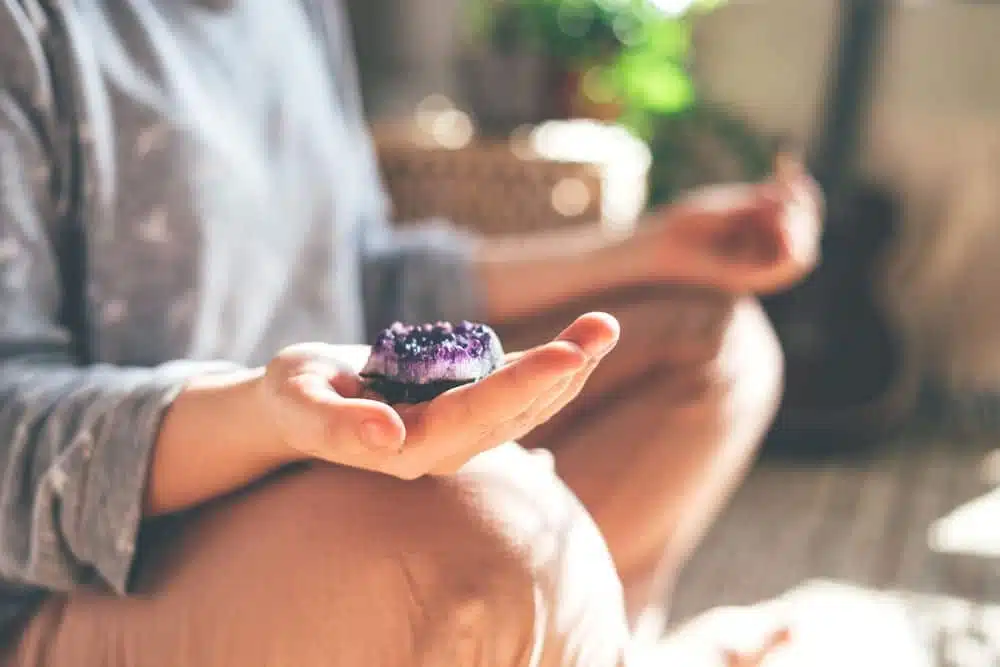
One method we embrace is the therapeutic use of crystals. The effect of crystals is sometimes scoffed at by people who haven’t tried it. Skepticism is good, we encourage it! Always. But empiricism is also good – as in, try it and see what happens.

Through experience and observation, we here at Villa Kali Ma find crystals to be a useful tool. We also don’t find it outlandish to imagine that the same properties that make crystals useful in emitting frequency for use in an ultrasound machine, for example, might make them helpful in balancing the body’s electromagnetic field, too.

That said, we do not recommend trying to get sober using crystals alone. Addiction is a serious medical condition requiring an urgent and intensive treatment response. Getting sober requires medically supervised detox and some months of follow-up treatment in a highly structured setting.

Holistic therapies are powerful healing modalities in their own right, but they are slower and gentler approaches and do not belong as the sole tool in an emergency protocol.

Whatever has brought you to this article today, we invite you to read on, for our exploration of how crystals can be used therapeutically in the journey to recovery from addiction.

What are crystals?

Stone crystals are a type of rock, formed from minerals and combinations of minerals, occurring naturally in the wild. They are also manufactured.

What makes crystals different from other stones is that they have a lattice structure, a repeated crystalline pattern that is consistent throughout the whole stone. These patterns are often beautiful, and under a microscope, strikingly perfect, geometrical, and regular.

Gemstones are usually crystals, such as rubies, emeralds, diamonds, and sapphires. Some crystals are made from a single mineral, as diamonds are created from carbon, but many are made from combinations of minerals. Emeralds, for example, are mostly made of the mineral beryl but include also trace amounts of chromium, vanadium, and iron.

Crystals have many physical properties that contribute to their unique profile and utility in technology as well as therapeutic purposes, such as degree of lightfastness, hardness, piezoelectric effect, and electrical conductivity.

How do crystals work?

Crystals work on the body and its electromagnetic field, through their electro-magnetic conductivity.

Different crystals placed on or near the body will have different effects, either drawing small amounts of current from the human bio-field or flowing small amounts of current into it.

In the context of crystals used in healing, the unique electromagnetic profile of a specific crystal is referred to as its vibration, which determines its therapeutic use.

What are examples of healing crystals?

There are many different therapeutic effects possible through the use of crystals in healing.

The most commonly used healing crystals include clear quartz, rose quartz, selenite, turquoise, agate, amethyst, citrine, obsidian, black tourmaline, and aquamarine, just to name a few. The list of popular healing stones is long.

These crystals are used for specific effects that benefit the physical body, and/or emotional states. For example, turquoise is believed to be de-acidifying, reducing infections, digestion problems, and inflammation. Selenite is commonly used for lessening emotional pain, such as depression and anxiety.

What are the healing effects of crystals for addiction?

We include crystal therapy in our programs at Villa Kali Ma, because like massage and acupuncture, crystal healing is useful for creating safety, ease, comfort, and peace in the body. It is much easier to respond to treatment when the body is feeling safe and relatively pain-free. Crystals balance the human bio-field, creating relief from the emotional distress and physiological discomfort of withdrawal and early sobriety.

Gently stimulating energetic nodes in the body has clarifying, calming, and regulating effects for the patient, as organs that are heavily involved in negative emotions and thoughts, like the heart, lungs, and adrenals, can be corrected to a more neutral, healthful electromagnetic signature.

Healing crystals for alcohol addiction

Alcohol is a common substance of choice for women, with tragic impacts on their minds, bodies, emotions, and relationships. When a woman is recovering from addiction to alcohol, two crystals are considered to be particularly helpful, celestite and amethyst.

Named for its heavenly blue color, celestite has a relaxant, and soothing effects on the body, stimulating the parasympathetic nervous system. The parasympathetic branch of the nervous system is responsible for healing, rest, digestion, and recovering. Whenever you want to encourage the body’s self-healing mechanism, activating the parasympathetic nervous system is key.

Amethyst, a beautiful violet quartz, has been used to help with alcohol’s negative effects for thousands of years. The name comes from the Greek word amethystos, meaning “not intoxicated”. The stone was believed by the ancient Greeks to protect against inebriation.


Healing crystals for cocaine addiction

Women recovering from addiction to cocaine typically have problems with their nervous systems for a time, until they rebalance and rebuild through positive actions over a consistent period.

Since during active addiction, these women used cocaine to overstimulate their sympathetic nervous system, creating artificial energy, excitement, and euphoria, post-acute cocaine withdrawal can be a brutal climb out of a valley of low mood, low energy, and ego deflation.

Crystals that work to raise energy and un-dampen the nervous system, without overstimulating, are helpful.

Rose quartz is a pink stone with gentle stimulating effects, linked to feelings of love and connection. Citrine, a stone associated with enthusiasm and enjoyment, is used for ameliorating low mood.


Healing crystals for heroin and opioid addiction

Heroin, fentanyl, and prescription opioids are powerfully addictive because they temporarily obliterate pain, and at the same time, generate euphoria.

Withdrawal from opioids is a tough experience because it means finding healthy ways to tolerate some pain and dysphoria, during the window of time it takes your body to regenerate its natural state.

Two crystals that can be helpful during post-acute opioid withdrawal and early recovery are aquamarine and howlite.

Aquamarine is a very beautiful blue-green gemstone that helps the lungs and breath. The breath is involved with our ability to self-soothe, trigger the parasympathetic nervous system, and modulate pain both emotional and physical.  The lungs are strongly affected by opioids.

Howlite has anti-inflammatory effects, which can ease physical pain and relieve places of chronic tension that are generating headaches. It is also sedative, bringing calm and relaxation.

How do women use crystals for sobriety?

A life in sobriety has ups and downs, and crystals can help us through without using, in a few different ways.

Crystals for Boosting Mood and Energy

Crystals like jasper and blue apatite can be used to stimulate your energy to bring courage and cheer when you’re feeling discouraged or otherwise low.


Crystals For Calm and Relaxation

Crystals like rhodonite and blue lace agate soothe states of agitation and encourage strong emotions to pass out of the body, for example when triggered.


Crystals for Spirituality

Crystals can be incorporated into a centering spiritual practice like meditation or prayer, used for grounding and self-soothing.

How are crystals for sobriety used?

There are many ways to use crystals to support your sobriety. Here are some ways to begin your journey of exploration.

Placing Crystals on Meridians and Chakras

If you have an understanding of the Chinese system of meridians or the Indian system of chakras, you can use these body maps to experiment with placing crystals on key energy nodes and highways of the body.


Placing Crystals on Parts of the Body that Need Help

You can also place crystals directly on parts of the body that are in pain, such as on your lower back, or key emotional centers in the body, like the heart, solar plexus, or forehead. Holding crystals in your palms is also effective and calming.


Charging Crystals and Setting Intentions

Some people charge crystals by placing them in the sun, or through creating a vibrational field of intentions and focused thought. Essentially, you are programming your crystal to help you in accordance to the way you wish it to.


Using Crystals to Crystallize Water

It is also possible to charge your drinking water and your bathwater with crystals. Some crystals are toxic if consumed internally, though, so research before you try this method.

What are FAQs of crystals for addiction?

Do crystals work for addiction?

Crystals can be part of your mental, emotional, and physical healing process once drugs and alcohol are detoxed out of your system. No therapy, mainstream or alternative, works while you’re still actively using drugs and alcohol, as substances create an overload of toxicity for the body and also interfere with any healing mechanism a modality has.

The only known cure for addiction is to stop using drugs and alcohol completely and to commit to a full transformation of lifestyle, radically changing behavior, thoughts, and feelings.

Crystals can support the hard work a person does to achieve sobriety and recovery, and can be used very effectively to help relieve psychological and physical pain, making treatment easier and more powerfully transformative.


What can using crystals for addiction do, and what can’t it do?

Crystals can balance, regulate, and harmonize your body’s electromagnetic field. Physical illness and unhappy states of mind and mood have certain electromagnetic vibrational signatures, and these can be changed through the application of a crystal that carries the correct vibrational “medicine”.

Through the correction of imbalances, a state of health and harmony can be created. When you are ready to be relieved of an imbalance, crystals can take the imbalance out of your field, and help entrain your field to a more balanced, crystalline, symmetrical state.

Broadly speaking, what crystals don’t do is eliminate a powerful recurring root cause, if you aren’t yet conscious and ready to change it. For example, if you are very anxious because, at a deep unconscious level, you believe that you are not safe, you will also need to repair the core belief consciously before lasting improvements will be noticeable. As with other modalities, including mainstream ones, unconscious trauma can get in the way of the healing powers of crystals.


Where can I start with using crystals for healing?

Intuition is a good guide when it comes to choosing and working with crystals. Just as you might be guided to choose a color to paint your house, or are drawn to certain flowers and scents, the vibrational signature of a crystal may be felt before it is understood mentally.

Start with finding your first healing stone. It is probably best to go to a store rather than purchasing online, because of the physical properties which can be better felt in person. By holding a crystal in your hand you may be able to feel within seconds whether the vibrational signature of electromagnetic effects is a good medicine for your particular needs at this time, or not.

You can also research online or in guidebooks, to get a more comprehensive overview.

Villa Kali Ma uses crystals for addiction treatment

Villa Kali Ma’s core program is built on evidence-based practices which are shown in clinical studies to have the best outcomes for women recovering from addiction, mental health disorders, and trauma.

Into this core, we integrate many ancient healing practices from around the globe. Crystals are used in some of our alternative therapeutic options, such as in our Reiki with Plant Oils and Crystals sessions, and are occasionally incorporated into our earthing, shamanic healing, art therapy, and meditation groups.

If you’re struggling with addiction, we encourage you to reach out and get help right away. If you like the sound of getting world-class treatment and also having the option of learning more about crystals and other holistic methods, consider one of our many programs for women!

Categories
Alcohol Addiction

A Guide to the Effects Alcoholic Mothers Have on Their Daughters

Every woman alive is a daughter. Daughterhood is a deep and archetypal condition, a form we fill out, each in our own ways. All mothers are daughters, too.

The relationship between mother and daughter is like no other. For better or worse, the mothers out of whose bodies and psyches we were forged will always be a source further upstream from us, a wellspring that feeds into our own lifestream.

For those of us with mothers who have also harmed us deeply, we know the peculiar bond braided from love, victimization, and dependency all at once. But nothing is unmixed, even the worst mothers give us something good – if only our own lives.

Those of us who feel mostly positive towards our mothers are still imprinted in such a way that we are forever influenced, and guided into being who we are now partly because of who she is or was.

We are all made out of our mothers. And our daughters are made out of us.

What is the effect an alcoholic mother can have on her daughter?

When a mother is an alcoholic, the effect of that alcoholism on her daughter follows a recognizable pattern. The patterns are predictable, as is the course of alcoholism itself.

Alcoholism shows up in different forms, but has one thing in common – whoever you once were, whoever you could have been, your original self is replaced with an alcoholic version of you.

Daughters of alcoholic mothers suffer greatly at the hands of the alcoholic version of their mother, whether by neglect of basic needs, psychological and physical abuse, exposure to danger, or just the unpredictability and inconsistency of people with addiction. Daughters of alcoholic mothers develop a recognizable syndrome, called “adult child of an alcoholic”, or ACOA.

A daughter of a mother who struggles with alcoholism is likely to:

  • have severe problems with self-esteem, struggling her whole life with guilt, shame, and self-blame
  • be anxious, depressed, and perfectionistic
  • have poor boundaries and internalize her anger (turn against herself rather than get mad at others)
  • develop behavioral health problems (substance addiction, eating disorders, and/or other kinds of self-harm)
  • be diagnosed with a mental illness (panic disorder, generalized anxiety, major depression, ADHD, and so on)
  • have a codependent relationship style, and/or be attracted to partners who also have addiction problems
  • have an ambivalent, avoidant, or disordered attachment style

Codependency, a concept very closely linked to ACOAs, is a kind of psychological syndrome reflecting the dependent child’s adaptation to her mother’s illness.

Codependency is characterized by psychological fusion and role confusion, wherein the child becomes “parentified” and roles get reversed so that in some domains the child meets the parent’s needs rather than the other way around.

In codependent dynamics, a non-substance-addicted person, in this case, the daughter, takes on responsibility for the alcoholic’s life, trying to compensate for their pain, and most of all trying to control the addicted person’s unsafe, unpredictable, and toxic behavior. This enabling and “closeness” (which is actually unhealthy enmeshment) is confused for love.

What strong connection does a mother have with her daughter?

The bond between a mother and her daughter is the most impactful relationship the daughter will ever have. It is the starting place for a daughter, and like the beginning of a story, sets the stage for her hero’s journey.

All children live for a long time in the metaphorical kangaroo pouch of their mother’s psyches. Mothers and babies begin their relationship in a state of merge, a kind of oneness similar to being in love. It is a stage of deep bonding and imprint that can never be undone, no matter what else happens.

Whether that relationship is sweet or fraught, it is a state of fusion. Whatever is true in the mother’s psyche will be shared with her daughter directly, cell to cell, during this stage. A daughter is psychologically part of her mother for many years after the physical parting from her mother’s body at birth.

The process by which a daughter becomes her own being and no longer primarily sourced out of her mother’s body and being is gradual, going through many steps and stages of growth and separation. The individuation process may be said to take decades.

Even when a daughter’s mother has passed on out of the physical realm, the psychological memory and shaping of the mother will persist, as it is not only about the individual person who had the role of being our mother but also the larger archetype of mother, which is collective and universal.

How can a mother break the cycle of addiction?

It is important to know that we can retrieve ourselves from the prison of addiction. It is absolutely possible. It has been done many millions of times, as the large community of recovering people can tell you.

It also isn’t easy and demands that we rise to the occasion of our own lives. Believing ourselves worthy of redemption is hard if we do not value or love ourselves, which many of us don’t.

For many mothers, it may be through the portal of the pain of realizing their impact on their daughters, that they are given the gift of a true desire to change.

If you’re ready, here are the steps to breaking the cycle of addiction, so that what has hurt you, doesn’t go on to hurt more people:

1. Get professional help

It is very difficult to get sober and, more notably, to stay sober permanently, without a total renovation of body, mindset, and emotional habits. This is not a time to go it alone, but rather to get all the help you can.

Addiction is treatable, and recovery is absolutely possible, but it takes some doing. One-on-one psychotherapy, active and frequent participation in healing recovery groups, and behavioral skills training in learning not to react to one’s thoughts, emotions and urges are all generally necessary.

At Villa Kali Ma, we also feel that lifestyle transformations in terms of exercise, diet, and consciousness habits are supportive too. Either way, you can expect to re-envision or update almost everything about yourself and how you have approached life.


2. Educate yourself about the nature of the disease

Knowledge is power. The more we know about addiction and how it operates, the more swiftly we will be able to see it when it comes knocking on our door, asking for us to take it back, as it will most certainly do.

By learning all we can about the biology, psychology, sociology, and even spirituality of addiction and recovery, we will be gifted with more insight and compassion for ourselves, and be armed to the teeth to defend ourselves against relapse.


3. Get into community

Build a support network that is resilient and flexible, ideally made up of loving, wise souls who understand what you’re up against. If you’re not sure where to find such people, start by looking within the walls of recovery meetings like AA. Whether there, or in other communities, remember that actions speak louder than words, and vibration speaks the loudest. Look for the people whose faces are shining with peace and clarity, but who also feel real and relatable to you. Those who have no need to deny your darkness, but also have a source of light inside them, are your people.


4. Look into your Family History

Our lives, as personal as they feel to us, have strong similarities with our forebears. If we struggle with depression or alcoholism, it’s highly likely we’re not the first in our family to do so.

By looking into our family history, perhaps completing a genogram or drawing our family tree as best we can with the information we have, we can gain valuable insights and expand our compassion for ourselves and our whole family system. Understanding a pattern that is being played out in your life can bring enormous relief and help you make different choices.


5. Address the Trauma Factor

It’s important to know that trauma and addiction go together like a horse and carriage. Especially in women, addiction is very frequently rooted in traumatization, from events that took place in childhood or during adolescence, and/or from sexual violation of some kind. Trauma is difficult to recognize until you learn that what you took to be a “normal” state (eg chronic tension or dread) is actually the trauma itself. Getting dedicated help for healing trauma is very often the critical intervention that helps a woman break the cycle of addiction.

What treatment programs are offered for women struggling with alcoholism?

Gender-specific treatment is strongly advised, for women in particular. It is more effective for women to receive treatment among other women than it is for them to get help in mixed-gender settings.

This is for a variety of reasons, most of which stem from the ways that women relate to men, and whether or not women are able to feel physically and psychologically safe around men (and, of course, whether those men are psychologically and physically safe for women). All in all, for women it is preferable to be in a same-sex setting if you can find one that meets your needs.

Addiction treatment exists on a continuum of care, that starts with medically supervised detoxification in a hospital or hospital-like setting and gradually tapers down to outpatient levels of care. Most of these levels of care are available in women-only settings (such as what we at Villa Kali Ma provide).

The levels of care are:

Medically-supervised Detoxification

A short-term, hospital-like stay among medical professionals, who monitor your detoxification process to make sure you detox safely.


Partial Hospitalization

A hybrid treatment setting that retains a strong medical element in case needed, but also begins the treatment and rehabilitation process.


In-patient, or Residential treatment

Traditional rehabilitation setting, in which treatment is administered in a safe, sequestered environment away from normal life.


Intensive Outpatient Treatment

Another hybrid option provides a high level of structure and intensity of treatment services but in an outpatient setting.


Outpatient Treatment

The least intensive level of care is usually recommended as a step-down level for people who have completed higher levels of care.

Where you belong in the continuum of care depends on how long you have been drinking, how old you were when you began drinking, how much alcohol you have been drinking, how frequently you have been drinking, whether you also use prescriptions, and factors like these.

Which level of care you belong in should be determined together with a professional, with input from both of you about what may be needed and necessary in your case.

Villa Kali Ma offers all of the above levels of care in holistic women-only treatment settings.

What are the signs of alcoholism in women?

There are many tell-tale signs of alcoholism, ranging from physical signs, like liver problems, to psychological problems, like anxiety and depression.

The easiest indicator to recognize in oneself or another is out-of-control behavior related to drinking. The following signs can be helpful for recognition of the patterns:

1. Drinking More Than You Mean To in One Sitting

A common experience for people with alcoholism is an inability to set limits on one’s own drinking, within a given drinking event. For example, you may say to yourself, “I need to get up early tomorrow, so tonight I will have just one glass of wine with dinner”, but nevertheless you end up drinking several glasses. The difficulty stopping once started on a particular incidence of drinking, is a sign that alcohol has some growing power over your will.


2. Unable to Cut Down even when you have Good Reasons To

Many people decide at some point to stop drinking altogether for a while or to drink a little less, overall. It is a sign that alcoholism is at play if you find this to be very difficult or even impossible. If you cannot follow a resolution to not drink for a certain period of time, if you are struggling with your own willpower, this indicates alcoholism.


3. Craving alcohol

Women who have developed or are starting to develop alcoholism will experience cravings to drink which feel relatively strong, akin to hunger when you haven’t eaten or thirst when you’re dehydrated. It will feel almost like a bodily need, such as needing to rest when tired. Cravings to drink may kick in after emotional triggers or as a habit at a certain time of the day, as though your body is asking for it.


4. Feeling Bad when you don’t drink: aka withdrawals

Another telltale sign of alcoholism underway is if, in the absence of alcohol, you start to feel bad physically, mentally, and/or emotionally. This is the body withdrawing from alcohol. The pain can be as subtle as an uptick in unease or grumpiness, or it can be so severe that you can’t function normally due to headaches or trembling, and you find you need to consume some alcohol to return to your normal state. Eventually, withdrawals can become part of your daily life. Withdrawal symptoms include nausea, sweating, trembling, anxiety, headaches, and delirium.


5. Needing to drink more to get the same effect: tolerance

Tolerance is part of all substance addiction. Tolerance means that what used to be enough alcohol to make you drunk or get the relaxant effect you are after, is no longer sufficient, leading you to drink more and more to get the same effect. Eventually, alcoholics no longer get any pleasure or peace from drinking, and instead drink just to stave off the pain of withdrawals.

Why is it important for a mother to be a good role model for her daughter and for herself?

We believe that women matter. All women. Me, you, all of us here at Villa Kali Ma, all women everywhere.

If you’re a mother, don’t ever fall for the mean voice inside that says you don’t matter to your daughter. Even if it doesn’t seem like it, you matter more than you will ever know, and to your daughter most of all. A mother-daughter relationship is forever, and as long as you are both still here, in living, breathing bodies, you have a chance to start again.

Every daughter counts, and you’re a daughter too. You can be the mother that you need, and the mother your daughter needs, all in the same breath.

Villa Kali Ma can help women struggling with alcoholism

Villa Kali Ma offers addiction treatment and recovery programs for women who suffer from alcoholism, trauma, and/or mental health struggles. We welcome mothers, daughters, sisters, and all the women of this world, into the heart of our program of care. We are here to help you throw off the burdens of addiction and to claim your right to live fully and freely, as best you can, in the light that you actually already are.

Categories
Alcohol Addiction

What are the Emotional Effects of Alcohol?

There is a reason that nearly 12 million women in the United States alone qualify for an alcohol use disorder. The way that alcohol affects the mind, body, and mood is addictive, generating the phenomena of craving, tolerance, and withdrawal.

But how does alcohol affect our feelings? Any woman who has wrested her life back from the octopus arms of addiction will tell you: that alcohol starts out friendly, helping us feel more social, open, and relaxed. But before too long, alcohol amplifies shame, guilt, anger, stress, trauma, depression, and anxiety. For those who don’t get out of alcoholism’s grip in time, their last days are spent in pure insanity.

Read on for Villa Kali Ma’s exploration of how alcoholism takes away a woman’s ability to feel her feelings. All the more reason to devote ourselves, once again, to the bright, true path of recovery.

What are the emotional effects of alcohol?

Here are a few of the ways that alcohol makes us feel bad.

How Alcohol Affects Women with PTSD

There is a strong connection between traumatization and addiction. The link goes in both directions; women who drink are more likely to develop post-traumatic stress disorder than women who don’t, and women who already have PTSD or complex trauma are more likely to become addicted to substances, including alcohol.

Alcohol, like all addictive substances, has a negative interaction with trauma, causing greater levels of dissociation, intensity of traumatic memory, flashbacks, and reenactment compulsion. This is because alcohol further prevents the processing and release of traumatic memories, so the distress coming from damage to survival instincts, which people with PTSD must learn how to release, is doubly locked inside the body.


How Alcohol Interacts with Stress

For the same reasons that alcohol interacts negatively with traumatic stress, it also interacts negatively with everyday life stress, such as the stress associated with parenting and work. The body’s stress processing pathways – heart, stomach, breath, and nervous system – are deteriorated by alcohol. The consequences of alcoholism also bring more stressful events into a woman’s life, in the form of legal, financial, and relationship problems.


How Alcohol Interacts with Depression

Alcohol generates depression as a side effect, even though many women also use it to self-medicate their pre-existing depression. The longer-term impact on physiology is to reduce levels of happiness and good mood, through disrupting neurotransmitter and hormone production and circulation in the body, as well as re-routing patterns of brain and nervous system functioning.

Alcohol also depletes the body of vitamins, minerals, and nutrients, which are vital to the maintenance of positive mood. Alcohol gradually poisons the liver and sickens the body, such that the body’s ability to eliminate toxins is impaired.
Feeling ill in the body and having a heavy load of toxins and inflammation are both correlated with depression.


How Alcohol Interacts with Anxiety

Anxiety is a side effect of alcohol and a withdrawal symptom from alcohol. Women who turn to alcohol for its calming, relaxant, and socially lubricating effects have to eventually face the reverse impact when the body no longer has enough of the substance to recreate the effect.

The pattern of chronic anxiety is deepened through the repetitive use of alcohol, and alcohol gets in the way of the body’s ability to find nervous system healing through positive methods like exercise, nutrition, and meditation.


How Alcohol Interacts with Anger

We need boundaries that protect ourselves and others, and healthy anger can be part of recognizing a boundary. A temporary emotional state of anger can be used as a signal to take action to protect ourselves and other vulnerable who are counting on us to defend them, such as our children or pets.

Rage, on the other hand, is out of control, explosive anger that hurts ourselves and others. Rage is not helpful for resolving conflicts or getting our needs addressed. Rage is adversely affected by alcohol abuse. Women who abuse alcohol gradually become more and more rageful over time.


How Alcohol Affects a Woman’s Self-Esteem

Alcohol reinforces shame severely. Shame is the feeling that you don’t deserve to be loved or to belong in the group. It is one of the most difficult emotions to endure.

When you’re already depressed, angry, and anxious, the chronic and relentless shame that people with addiction feel can be a killer. Many women with substance use disorders take their own lives.

There is a stigma associated with addiction, and the life consequences of alcoholism, such as health problems, physical ravages, job loss, financial trouble, DUIs, loss of custody, and so on, are also stigmatized.


How Alcohol Affects Social Interactions

Alcoholism leads to social isolation. Due to the changes in personality that take place with alcoholism, sober people and moderate drinkers don’t want to be around us and we don’t want to be around them. It is hard for caring people to witness our self-destruction and not be able to do anything about it. All of these reasons, and more, lead to a loss of family, friends, and social belonging.


How Alcohol Affects Intimate Relationships

Alcohol corrodes intimacy. In addition to psychological impacts that generate more rage, stress, depression, and anxiety, alcoholics make bad choices, bringing on financial and legal trouble.

Alcohol is linked to domestic violence (for victims too), emotional volatility, fights, and reckless behavior, like crashing cars, infidelity, and spending sprees. People who love us may eventually leave for their own well-being. The people who stay with us get sick with codependency, which harms them considerably.

How does alcohol affect the human brain?

Alcohol is first absorbed into the blood and then transmitted to the brain. Once in the brain, alcohol affects our supply of neurotransmitters and hormones. These tiny chemical messengers are involved in regulating and balancing all vital systems. The connection between alcohol and menopause is particularly significant because hormonal fluctuations during menopause can amplify the effects of alcohol on neurotransmitters and overall mental health.

If we do not have enough of the right kinds of these molecules, many pathways are disrupted and thrown out of whack. Some neurotransmitters which are known to be disturbed by alcohol are GABA, serotonin, and dopamine.

A very simplified analogy for thinking about this is: that alcohol breaks into the storehouse of neurotransmitters and releases them artificially, thereby cheating the system and spending them when we haven’t yet earned them.

An alcohol-induced GABA spike creates sedation, and a release of concentrated dopamine feels like pleasure. Sedation and pleasure are addictive, leading us to want to drink alcohol again and again. When the physical toxicity and negative emotional impacts of alcohol kick in, we are liable to want that borrowed pleasure and sedation even more.

The problem with breaking into the storehouse is that the required levels of these transmitters are gone when we need them for other bodily operations.

These molecules are supposed to be used for operating the body, as well as for natural reward and relaxation processes. They are ordinarily released as a cascade when we are doing life-affirming activities: after exercise, sleep, emotional connection, creativity, and procreation. Normally, we would feel pleasure as a reward for behavior that is good for life (our own and other people’s).

For example, the natural pleasure that a mother and her baby feel when a mother is nursing her newborn, or that two people feel when falling in love, or which a grandmother feels while gardening in the sun, are hormonal and neurotransmitter cascades saying “yes, this is good for you”.

If we deplete our supply of biological reward hormones and neurotransmitters through using drugs and alcohol, we eventually aren’t able to feel enjoyment naturally anymore. This can all be restored through a life of recovery, but it takes some time to replenish after addiction.

What influences alcohol’s impact on your brain?

How much influence alcohol will have on your brain depends on how much exposure you have had. The amount of alcohol you drink, how often you drink, how old you were when you began drinking, and for how many years total you have been drinking, are all predictors of how much impact alcohol will have on your brain. More alcohol over the same period of time means more impact. Also, the earlier in your development you start using alcohol, the greater the impact.

Another factor to consider is your baseline physical and mental health. If you have a physical or mental illness, then alcohol has a greater impact on you.

What parts of the brain does alcohol affect?

Alcohol affects multiple centers in the brain that are connected to mood, motor control, thought, sensation, and decisions.

Alcohol inhibits some brain functions and stimulates other functions. The frontal lobe, which moderates aggressive behavior, helps us make rational decisions and overrides impulsive urges, is inhibited by alcohol and can be damaged.

Alcohol also stimulates the limbic system, explaining why it can make people feel happy, affectionate, and connected in the short term, but also why sadness and other more difficult emotions exist in abundance in alcoholics.

Alcohol-related brain damage in women

In recent decades the impact of chronic alcohol abuse on the brain has been studied more closely. Brain imaging reveals what appear to be areas of damage in the brains of alcoholics, in key centers related to emotion. These areas of brain damage corroborate the already observable phenomena of extreme mood swings and out-of-control behavior in alcoholics.

Women are more at risk of alcohol-related brain damage than men, due to our physiological differences. We are also more prone to experiencing blackouts, which harm short and long-term memory, showing up as shrinkage in function-specific centers of the brain. What this generally means for women is chronic problems with anxiety, depression, and anger, as well as difficulty with memory and decisions.

How does alcohol affect your mental health?

Mental health is deeply disrupted by alcohol. For people who have no pre-existing mental health problems, alcoholism instills them, bringing on depression, anxiety, and in later stages, psychosis. For people who have a pre-existing or co-occurring mental health problem, including trauma-related disorders, alcohol makes these worse, deepening them and interfering with healing them.

People with severe and chronic mental health problems, such as bipolar disorder and major depression, often use alcohol to self-medicate, but its impact is very destructive in the long run, aggravating both mania and depression.

Overcome the emotional effects of alcohol today!

When our emotions are working as nature intended, we have vivid, active hearts. Our emotions guide and comfort us. When joy comes, we feel it fully. We can also tolerate and pass through the tenderness of sorrow. We play the full, grand piano range of emotional notes.

All that makes life worth living, is recognized by how it feels. Alcohol takes this birthright from us. It darkens our hearts.

Through sobriety, it’s possible to start over. Villa Kali Ma is a unique, women-only holistic treatment provider, specializing in recovery from addiction, co-occurring mental health disorders, and/or trauma. If you’re looking to recover your right to feel good in your own heart, body, and mind, we’d love to work with you!

Accessibility Toolbar

Exit mobile version