
Categories
General

The Role of Hormones in Addiction and Recovery for Women 

In recent decades, more focus has been given to differences between men and women when it comes to substance use disorders. Several gender differences have been observed, in each phase of addiction and recovery.

In terms of raw numbers, more men than women use substances – men are about twice as likely to consume drugs and alcohol as women are.  (The exception to this is prescription painkillers and tranquilizers, where studies suggest women are on equal footing with men). The women who do use drugs and alcohol, a number which is on the rise, are more vulnerable to developing problems stemming from those substances, and to struggle throughout the recovery process.

Women move more quickly through the stages of addiction, from initial exposure to a substance to dependence upon it. It takes less of a substance to affect a woman’s physiology, and health impacts are more severe. Women are more sensitive to cravings, experience more vivid mental emotional suffering during withdrawals, and are more prone to relapse.

Although the topic merits a lot more research, one consideration is the role of women’s hormones. As every woman knows, our hormonal systems are complex, such that we experience several hormonal shifts every month. These variations notoriously affect our mood, thoughts, and physical sensations.

It is perhaps no surprise that the hormonal aspect of the female experience interfaces with the topic of addiction. In this blog, we’ll look closer at what is currently known about women’s hormones and addiction.

Understanding hormones and their functions 

Hormones are tiny molecules that travel throughout the systems of the body, serving as chemical messengers. Chemical messengers are substances that communicate commands to activate or inhibit a body part or system.

Hormones are produced by glands, and are part of our endocrine system. They are released into the bloodstream and carried to organs and tissues, where they act upon those organs and tissues to excite or dampen them.

Hormones are responsible for balancing the body’s many systems, including metabolism. They are critical for restoring homeostasis, keeping body systems regulated and in check. Hormones also circulate in the brain, where they are intimately involved in triggering and modulating the stress response.

How do hormones impact addiction? 

Stress is connected to the release of a hormone called cortisol, which generates the uncomfortable feelings of stress, dread and agitation we feel when the body perceives a danger or threat to our survival or belonging to the herd.

High levels of cortisol over a sustained period of time is what leads to chronic stress. Too much cortisol in the body is linked to vulnerability to addiction, and also describes what happens to the body after traumatization.

Serotonin and dopamine are two other hormones which are involved in regulating mood and behavior. Adrenalin, oxytocin (the “love hormone”) and endorphin (the body’s natural painkiller) are hormones, too. Each of these hormones has a job which can be temporarily boosted or reduced through using drugs, alcohol, and prescriptions.

People who fall into the trap of addiction do so because these powerful systems of mood regulation, pain modulation, and reward become dysregulated through the introduction of chemicals which are foreign to the body. The dazzlingly complex operation of hormones in creating the human experience is still only slightly understood, but it has been established that hormones are affected, hijacked and depleted by substance abuse.

Which certain hormone phases are connected with addiction? 

The primary female sex hormones are progesterone and estrogen. These two hormones are important throughout the entire life cycle of women, affecting puberty, menstruation, PMS, pregnancy, menopause, and elderhood.

During reproductive years, estrogen is high during the first two weeks of a woman’s menstrual cycle. In this phase, women are more likely to experience feelings of happiness, positive mood, and to experience less cortisol and adrenalin, two hormones linked to the discomfort of stress and trauma.

Progesterone appears once ovulation occurs. Progesterone is linked to the area of the brain that is responsible for triggering a sense of alarm when perceiving danger, and is believed to be the cause of the moodiness associated with PMS. Progesterone is connected to higher levels of cortisol, which explains why women feel irritable and sensitive to stressors, as well as to triggers of traumatic memory during this phase.

Women who have a predisposition to higher levels of cortisol to begin with, such as happens with trauma, are likely to seek some sort of modulating substance during these two weeks of the cycle, whether it be eating fatty, high calorie foods or turning to drugs and alcohol. Women who are in recovery are more prone to relapse during these two weeks.

The operations of these hormones and the ways that they interact with other hormones like serotonin, dopamine, cortisol, oxytocin, and endorphins is incredibly intricate, subtle, and complex. It is important not to oversimplify, nor to imagine that any of these hormones operates out of a context of supreme interdependence.

It is safe to acknowledge, however, that during phases of the cycle when we experience higher amounts of progesterone, as during PMS, we are more likely to experience the feelings of unease and unhappiness which underly self-medicating behaviors.

What is estrogen’s link to substance abuse?

Estrogen is linked to sensitivity to pleasure. The interactions between addictive substances and estrogen may be such that women’s response to addictive substances is especially powerful during this stage, as one study on the effects of stimulants like cocaine in women has indicated. This suggests that women who have high estrogen levels may be more likely to become addicted to substances, as well as to form a powerful association between getting high and this stage of the menstrual cycle.

How does progesterone lower drug seeking behaviors?

When progesterone levels fall, estrogen becomes the dominant hormone, which may make women more sensitive to the effects of drugs and alcohol. During progesterone-dominant phases, women experience less sensitivity and responsiveness to the same chemical substance.

What are key hormones involved in substance use disorders?

Several hormones have an important role in the body when it comes to substance abuse and recovery. Awareness of these hormones and their relevance to addiction may inform the way that we approach treatment.

Cortisol

Released by the adrenal glands in response to a perception (or memory) of danger or threat, cortisol is often called “the stress hormone”. Cortisol prepares the body to act swiftly, as may be needed to run away from, fight off, or freeze to mitigate the effects of harm.

Cortisol is intended by nature to be a short-term, emergency solution, and it works by spiking blood sugar levels to fill the body with energy, momentarily suppressing the restorative, digestive, and immune systems. The condition of chronically high cortisol levels is also present in people with trauma and people who have high levels of stress as a daily experience.

People who experience chronically high levels of cortisol are at risk to develop substance use disorders. Elevated cortisol levels also increase the risk of relapse once in recovery.

Serotonin

Serotonin is a neurotransmitter influencing mood, sleep, and appetite. Serotonin levels are believed to explain the presence of mood disturbances like depression and anxiety. Drugs and alcohol change the level of available serotonin in the body. This impact on serotonin levels explains why people who are used to chronic mood disturbances tend to turn to drugs and alcohol to try to change serotonin levels. It also explains why, after drugs and alcohol have depleted serotonin levels, people will experience depression and anxiety symptoms.

Dopamine

Dopamine is the neurotransmitter connected to the brain’s reward circuit. Dopamine is released when we are behaving in ways that led to social or physiological rewards in the past. Dopamine feels pleasurable, and it is meant to reinforce behaviors that are good for the physiology’s health and longer term survival. Drugs and alcohol are believed to hijack the reward system, releasing dopamine artificially, even though we are not behaving in life-affirming ways.

Endorphins

Endorphins are produced naturally in the body when we experience pain. Endorphins interact with the brain’s opiate receptors, lessening pain and creating feelings of euphoria. Endorphins are meant to be released only in occasional cases of injury and pain. Opioids and other addictive substances were designed to bind to the same receptors in the brain, to induce euphoria and numbing. They are highly addictive due to the combination of painkilling and euphoria-boosting. Problematically, using substances reduces the body’s ability to produce endorphins naturally.

Norepinephrine

Essential for alertness and focus, norepinephrine is a hormone and neurotransmitter involved in the body’s high arousal system, or fight-flight. Stimulants like cocaine affect norepinephrine levels, temporarily boosting energy and concentration, while also triggering anxiety and leading to severe dependence.

GABA (Gamma-Aminobutyric Acid)

GABA is a neurotransmitter that inhibits nervous system activity, creating feelings of calm and relaxation. It works as a brake, dampening the effects of other hormones and helping the body to move into parasympathetic, or restoration and digestion states. Substances like tranquilizers and alcohol enhance GABA’s effects, initially creating feelings of well-being, and eventually leading to greater feelings of anxiety and cravings to use.

Gender differences in hormonal impact

The differences between men and women due to hormones have implications for treatment. Women can experience greater success in recovery from addiction when armed with the awareness of how their hormones influence mood, motivation, stress, and sensitivity. By tracking their hormonal cycles in tandem with substance abuse treatment, women can be prepared for phases of the month which represent different challenges, and take proactive steps to protect themselves from fluctuations in mood and urges to act destructively.

Hormonal changes across life stages

Fluctuating hormone levels affect women’s responsiveness to substances and vulnerability to relapse. Understanding how hormones feature in different stages of a woman’s life can be helpful for supporting recovery.  Here is an overview of how stages of life imply different hormonal considerations.

Adolescence

During adolescence, girls experience extreme fluctuations in sex hormones, making them more susceptible to risk-taking behaviors such as experimentation with drugs and alcohol. They are also more sensitive to the effects of alcohol and drugs. Exposure to drugs and alcohol during adolescence is highly correlated to long-term problems with neurotransmitter functioning, and vulnerability to addiction.

Pregnancy

During pregnancy, women experience a wash of hormones that can affect urges to use substances. Estrogen and progesterone changes impact stress and mood levels. Using substances during pregnancy can harm mother and fetus significantly.

Menopause

The decrease in estrogen associated with menopause may be experienced as depression, anxiety, and rapid fluctuation between moods. Women who have a history of using substances to cope with their unpleasant sensations and emotions are at a greater risk of relapse during this phase of life.

The role of stress and coping mechanisms

The role of stress is extremely important in addiction. When the stress system is activated, cortisol levels increase and positive feeling hormones and neurotransmitters are inhibited.

When experiencing chronic stress, the body is exposed to toxic levels of cortisol, which has negative health effects, leading to disease. When cortisol is present in the bloodstream, it is experienced subjectively as unease, dread, and agitation. When the nervous system is permanently dysregulated, a person can’t easily reduce cortisol back to normal levels naturally.

Being in a state of frequent cortisol activation, as happens when we grew up in an environment of many survival threats, leads women to self-medicating behaviors. These behaviors occur out of desperation to get a break from over-activation of sensations of dread, fear, and lack of safety.

During recovery, it is important to understand the role of stress, and to find coping mechanisms that heal chronic hyperarousal, such as tools from somatic therapy, yoga, nutrition, and mindfulness based therapies.

Integrating Hormonal Considerations into Treatment Plans

When working with women to recover from substances, hormonal considerations can be incorporated into treatment plans. Hormone levels may be tested, menstrual cycle tracking included as a part of teaching self-care and stress management practices, and stage of life considered in terms of hormonal impacts for women.

Impact of Hormones on Substance Use Disorders

In gender specific addiction treatment, such as that offered by Villa Kali Ma, the role of hormones in creating lasting peace and feelings of wellbeing in recovery can be safely explored. The impacts of hormonal phases and fluctuations can be  acknowledged and incorporated into healing work, to support women to understand their experiences and needs more compassionately. Each woman is unique and deserves to be met where she is at, hormonally as well as in every other way.

Categories
General

Substance Abuse in Women: Statistics

Substance Abuse among women is on the rise. Here are some statistics reflecting information gathered in the most recent national surveys and studies.

Substance Abuse Statistics for Women 

The following statistics are from the National Center for Drug Abuse Statistics and from the National Institute on Alcohol Abuse and Alcoholism.

  • An estimated 12 million women in the United States qualify for Alcohol Use Disorder, about 8% of all women in America
  • 17% of women have used drugs in the past year
  • 5% of women abuse opioids
  • 2% of women use heroin
  • 4% of women abuse prescription pain killers; 9 million women have a prescription opioid abuse problem
  • 4 million women abuse Hydrocodone
  • 4 million women abuse Oxycodone
  • 125,000 women abuse Fentanyl
  • 5% of women use cocaine
  • 4% of women use methamphetamines
  • 6% of women misuse prescription stimulants
  • 5% of women use marijuana
  • 0% of women abuse prescription tranquilizers
  • 5% of women abuse prescription sedatives
  • 20% of people in drug treatment are women

Substance Abuse Differences between Men and Women

There are gender differences among men and women with substance use disorders. According to statistics gathered in large-scale studies comparing the genders, men are around twice as likely as women to abuse substances, except in the case of prescription narcotics (opioid medications) and tranquilizers, where the numbers are more equal.

Though men are more likely than women to abuse substances, women who do abuse substances are more likely than men to develop tolerance, become dependent, and develop an addiction. Women are also more likely to have adverse health effects from using substances, such as liver damage and psychological problems like depression and anxiety. Women progress more quickly than men from initial exposure to a substance to needing substance abuse treatment, a phenomenon called telescoping.

When women enter treatment, they present in worse condition than men, in spite of having used a smaller amount of the substance, for a shorter period of time. Women who use substances are more likely than men who use substances to have additional psychological, behavioral, medical, and social problems alongside their substance use disorder, and to qualify for a diagnosis of PTSD.

Hormonal differences between men and women are currently believed to have a role in women’s greater sensitivity to substances, as well as their greater vulnerability to relapse. Ovarian steroid hormones (estrogen and progesterone) and sex differences in how GABA-A and DHEA are processed may have an influence on drug related behavior. During phases of the menstrual cycle when progesterone is low and estrogen is higher, women are more sensitive to the effects of substances. They are also more likely to experience vulnerability to cravings, negative emotions, and impulsive behavior which can interfere with progress towards sobriety.

Relapse vulnerability may also be explained in part by sex differences in neuroendocrine adaptations to stress. Women are more likely than men to have what’s called hypothalamic-pituitary-adreonocortical (HPA) dysregulation, which means that women experience greater emotional intensity at lower levels of arousal of the stress system. This means women subjectively experience the triggered state more vividly than men with a comparable substance use history.

The role of co-occurring disorders is also important to consider. Women are significantly more likely than men to have a lifelong diagnosis of a mood or anxiety disorder than men. Women who use substances are also significantly more likely to have a co-occurring eating disorder, such as bulimia. Finally, the link between post-traumatic stress disorders and substance abuse in women is critical to acknowledge, with the majority of women who enter treatment qualifying for PTSD or complex PTSD.

Alcohol

Alcohol is the most commonly abused substance in the United States. In the past, cultural norms that inhibited women from drinking alcohol meant that women were less likely to become addicted to alcohol than men. The gap between the genders when it comes to alcohol abuse has lessened over time, and the number of women presenting with a need for treatment for their alcohol use is ever on the rise.

Particularly troublesome is the fact that women are more likely to develop dependence on alcohol than men, while consuming lower levels of alcohol. Women progress through the phases of alcohol addiction more swiftly, and are more vulnerable to relapse once sober.

Health impacts of alcohol abuse are also stronger on women, with women more likely to manifest disease and tissue damage. Among people diagnosed with alcohol use disorder, women have a higher death rate, due to suicide, alcohol-related accidents, stroke, and liver disease.

Women are more likely than men to struggle with co-occurring conditions that complicate recovery, such as trauma and mental health disorders. Women are less likely than men to seek treatment, and to face gender specific barriers in treatment, such as financial problems and childcare issues.

Benzodiazepines

Alcohol use may have been socially unacceptable, but women have always been prone to becoming addicted to prescription depressants with similar effects to alcohol, such as tranquilizers and sedatives prescribed by their doctors to treat “nervous disorders”.

Contemporary prescription depressants, like the benzodiazepine class of drugs (Xanax and Klonopin, for example), continue to be popular drugs of abuse among women, often leading to severe dependency with multiple health impacts.

This situation may be owed in part to the ways that trauma is misunderstood and the ways that gender affects expressions of distress externally; women are more likely than men to be diagnosed with an anxiety disorder, and consequently to be prescribed addictive pharmaceuticals as a way to reign in symptoms of chronic nervous system hyperarousal.

Opioids

Opioids are a serious problem for both genders. However, women are generally more sensitive to pain, and more likely to be diagnosed with a chronic pain related syndrome, which can lead to a prescription for opioid pharmaceuticals, introducing the addictive substance to the more substance-sensitive and habit-forming female body.

Given the same exposure levels, women are faster to develop tolerance, dependence, and to spiral into addiction. Nevertheless, men are more likely to die from an opioid overdose than women, though recent death tolls indicate that female death by opioid overdose is rising by faster numbers than male opioid deaths. Women are less likely to inject an opioid intravenously, such as heroin or fentanyl. However, if they do, they are more likely to overdose.

Marijuana

Marijuana is the most popular illicit substance in the United States, with almost 100 million Americans self-reporting that they have tried it – about 40% of the population at the time of the 2003 National Study on Drug Use and Health. Women are less likely than men to use marijuana daily, and begin using marijuana at a later age, on average. Marijuana use may be linked, for some women, to stages of the menstrual cycle, particularly for women who have severe PMS or a diagnosis of Premenstrual Dysphoric Disorder.

The effects of marijuana may also be different for men and women. Women are more likely to move faster through the stages of addiction, developing dependency after a shorter period of use than a male using the same amount. Adverse impacts on memory and attention have been observed to affect women more strongly than men, as well.

Stimulants: Cocaine and Meth

The interactions between hormones and the effects of stimulants may explain why women are more sensitive to cocaine’s effects, including its addictiveness, than men. There is a link between estrogen and sensitivity to stimulants according to one study on cocaine, which may reinforce the addiction cycle in women.

As with other classes of addictive substances, women are generally less likely than men to try stimulants. If they do experiment with stimulants, however, including prescription stimulants like Ritalin, women tend to progress through the stages of addiction more quickly than men.

Women experience greater effects and stronger dependence from lower levels of the substance, as well as worse health impacts. Women struggle more with mood dysregulation, cravings, and relapse once sober.

Ecstasy

MDMA, or Ecstasy, is a stimulant and hallucinogen. Some findings suggest that women experience more euphoria under the influence of ecstasy, stronger hallucinations, and more depression following ecstasy use, than men do.

Prescription Drugs

There are three categories of prescription drugs which represent a serious risk of addiction: benzodiazepines, opioids, and stimulants.

The benzodiazepine class of drugs (tranquilizers and sedatives, such as Xanax and Klonopin), is a common source of addiction among women.

Prescription opioids are also a widespread problem. Although men and women suffer in equal numbers, it’s important to recognize that medications like OxyContin have been widely diagnosed to women due to their greater sensitivity to pain and their greater likelihood of being diagnosed with chronic pain.

Prescription stimulants like Ritalin and Adderal, commonly used to manage symptoms of ADHD, are also prone to abuse and addiction. While women are still less likely than men to be diagnosed with ADHD, more and more women are being diagnosed as criteria are expanded to include less obviously disruptive symptoms of the disorder.

If prescribed a stimulant for their ADHD, or if experimenting recreationally with ADHD medications, women are more likely to have an addictive response to it, more likely to move from use to abuse, and on to dependence.

Why are women in recovery more susceptible to cravings and relapse?

Once women enter treatment and begin a life in recovery, they are more prone to experience intense cravings and to succumb to relapse than men. This difference is owed to a few factors, including fluctuations in hormones that mean women experience changes in mood and levels of stress each month, as well as throughout different life stages and transitions.

Estrogen, as a hormone linked to feelings of pleasure and well-being, is linked to women’s greater sensitivity to habit forming experiences of euphoria. Progesterone, on the flip side, is linked to greater feelings of stress, irritability, and depressed mood. The complicated dance between female hormones and the other key neurotransmitters responsible for mood, motivation, reward, pain, and stress, create a greater overall risk, due to more vivid cravings and stronger urges to self-medicate for emotional reasons.

Beyond hormonal considerations, women are more likely to suffer from co-occurring mental health disorders and traumatization than men. This means that upon achieving a measure of basic sobriety and stability, more women than men have the immediate and challenging task of facing a pre-existing condition of chronic painful emotions and states.

The high incidence of sexual trauma history among women who use substances also explains the challenges many women face once they stop using substances. They must quickly stabilize new behaviors and coping tools that really work to reduce the severe distress of trauma symptoms, or they will find themselves turning to substances again to modulate their intense experiences as before.

Overcome Substance Abuse in Women

Everything about addiction is different for women, and recovery is different too. Women report different reasons for using drugs and alcohol in the first place. Women have different pre-existing conditions, from the basics of biology to the many vulnerabilities inherent to being female in our society. What drives a woman to latch on to certain substances as a strategy for coping with chronically disturbed emotions, can be quite opposite from the reasons the man next to her reaches for the same tool. Once in recovery, the intense, ever-changing emotional waters that women are immersed in by nature, affect and inform their experiences of recovery. Our more emotional and relationship-oriented connection styles, once healed, become vast resources for profound transformation.

For all of these reasons, and more, we believe in our hearts that supporting women in gender specific treatment environments is the key to healing womankind from the triple burdens of addiction, mental illness, and trauma. Our many programs for women reflect the value we place on women’s experiences, and how much we want to do to help women to flourish in this world, for the benefit of all.

Categories
General

The Basics: Defining How Much Alcohol is Too Much

There are several troublesome effects for human physiology that come from consuming alcohol. The greater the amount of alcohol consumed, the faster it is consumed, and the more frequently it is consumed all affect the total impact negative impact alcohol has.

In this article, we’ll look closer at the basics of drinking, and how to know when alcohol consumption is at a point where adverse health effects, including addiction, are likely to come into play.

What counts as a drink? 

In the United States, the standard drink is defined as any beverage containing 14 grams, or around .6 fluid ounces, of pure ethanol, regardless of the total ounces of the drink.

A 12 ounce beer, a 5 ounce glass of wine, and a shot of 1.5 ounces of hard liquor each count as one drink. Beer usually has around a 5% alcohol level, wine around a 12% alcohol level, and spirits a 40% alcohol level, hence the different overall volumes.

Within each of these types of alcoholic beverages, there are variations, with some versions having higher concentrations of alcohol. Some craft beers, for example, are more like 8 or 9% alcohol. The average bottle of wine, at 12% alcohol, is five drinks, but when the alcohol concentration is higher, as in some wines, the number of drinks counted is higher. Many cocktails include more than one drink’s worth of alcohol.

How many drinks are in common containers? 

Alcoholic beverages are packaged in standardized ways, so you can calculate how many drinks are included in a given container.

Regular beer, with a concentration of 5% alcohol by volume, is served in containers of 12 fluid ounces (1 drink), 16 fluid ounces (1.3 drinks), 22 fluid ounces (2 drinks), and 40 fluid ounces (3.3 drinks). Malt liquor, with a higher concentration of 7% alcohol, is packaged in containers of 12 ounces (1.5 drinks), 16 fluid ounces (2 drinks), 22 fluid ounces (2.5 drinks), and 40ounces (4.5 drinks).

Table wine, usually 12% alcohol, comes in containers of 750 ml (5 drinks).

80-proof distilled spirits, 40% alcohol, come in single shot containers (1 drink), in mixed drinks (1 or more drinks), in a 200ml half pint bottle (4.5 drinks), in 375ml pint bottles (8.5 drinks), 750 ml “fifth” bottles (17 drinks), and 1.5 L “magnum” bottles (34 drinks).

When is having any alcohol too much?

There are several situations in which people should avoid alcohol altogether. Here are some of the most common reasons to decide not to drink at all:

  1. Medications

Many common medications cannot be safely consumed together with alcohol. Some are made ineffective, and many have disastrous effects when taken in combination with alcohol. It is very important to pay attention to this factor when using prescriptions for any purpose.

  1. Pregnancy

Women who are trying to get pregnant, and women who are pregnant, should avoid drinking, for their own health implications as well as that of the potential baby’s.

  1. Medical conditions affected by drinking

Many medical conditions are made much worse by drinking, such as diabetes and liver disease. This includes mental health diagnoses, such as bipolar disorder, depression, and anxiety. Chronic pain is also adversely affected by drinking.

  1. Underage

People who have not yet matured to adulthood are significantly more impacted by the damaging effects of alcohol and other drugs. People under the age of 21 are vulnerable to changing their body’s basic functioning permanently if they drink alcohol, especially to excess, but even at moderate levels.

  1. Facial Flushing and Dizziness when Drinking

Around a third of people with East Asian heritage possess a genetic enzyme deficiency which makes alcohol unsafe for them. Symptoms of flushing and dizziness indicate the presence of this condition, which increases risk for alcohol related cancers like head and neck cancer, even with only light use of alcohol.

  1. People who are planning to drive a vehicle or operate machinery

It is not safe to combine any amount of alcohol with driving or using equipment.

What are the U.S. Dietary Guidelines on alcohol consumption? 

The US Dietary Guidelines (https://www.dietaryguidelines.gov/resources/2020-2025-dietary-guidelines-online-materials) state that for adult women who choose to drink alcohol, it is recommended that they have maximum one drink per day.

The one drink a day guideline for women is not meant as an average, but as a daily limit. Drinking beyond this amount brings blood alcohol levels into range where there are physiological consequences of a negative nature.

The notion that light to moderate drinking is healthy is prevalent. However, more recent research has cast doubt on this common dictum. Past studies may have confused the impacts of light to moderate drinking with co-existing factors like healthy diet and other behavioral differences. More recent studies show evidence than even light to moderate drinking increases risk factors for several serious conditions, such as cancer and heart disease.

The updated picture of the impacts of alcohol use is as follows: people who do not drink at all have several health advantages over those that do, in terms of less risk of cancer and other diseases. Among people who do drink, the less alcohol a person consumes, the better it is for their long term health and longevity.

What is heavy drinking? 

Heavy drinking is a term that encompasses binge drinking, and it refers to women drinking four or more drinks on any given day, and/or eight or more drinks in one week. Binge drinking is defined as drinking enough alcohol to bring the average woman’s blood alcohol concentration to .08% or higher, which for most women would take consuming four drinks within two hours.

Heavy drinking thresholds are lower in women than in men, because of the ways that alcohol is diluted in the body’s water levels. A woman drinking the same amount of alcohol as a man will have a higher blood alcohol concentration. That means that when women drink the same amount of alcohol as men, the health impacts are greater.

There are two types of dangers that come from excessive alcohol, one is the “too much too fast” variety, and the other is the “too much, too often” variety.

The “too much, too fast” variant refers to what happens when women binge drink. When a woman has four or more drinks within a space of two hours, her blood alcohol concentration will reach .08%, or the definition of binge drinking.

Binge drinking is responsible for more than half of the deaths caused by alcohol. Binge drinking increases the risk of harm through multiple avenues, including car crashes, falls, burns, memory loss, blackouts, medication interactions, sexual and physical assault, overdose deaths, and drowning.

In the “too much, too often” category, women who frequently drink to excess are at risk of longer term consequences as well as the above category of immediate consequences. Longer term consequences include developing an alcohol use disorder (AUD), liver damage, cancer, heart disease, and brain damage.

What is the clinical utility of the heavy drinking day” metric?

The definition of a heavy drinking day is a helpful measure for motivating change. Knowing that heavy drinking days carry a risk of death (immediately through accidents, or in the longer run through cancer or heart disease) can help encourage women to reduce their drinking until it falls within the range wherein fewer consequences will be experienced.

It is also beneficial to think about typical weekly volume, because the more frequently a woman has heavy drinking days, and the greater the overall volume she consumes, the more likely she is to develop addiction to alcohol.

Becoming addicted to a substance is an important negative turning point which is best avoided, if possible, through reducing or stopping use before developing this condition. Although addiction can be treated, it is very difficult to reverse entirely. Once a certain line has been crossed, a woman can never go back to her pre-drinking self.

The Basics of How the Body Processes Alcohol

Absorption into the Bloodstream

When a woman drinks alcohol, it goes first into her stomach and intestines. After that, it is released into her bloodstream. Once in her blood, alcohol distributes itself evenly over all of the body’s water, throughout all tissues and bodily fluids.

The more alcohol she drinks over a given period of time, the higher the concentration of alcohol in the blood and other bodily fluids. Alcohol is absorbed into the bloodstream more rapidly than the body can metabolize it, increasing blood alcohol concentration levels as more drinks are consumed.

Metabolism

The body begins the process of metabolizing alcohol moments after ingestion. Metabolism proceeds at a stable rate, regardless of how many drinks are consumed additionally, and independent of the addition of other substances like caffeine.

An enzyme in the liver, alcohol dehydrogenase, works to turn ethanol into the toxic compound acetaldehyde, which is carcinogenic. The body works quickly to break the toxic acetaldehyde down further into a less toxic compound, acetate, by way of aldehyde dehydrogenase. Acetate is processed further in tissues outside the liver, into water and carbon dioxide, which can be eliminated by the body using natural channels.

Although each person’s metabolism operates at a steady rate, that rate of metabolism varies by person depending on individual factors, including body mass, genetics, and liver size.

Villa Kali Ma offers holistic alcohol addiction treatment for women

Women are especially vulnerable to the many forms of potential harm that accompany alcohol abuse. Safety is compromised in many ways when women drink to excess, including through sexual assault, violence, and other deeply traumatizing events. In the longer term, women’s health suffers severely when alcohol-related cancers and heart disease patterning take root in the body. Finally, the psychological nightmare of addiction gradually becomes a certainty, the longer a woman drinks too much.

The tragedy of the matter is that the real reasons women binge drink have very little to do with a desire to die or experience even more danger than they already have; on the contrary, drinking is a search for peace, safety, and wellbeing.

Whatever your story is, if you’re interested in how women can stop drinking, you may be interested in Villa Kali Ma’s many programs for helping women heal through holistic pathways. We address substance use disorders, as well as the underlying emotional and trauma needs that women have, through evidence-based clinical practices combined with natural healing modalities like Ayurveda, yoga, and meditation.

Categories
General

The Role of Therapy in IOP for Addiction

 There are many benefits of holistic Intensive Outpatient Treatment programs like the one we created at Villa Kali Ma.

Among the sundry multidisciplinary approaches that heal addiction, mental illness, and trauma, the opportunity to undergo a deep, immersive psychotherapy experience is a key opportunity for lasting change.

In this blog post, we’ll unpack further details of the therapy journey of our Intensive Outpatient Treatment program.

What is the role of therapy in IOP for addiction?

Therapy plays an important role in the Intensive Outpatient experience. Through short term, highly focused, and structured support, each woman is guided personally to discover her unique needs and solutions.

Although suffering is a universal aspect of human life, it is only through compassionate self-recognition from within our own lived experiences that we can awaken and achieve an embodied understanding of why we have used substances.

Having seen into the heart of our own motivation for behaving destructively, we can see what we need to change to be able to live differently. Not only can we see the necessary changes, we start to feel that they are possible.

Here are some of the typical resources that therapy in Intensive Outpatient is likely to bring out for us.

Recognizing Triggers and the Triggered State

In the context of addiction, the word triggered refers not only to becoming emotionally upset, as it is commonly used in pop psychology nowadays, but also to getting activated into addiction-related self-destructive behaviors.

Before the moment a woman uses drugs or alcohol, there is a preceding state of discomfort. That uncomfortable state of being was activated by exposure to a trigger. For example, many women have had traumatizing relationship experiences, so that feelings of abandonment can be a trigger.

For such a woman, a relatively benign incidence, like a new love interest not returning her text in a timely way, could cause her to get triggered into a uncomfortable state of distress. This triggered state can easily lead to substance use, (she is now triggered to use) if she does not catch and soothe the triggered state in time.

A big part of therapy in Intensive Outpatient is devoted to a thorough inventory of triggers, and expanding awareness of what the triggered state feels like, so that women can catch the fleeting state before it turns into self-destructive action.

Building an Arsenal of Coping Skills

In order for a woman to be able to soothe the triggered state before it turns into negative action, she’s going to need some reliable coping skills that work really well to help her feel better in the moment.

Luckily, there are many, many coping skills we can learn that really do work. These skills range from body-based hacks like breathing and self-soothing movements, to thought tools, to spiritual solutions, to relationship skills.

It is completely possible, with the right information about the brain and body, combined with a chance to practice, to sufficiently rewire our brains and bodies so that triggers are disarmed.

The challenge here is that we may have had many experiences of trying coping skills and feeling that they didn’t really work (or not well enough). This has reinforced a sense of hopelessness or personal deficiency, contributing to our despair and shame.

The most likely reason this happened for us in the past is one of the following:

  • we weren’t adequately educated about and trained in the coping skill and how it’s supposed to work
  • it wasn’t the right coping skill for us personally (everyone’s different)
  • we didn’t manage to stick with it long enough for it to become a habit (change takes time and effort!)
  • we didn’t really believe we could change (self-limiting beliefs)
  • we didn’t really believe we deserved to change (shame, guilt, and low self-esteem)
  • we didn’t really want to change (we still felt like we needed our addiction to cope with life)

Within the therapy offered in Intensive Outpatient, women have the opportunity to have personalized support for finding tools that really work. Each woman is guided through the process of discovering, practicing, and anchoring these resources.

Repairing Underlying Pain

No one becomes an addict on purpose. No one decides to have mental illness symptoms like depression and anxiety, eating disorders, attention problems or obsessions. No one wakes up and decides that they will be traumatized.

All of these conditions develop automatically and without conscious choice, as life-protecting survival mechanisms that the body deems necessary, in order to make it through something very, very difficult.

Once a woman has been supported to achieve a measure of stabilization of her behavior, she has a chance to look at why the addiction was there in the first place.

What underlies addiction is often one or both of two things: disordered attachment and/or trauma. Disordered attachment means that on a deep, preverbal and physiological level, a woman feels conflicted about whether or not it is safe and possible to have a secure bond with another person (or whether all close relationships lead to some kind of harm). Trauma is the legacy in the body of extreme adaptive survival strategies – severe ways of coping that were once necessary for survival.

Negative thoughts and emotions, as well as very uncomfortable body states, can be traced back to these original causes. In therapy in Intensive Outpatient, there will be some measure of focus on allowing you to recognize the extreme conditions you have survived, which led to your extreme behavior.

You then have a chance to let go of the burdens of shame, low self-esteem, fear, and rage, which are the natural results of these underlying conditions. You have a chance, maybe for the first time, to really move forward into a positive future. You metabolize and release the thoughts, emotions, and physiological sensations which were necessary once upon a time (but not anymore). You leave feelings that were created in the past where they belong: in the past.

Developing a Plan

During therapy at any quality Intensive Outpatient Program, there will also be a large focus on developing a realistic, practical, and soothing plan for the future. Called a “Relapse Prevention Plan”,  this is a blueprint for the next stages of life. Your plan will help you know what your focus should be in the important first few weeks, months and years after completing treatment.

Relapse Prevention planning covers all aspects of life. It covers what will you do when triggered to use, specifically which coping mechanisms with which triggers. It also plans out how you can approach work, family, recreation, food, exercise, and all the other aspects of life. This is so that you have a map, which reduces the level of uncertainty. Uncertainty can feel overwhelming when newly anchoring important changes.

Beyond Treatment: The Lifelong Impact of Therapy in Intensive Outpatient Programs 

The experiences had in therapy in an IOP have lasting effects. Although short, the depth and intensiveness of therapeutic immersion restructures a person at foundational levels, so that a new life structure can be built. Here are some of the ways.

A Foundation for Continuous Change

The most important thing that therapy does is teach us how to self-heal, going forward. When we leave IOP, we do so with a firsthand experience of what positive change is like, how it really actually works and how it feels in the body.

For many women, they must learn in relationship with a therapist and a supportive community how much unconditional love, compassion, kindness, patience and softness is necessary for change. Having had these foundational experiences with love as the healing agent, they can replicate and remember what change work is, and how to self-facilitate it in the future.

A New Perspective on Life

Therapy teaches kind, mindful self-awareness. It expands consciousness, allowing us to see more, and to take in more truth than we were able to before. The new perspective on life that we receive through therapy has many benefits in work and relationship life. It allow us to see not only how we ourselves are deserving of love, kindness, and courageous connection, but also others around us.

Viewing our own past agitated states and negative coping choices with self-acceptance, we find we can understand human hearts and behaviors in ways we never could before: with compassion, without taking anything personally.

A Fresh Start at Any Age

There is a bumper sticker that says “It’s never too late to have a happy childhood.” In therapy, we realize that now that we are in safe enough conditions, we are allowed to go back in time, imaginally and psychologically, to retrieve the inner child from where she has been hiding out in loneliness, sadness, and fear. Discovering that the joyful, vulnerable, lovable child we once were is still alive, and can be brought back to vividness through self-love, self-connection, and kindness, means that we have a chance at that happy life we thought would never be a possibility for us. This fresh start is infinitely valuable.

Empowering Change: The Therapeutic Process in Intensive Outpatient Programs

Make no mistake, the therapeutic journey which is started in IOP is an invitation to a deeper, richer, more colorful, meaningful, and connected life than we have dreamed possible. Yes, change takes a while. Change is slow, requires patience and courage, and it is not an easy or shallow solution. It takes all that we are and all that we have. We must put everything we have on the table and be willing to have something somewhat uncertain and unknown happen to us.

But as the saying goes, it’s better to take one step in the right direction than one thousand steps in the wrong direction. We can be assured that although we don’t know what exactly our healing will look like, whoever we turn into under the changing pressures of love, kindness, and encouragement will be who we have always actually longed to be.

Villa Kali Ma offers therapy in IOP for addiction

In our Intensive Outpatient Program for healing addiction, mental illness, and trauma, we help women discover the treasures buried right inside their own hearts, bodies and minds. Through our multidisciplinary team of wakeful, compassionate clinicians and deeply grounded holistic healers, we help each woman who comes through our doors have a chance at remembering her own value, how precious and needed she is.

Categories
General

How to Choose a Rehab Facility

At Villa Kali Ma, we have an opinion about what creates the ideal environment for women’s recovery. Our programs reflect our experience-validated approach of combining clinical and holistic modalities to help women address traumatization and mental illness alongside substance use.

But every woman is different, financials are a factor for most people in this world, and addiction is a tricky beast, so we understand that each person must find their own right environment. In this post, we will share our thoughts on how to navigate the landscape of available options.

Choosing an Addiction Treatment Center

A treatment environment needs to be a safe, professional space in which the healing process can take place with maximal support and minimal interference from non-therapeutic factors. For that to be so, the integrity and quality of services provided must be high.

No treatment environment is perfect. The most well-trained, experienced professionals on the planet are human beings, too. All humans have wounds and blind spots. In all healing environments, relational patterns play out in a way that may feel far from what we would wish for, speaking both from the client role and the provider position. Healing takes place in the unscripted terrain of human relationships, no matter how you slice it.

Acknowledging that caveat, a treatment environment has the responsibility to maintain a high standard of ethics. This is achieved and maintained through rigorous training, ongoing education, certification, and a culture of continuous improvement. There are standards and best practices that help facilities maintain a clean, healthy culture, in which staff and clients are supported to bring out their best.

One unfortunate side effect of the opioid crisis and the rising demand for treatment has been the development of a more profit-minded interest in the business of running a rehabilitation facility. An overly financial motivation can cloud the high standard of ethics and psychological support for staff that is required to operate a professional treatment facility. Be on the lookout for the possibility of a shady business, as some unfortunately do exist.

Do your own research. Visit the facility, meet the staff, and sense into whether this is going to be a safe and productive healing environment for you. Recovery can take many shapes and forms, so be as empowered as possible when finding the right setting for you.

Here are some key considerations, and areas of potential red flags, to think about.

Accreditation, Licensing and Certifications  

Three quality seals can help you distinguish whether a facility merits consideration: accreditation, licensing, and certification.

The Joint Commission (https://www.jointcommission.org/) and the Commission on Accreditation of Rehabilitation Facilities (https://carf.org/) are two independent, not for profit organizations that offer accreditation for rehabilitation facilities.

Though not a guarantee, some safeguards are in place if a facility has been granted accreditation by either or both of these organizations. CARF and the Joint Commission grant accreditation based on standardized measurements requiring demonstrations of effectiveness, quality, and value.

In addition to accreditation, look for state licensure. Licensure is a separate process and a minimum requirement to ensure that a facility operates legally.

Finally, when looking for rehabilitation facilities online, look for certification through a third party provider called LegitScript, a consumer-protection channel that prevents fraudulent advertising.

Clinical Staff Credentials and Licenses

Check for licenses and credentials that guarantee staff have been appropriately educated and certified.

Clinical staff, such as therapists, psychologists, and social workers, are required to be licensed by a state board (or else working towards licensure under the supervision of a licensed clinician). In addition to clinical staff, there are other kinds of treatment specialists and support staff, with a variety of types of accreditation.

There are many wise, compassionate people working in addictions facilities who can help you even though they have not had the privilege of extensive formal education, so use your discernment and common sense when looking at the staff page.

Multidisciplinary Treatment Team 

Addiction is best treated with a multidisciplinary approach, through several different kinds of services. Support should be provided not only by clinicians (social workers, therapists, psychologists, counselors, and so on) but also by nutritionists, bodyworkers, yoga teachers, art therapists, activities facilitators, and so on.

Look for a multi-disciplinary team, that will be able to address many facets of your recovery process simultaneously. This way you will get the most out of your stay, planting many seeds that can sprout and take greater root later on when you’re on your own again.

Use of Evidence-based Practices

A good rehabilitation facility will have a strong core treatment team made up of clinical professionals specialized in the methods known to be most effective with addiction. Look for modalities like Acceptance and Commitment Therapy, Motivational Interviewing, Cognitive Behavioral Therapy, Dialectical Behavior Therapy, Family Therapy, and Trauma-Informed therapies.

You may not know that experiential therapies, such as expressive arts therapy, nature-based therapies, and other action-oriented (versus talking based) groups and therapies are considered best practices for treating addiction. If a facility offers many different kinds of activities and experiences, this is a good sign. For a list of best practices in addiction treatment, read here (https://www.naatp.org/addiction-treatment-resources/treatment-methods).

Mental Health Services

Many, but not all, treatment facilities address co-occurring mental health disorders. It is generally most effective for women to work on mental health symptoms together with stopping addictive behavior.

This is so that palpable relief from painful thoughts and emotions happens simultaneously with achieving sobriety. Some facilities are specifically equipped to address traumatization in its own right, as is the case with Villa Kali Ma.

Treatment Success Rate/Outcomes

If a facility claims a success rate, check for data or metrics shared that supports this claim. Addiction outcome studies are long range endeavors, and recovery is a challenging field. In general, be aware of a salesy tone; there is nothing in this world that makes recovery easy, only easier.

Insurance

Make sure that the rehabilitation you’re considering will be most affordable for you by looking for a facility that’s in-network with your insurance.

Medical Detox or Medication-assisted Therapies

For some substances, it is necessary for your own safety to undergo medically supervised detoxification before you will be able to start participating in treatment programming. Some facilities have medically supervised detoxification services on site (or close by), and some will require that you detox in the hospital or an unaffiliated outpatient clinic before you can begin. It can be nice to just enter treatment without having to take that separate step, so a facility that offers medically supervised detoxification as a part of the program can be an advantage.

Specialized Programs

At Villa Kali Ma, we are big believers in gender-specific care, which is why we offer a facility specifically for women. Gender-specific care is one example of a specialized program, tailored to a segment of the population. Depending on your situation, it may be smart to look for a rehabilitation environment tailored to your experience.

Rehab Program Length

Addiction recovery is not the same for everyone. Some people need more time, and some people move more quickly through a program, for a variety of reasons. There is no way to know in advance for certain. Estimates can be made based on the severity of your condition or the complexity of issues that need to be addressed, but how your recovery unfolds necessarily remains to be seen. Anywhere from one month to six months are common lengths of stay.

Good rehabilitation facilities typically suggest a minimum of thirty days of high intensity treatment, with extensions possible if needed. The higher intensity phase should be followed by a gradual lessening of intensity and frequency of services. Look for a “stepping down” program such as Intensive Outpatient following Inpatient, and/or an aftercare program.

Post-treatment Recovery Support

Although addiction treatment is where most people get the seed of their recovery firmly planted, it is always necessary to follow treatment up with several months or years, of ongoing support.

There is a long transitional phase that follows treatment during which people require support to stay sober, so you may want to look out for what kind of post-treatment support is offered by the facility, once you graduate.

Family Support

People who engage in family therapy work with even just one or two positive family members have a significantly higher chance of stabilizing their sobriety than people who are isolated without family support. Therefore, look for a rehabilitation facility that offers family therapy, family education programs, and other ways to involve your loved ones in your treatment.

The Test of Time

You may want to consider how long a treatment facility has been in operation. A rehabilitation that has just opened its doors may be struggling to gain its footing still, while others have more years of experience under their belt.

What Else Should I Know?

You may want to write up a checklist, of personal topics that would matter to you. Depending on your needs, here are some considerations:

-What is the healing philosophy of this facility? What methods and modalities do they rely on?

-Where is the facility? Close to home or far?

-If far, is the location desirable to me?

-What is the facility like? What kind of environment?

-What kind of climate? Does it have access to nature, a garden, or another kind of setting that’s appealing to me?

-What kinds of activities will I be able to participate in, outside of treatment hours?

-What do reviews say?

-Do I like what they say about themselves on the website?

-Do I like the faces and the bios of the treatment team? Do they seem kind, safe and knowledgeable to me?

-Do I like or resonate with the way they talk about addiction, struggles, and recovery?

The programs Villa Kali Ma offers

At Villa Kali Ma, we offer programs that reflect our experiences with what really works most powerfully to help women recover from addiction, mental health disorders, and trauma. Our approach rests on healing modalities that address the role of the body (exercise, nutrition, yoga, acupuncture, somatic therapies and bodywork), as well as the best known clinical methodologies for changing deep patterns of mind and emotion. We are equipped to address traumatization through a variety of trauma therapies. Finally, we acknowledge the unique spirit of each woman, providing chances for healing experiences with nature, creativity, mindfulness, and connection in community.

Categories
Recovery

Support Systems in Recovery

What is a support network?

The Yoruba proverb “It takes a village to raise a child” can be applied to recovery and childrearing. It takes a whole community of people to help each of us get and stay sober!

The good news is that growing a living, breathing forest of healthy relationships is one of healing connection, relational repairs, and restoration of our sense of belonging.

One of the most powerful remedies to the deep alienation and loneliness of addiction, a support network brings resilience, capacity, and joy into our embodied sense of the world we inhabit.

What is a healthy recovery support system?

A healthy recovery support system is abundant, flexible, and strong. There are different types of relationships inside a support system, ranging from close family members like spouses or siblings to addiction professionals who are part of your treatment team. The largest portion of a healthy recovery support network will be made up of sober peers, mentors, sponsors, and friends – others who are walking the recovery path, too.

You can think of your support system as radiating out from you like the strands of a spider web or a bird’s nest built to hold you safe and cushioned. The threads and fibers of the web or nest are the relationships you form and secure with people. Some people will be bonded to you in a close relationship – these people are close to the center where you are. Others will be a bit further away from you, less intimate, but still part of how you are held safe. A good support system has many secure, flexible fibers, creating an overall bouncy resilience that can withstand some wear and tear.

What is the importance of social support in recovery?

Social support is the most protective factor in recovery. Individuals who complete treatment and follow it up by continuously nurturing and leaning into their support system are significantly more likely to succeed as compared with people who complete treatment but return to living in relative isolation.

That’s why every good treatment program will insist upon the importance not only of using the tools learned in rehab or IOP but also in continuing to show up for the process of embedded relating with other positive people.

If you’re wondering why this is the case, consider that neuroscience confirms what addiction professionals and people who recover successfully have observed for many decades: It is vital for our emotional, mental, and even physiological well-being that we connect and co-regulate with other healthy humans every day.

Dr. Stephen Porges, the psychologist who studied and formulated the Polyvagal Theory, writes and speaks about the overwhelming evidence that we humans are animals made for social engagement. When trauma, addiction, or mental illness shuts off our access to basic communing with other human beings, we suffer and deteriorate dramatically.

Addiction inhibits our ability to form social bonds and to lovingly nourish and protect the ones we have. Once we get into recovery, we are given the gift of the chance to regrow our relatedness, recovering not only from addiction but also from isolation.

How recovery groups work?

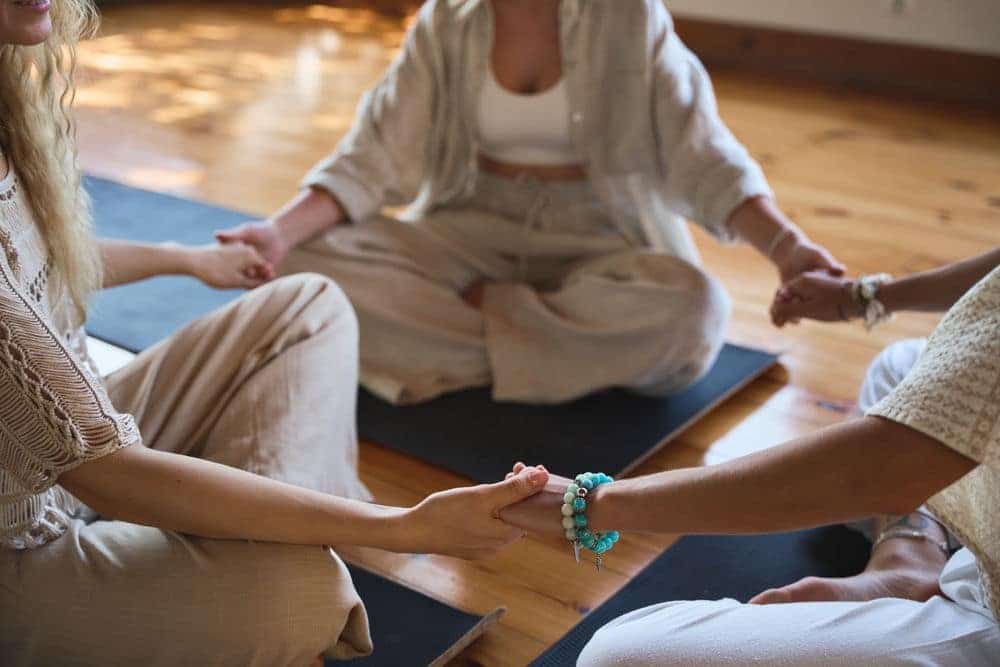
a group of women joining hands

Recovery groups are free, peer-led, self-organized communities that gather regularly for healing co-support meetings.

Recovery groups are where you can find other people who have “experience, strength, and hope” to share about what their addiction was like, how they got better, and how they live in the joy of the solution now.

Because it is part of the recovery process to help others, through sponsorship and service work, recovery groups include many people who are further along down the road than we are, who have been through the challenges we are facing now.

These more experienced people can offer guidance, listen to our truth without getting triggered into judgment or fear, and provide basic comfort and connection.

Most of all, recovery groups are a place to share emotions and struggles anonymously, in a nonjudgmental environment, among others who understand from their own experience what it’s like to struggle with addiction.

Recovery groups that are based on the original 12-step or AA model follow certain patterns and principles which might be called “best practices for healing together with others”, in which anonymity, safety, freedom, and inclusion are emphasized.

Other kinds of recovery groups are facilitated support groups and therapy groups (these usually require a fee, but not always).

What addiction support system services are available?

When you complete a treatment program, you will ideally be connected to what’s called an Aftercare Program, such as the one we offer at Villa Kali Ma for all of our program participants.

In Aftercare Programs, there are opportunities to touch base with your treatment team periodically, as well as chances to hang out with other sober peers.

Depending on the program you participated in, there may be ongoing individual therapy, relapse prevention groups, events, and celebrations, which you can attend as you bridge into your new life.

How is a healthy recovery support system built?

Building a healthy support web or nest is like weaving a basket – we do it twig by twig, strand by strand, slowly securing connections and braiding them in.

The first circle of relationships will probably be made up of our treatment team, professionals upon whom we allowed ourselves to first rely as we began to rebuild a sober life. Hopefully, these relationships helped us feel, at the body and heart level, what it’s like to have someone in our corner. Our therapist, a facilitator we felt especially safe and connected to, or another person on staff at the therapy center might be an important twig in our nest. Other people in our inner circle might (but also might not!) include family members, old friends, or our spouse. We all have different family and relationship histories, so whatever is true for you, try not to judge it.

After leaving treatment, we will ideally lean into the recovery community where we live by attending frequent 12-step meetings, going out for coffee with new sober friends, and forming a close relationship with a sponsor.

Every time we sit in a circle of other recovering people, and every time we linger a few minutes afterwards to help put away the chairs or connect with someone whose share resonated with us, we will be adding twigs to our nest. The more twigs we can add, the more protection and guidance we have through our early recovery experiences.

As we expand our network of recovery relationships, we may extend into friendships with people who aren’t addicts themselves but who can be part of our support nest for other reasons. They might be work friends, someone we meet in a yoga class, or a positive family member with whom we find ourselves able to be safely close.

All in all, we can think of support network-building as an ongoing, living, and breathing process that will happen slowly but surely by continuing to take small steps of connection and relating.

What are the steps to building a solid support system during addiction recovery?

A support network is best grown with patience and understanding. Each tiny connection will lead to more connections, and each time we take the risk of connecting with another, we grow our capacity for it. Here are some thoughts for getting started.

Step 1: Go to Meetings Every Day

In the very beginning, just consistently showing up is key. Sooner or later, we’ll discover glimmers of closeness and familiarity, noticing people we like or resonate with. This will all lead us gradually into more socially engaging behavior. We will find ourselves looking around more, maybe even smiling, making our first forays into connection.


Step 2: Introduce Yourself in Meetings

It can be tempting, even when we’re going to meetings, to stay quiet. That’s fine for a short while, but it’s good to let people hear our voices and to learn our names, too. We might not be ready to share, but we can always introduce ourselves.

It’s good to say to the room that we’re new and that we’d like to get connected to the community. Whenever we speak a need out loud in a meeting, the chances are higher that someone comes to us with an offer to connect or an idea for what we could do to get integrated.


Step 3: Share Your Story

When you’re ready, share a piece of your recovery story in meetings. Connection is built through small disclosures of who we are on the inside, and there’s nothing more intimacy-building than honestly disclosing what we think, feel, and experience.

When we allow others to glimpse the tender, imperfect pain and beauty inside us, people can resonate with us. We might even inspire or comfort them. When people resonate with us, they often reach out to tell us so or to begin the relating process with us.


Step 4: Go to Sober Social Gatherings

People in recovery rooms often go out to dinner or for another meal together after meetings, and newcomers are always welcome. If you linger after a meeting, chances are that you will get invited.

There are also often sober barbecues and other seasonal events, which are chances to socialize and connect. Socializing in recovery is very different than any other kind of socializing because no one requires you to put on a false front. You can be very raw and real when you hang out with sober people, and no one will be ruffled by it.

We just need to be around people. This will stimulate and grow our ability to connect and relate, and even if we don’t fully realize the effect it has on us while it’s happening, just seeing other smiling faces and hearing people talk and engage socially is enormously regulating.


Step 5: Ask Someone Out on a Friend Date

It is very likely that if you ask someone sober for a while to get coffee, they will say an enthusiastic yes. People with a few years of recovery under their belt highly value any chance to be “of service”.

This means they will be more than happy to listen to you, help you get connected to other sober people, tell you about meetings you might like, and give you all kinds of tips for getting through challenging situations. Sitting with you, hearing you, and accepting you just as you are right now, without placing any coercion, will be a positive experience for them. Try it and see for yourself!


Step 6: Get Lots of Recovery Phone Numbers and Call One Every Day

Most meetings circulate a phone list or otherwise share contact information. Some members will put their phone number down as a way of indicating that they are available to take a recovery call or even be a sponsor or temporary sponsor.

These phone numbers are gold. A quick supportive call helps you get your head screwed on straight again. You don’t need to be feeling bad to do it – on the contrary, if you make a habit of calling one recovery person a day no matter how you feel that day, you will entrain and align to the life-protecting connectivity you need to stay sober and keep on the path to joy.

What are the types of support networks in addiction recovery?

In addiction recovery, you can differentiate your support network into different categories.

Your treatment support network is made up of professionals, therapists, and facilitators. These are people to whom you can go for their expertise in the field of recovery, trauma recovery, and/or psychology. These supports are likely to be aware of many further resources that can help you. They are good people to ask for help or to consult about a specific problem you’re facing.

You may book treatment sessions with such people or just touch base from time to time regarding how your recovery is going. An Aftercare Program is designed to keep you feeling linked with this network.

Your recovery community support network is made up of sober peers, friends, sponsors, and acquaintances from your recovery community, such as people you befriend in AA. These are people who will take your call when you’re triggered and tempted to use, who will invite you over to a sober Christmas party (and it will be fun!), or who can help you remember the wisdom of the principles of recovery.

This will eventually be the most robust, supple, and extensive part of your recovery network, a place where you can experience joy, friendship, loyalty, playfulness, inclusion, and belonging at very deep levels.

Finally, your positive friends, family, and loved ones are also part of your personal support network. The people who love you, who have known you since you were a child, who were there for you when you were ill, and who are still with you now that you are well, are also a part of your support network.

These decades-old, thick-and-thin relationships can be challenging sometimes, but they also have special qualities that no other type of relationship can ever have. If this area feels hard for you, consider that the longer we are sober, the more likely it is that these relationships get the chance of healing and repair we have always longed for. But also, some relationships are too damaging to us to keep close, and that’s ok too.

What are tips for managing your personal support network?

Support networks need some tending. In the beginning, it is normal and natural that we are needy and that we lean on our support network, taking much more than we give. That might be the case for many years, and that is ok!

Over time, though, and on days when we feel that we are resourced and balanced, it is good to think about giving back to our support network.

Taking care of our support network isn’t as altruistic as it sounds – giving back also grows our web, making it even stronger, which means it can give us even more support! A healthy support network exchanges energy, sometimes giving, taking in, much like breathing.

To give back to your treatment support network, you can participate in Aftercare Groups actively. You can volunteer, for example, to come speak and share your story at your treatment center. This helps you realize how far you have come, as well as serve as inspiration for others!

To nourish your recovery support network, you can reach out to meeting newcomers, put your name on the phone list, or sit next to new people at sober events, just being a friendly face where one is needed. When you’re ready, you can sponsor. Speaking at a meeting is also a way to give back to your recovery community.

To nourish your personal support network, you can help friends and family know that their efforts, persistence, and loyalty mean something to you. Acknowledge them when you can. Practice patience with their lack of understanding, and try to see the ways that they are giving you their love.

Villa Kali Ma builds recovery support systems

At Villa Kali Ma, we know that community is the beating heart of a living, breathing recovery. All humans need connection, relatedness, and belonging – wounded women most of all!

Through our many programs that help women recover from addiction, trauma, and mental illness, we help women restore their capacity for authentic, deep relating. We do this by addressing what got hurt, shut down, and broken in them – in their bodies and nervous systems, and their hearts.

All of our programs lead towards this purpose: helping women feel good enough on the inside again, that they can reconnect back into the web of life – heart to heart, face to face, and spirit to spirit.

Categories
Recovery

The Importance of Honesty in Recovery

The practice of honesty has a revered, important place in the journey of recovery from addiction.

To heal any illness, we must learn how to notice and name what is currently true for us without judgment and gloss. This is especially so for addiction, mental health, and trauma recovery.

Isn’t that interesting? In this post, we here at Villa Kali Ma take a closer look at the ways coming clean supports staying clean.

How We Learned to Lie: the Habit of Hiding?

We weren’t always such complicated people. Human beings come into the world in a state of honesty. A baby’s first mode is total transparency, openly radiating every passing feeling, sensation, and desire.

During the growing-up process, we learn that some truths get frowns and scowls, and others get smiles and hugs. Entraining to our caregivers for survival purposes, we learn to hide, hold back, and fudge the facts some of the time.

Dishonesty as a Trauma Symptom

The idea of honesty often has a heavy moral overlay. Just thinking about the times we have lied, we may go into a reaction of guilt or shame.

However, dishonesty may also be looked at more matter-of-factly, as a sign of what was once necessary for us to get to where we are now.

The bigger the “bad reaction” to our authentic being, back when we were small and dependent on people for our lives, the more we may have developed lying as a survival strategy.

For example, if our attachment figures responded to our truth with shaming, anger, punishment, or abandonment, it’s very likely that we developed many different mechanisms for hiding the reality of what we feel, think, and experience.

Fast-forwarding to the years in which we were active in addiction, dishonesty very likely became a commonplace, daily habit. Lying to others helps us hide the truth of our addicted state, as well as our true feelings, thoughts, motivations, and actions. Lying to ourselves helps us to continue to use addiction as a coping tool without getting flooded with deep shame and desperation about our powerless condition.

Is it a coincidence that both lying and addiction are connected to trauma? What do you think?

Honesty in Recovery: Understanding That Dishonesty is a Common Relapse Trigger

When we get into recovery circles, we learn that to reverse the addiction’s pattern of misery and enslavement, the most powerful tool is the plain truth. All we have to do, on any given day, is tell the truth.

The truth about what? In the beginning, all we need to do is tell the truth about our addiction. In AA parlance, we learn to “tell on the addict within”.

We say, “The addict told me my use wasn’t as bad as the guy who spoke at the meeting, so maybe I don’t need to be in AA.” Or, “My addiction wants me to go to my cousin’s wedding, I think it’s hoping I’ll have a slip there”. We use this name-it-to-tame-it language, with its slight note of distancing, to differentiate from the addiction, which enhances our ability to see it and to understand that it isn’t who we are.

When we notice that we have moved back into patterns of dishonesty, we are moving in the wrong direction – towards relapse.

Dishonesty Will Make You Feel Trapped

Honesty is the protective talisman, the white magic of recovery. Honesty affects the nervous system and the body, creating the sensation of coherence, which means that everything within us can feel connected and unified as one whole.

Our physiological sensations, our emotions, and our thoughts can come into balance through practices of honesty – noticing and transparently naming what we notice. The feeling that goes along with honesty is liberation: the truth sets us free.

Every time we tell the truth, we slowly unravel more and more of the web of lies, the false persona, the person we have pretended to be. In sharing what we notice about our internal process as transparently as we can – naming thoughts, feelings, sensations, behaviors – we activate the prefrontal cortex.

The pre-frontal cortex is the seat of the so-called noticing mind, the wise part of us that is accessed in mindfulness-based therapies. In truth-telling, we move into compassionate, calm curiosity, out of reaction and judgment.

Over time, we may get very good at sensing all of it without becoming overtaken by any intense feelings, negative thoughts, or scary body sensations.

We may be able to say things like, “I notice there are some thoughts in my head, a part of me that’s saying she hates what I have done to my family. She’s being hard on me, creating feelings of guilt. I notice my chest is collapsing around my heart as she’s saying these things. I think this collapsing is coming from another part, who’s pretty young – it feels like the part that used to get yelled at, and she would feel so trapped and scared and bad.”

We do this to help protect ourselves. If we were to go back into patterns of dishonesty, for whatever our reasons, we would start to rebuild the thick web of lies and feel trapped in it all over again.

Dishonesty Destroys Relationships

Dishonesty shatters the most basic level of trust, which is necessary for a bond to exist between two people. Lies, even those meant to spare people’s feelings or control their reactions, compromise the chance of intimacy. Intimacy is only possible when two people are being their real selves. Any relationship based on a faked self won’t touch on real love, connection, nurturance, or growth.

At the same time, we might not know how to stop lying to ourselves or others.

We may struggle to stop withholding important information about our thoughts and feelings, fearing what will happen to our inner sensations and feelings if we do.

If we associate truthfulness with past overwhelming experiences of judgment, shame, and rejection, it puts us between a rock and a hard place. We have to tell the truth about what we’re thinking, feeling, and doing to recover, and doing so will make us feel better, but we may also believe deep down that if we tell the truth, we’ll experience the feelings we’ve been trying to avoid. We may expect to be flooded with shame, guilt, fear, rage, or other difficult sensations.

The answer to this conundrum lies in the choice of person to whom we tell our truths. In the beginning, recipients of our honesty must be people who are reasonably able to hear it.

It is very likely true that in the past, the people we depended on responded to our truth in ways that hurt us, scared us, made us angry or want to run away, maybe all at once.

With a therapist or a recovery friend, however, we are in a position to have a different experience of telling the truth. Though it takes some getting used to, the practice of telling the truth grows our feelings of resonance and relatedness.

Honesty brings us closer, into a zone where our needs for compassion and witnessing can be met by another human. We find we are strengthened by truth and learn to rely on it as a clarifying, healing factor.

Over time, we will learn how exactly we can be fully authentic without hurting or triggering others so much. We will eventually learn to do this even in our closest relationships, where it is most likely all that we encounter our deepest, oldest pain, coded in memories of vulnerability gone wrong.

How to Maintain Honesty in Recovery?

The secret to authenticity in the face of risk lies in sharing neutral observations gathered through mindful noticing, without interpretation or assigning blame. It also helps to tell the truth only when we’re feeling calm and safe and to use that same, slightly distancing kind of name-it-to-tame-it language.

We can say, “I noticed that when you said ‘you’re late’ to me, I began to feel agitated and a bit angry. I think there’s some triggering going on, some sensations and memories that belong to my past more than they do to this moment. Let me take a moment to regulate myself and look into what this reaction in me is about, and then I’ll return to finish this conversation, OK?”

It takes practice to learn, but this kind of truth telling is easier for another person to hear without being triggered. Emotional, blaming, or judgmental language that sometimes comes out of our mouths when temporarily hijacked by a trauma-based part of us, on the other hand, all but guarantees that we trigger the other person!

Sometimes, even calm, regulated truth telling triggers other people – that’s part of life. In such moments, it will be our ability to compassionately witness our truth, internalized from our years of practice telling the truth in recovery circles and/or with therapists, that will help us hold strong and yet stay open in the face of a loved one’s triggered state of being.

What to do if we realize we have lied or we are tempted to lie? Tell the truth as soon as you can. Even if the truth is embarrassing, makes us look bad (often only to our perfectionistic inner critics), or causes another person to have a reaction which is hard for us, the truth is necessary for recovery. If we start lying again, we’ll end up using again.

Tell the truth, then choose not to beat yourself up about whatever the truth is, nor about the fact that you slipped back into lying. You can comfort yourself by remembering that lying is a feature of addiction and is connected to survival strategies from your past. You can remember the wider culture and how it teaches all of us to hide.

You aren’t the only one. It is hard for all of us to stop falsifying. We may still feel that we need our white lies now, for a million reasons – because it is more socially comfortable, to avoid conflicts, or because we fear judgment from people whose rejection of us would be felt as very painful.

If you react, tell the truth about that reaction, too. “I notice some shame creeping in as I’m telling you this.”

Whatever you do, tell the truth about what you’re experiencing, sensing, thinking, feeling, and what your behaviors are to a safe recovery person, and you’ll be back in the right flow for recovery.

Villa Kali Ma can help women with honesty in recovery

At Villa Kali Ma, we aim to help each woman who comes through our doors to recover enough of her spunk, spirit, and capacity for calm, joy, and courage that she can tell the truth about who she is.

Our holistic clinical programs show women how to un-snag from fallen branches, move around boulders, and unblock the way. We know that once a woman is back on her true journey, magnificent things will happen in her life. Yes, life will challenge her, but she will be flowing and growing again. In this, we trust completely.  And that’s the truth!

Categories
Sobriety

What is California Sober?

What’s the Meaning of California Sober?

The term “California Sober” means that a person is abstinent from alcohol, addictive prescriptions, and hard drugs.

In contrast with the ordinary understanding of the term “sober”, someone who is California Sober may still use marijuana. In some instances, the person may also use psychedelics, such as shrooms, ayahuasca, or acid.

California Sober is, in its essence, a harm-reduction approach to managing addiction. It has gained popularity in recent years, largely due to endorsement by some celebrities.

Does California Sober work?

California Sober may work for some people as a temporary measure, but it is unlikely to last as a solution for most people who struggle with addiction. Since marijuana and psychedelics are generally less harmful and addictive, especially when compared to serious narcotics like opioids, California Sober may still be explored as a potentially beneficial approach, especially if someone is not yet ready to embrace full abstinence.

The concept of being California Sober was probably seeded by singer Demi Lovato, who went so far as to release a song with the same title in 2021.

At the time of the song’s release, Demi Lovato was of the mind that the approach helped them (Lovato uses they/them pronouns) to recover from the use of opioids. After a near-fatal opioid overdose, Lovato felt that being California Sober helped them stay away from more dangerous substances.

Since then, Lovato has changed their stance, clarifying that full sobriety is the only kind of sobriety that they support, after California Sober did not protect them from relapse.

So the answer to whether or not California Sober works may be answered by Demi’s own example: it probably does not work for anyone with a substance addiction.

Does California Sober work for everyone?

California Sober may work for some women, but it does not seem to work for women who qualify for a substance use disorder. Once addiction has taken root within a woman’s body and nervous system, it is unlikely she will be able to stay sober from her more serious drugs of choice by pursuing partial sobriety while still using marijuana and psychedelics.

This is because to recover from underlying physiological and emotional conditions that feed into a pattern of using substances to cope, it’s necessary to abstain entirely from any kind of chemically induced mood alteration.

What this means is that while in the short term, California Sober may reduce the harm compared with continuing to use more dangerous substances like opioids, cocaine, or alcohol, being California Sober is not a permanent solution. It will eventually lead back to relapse in those more serious substances.

What are the benefits of being California Sober?

Compared to more toxic substances like prescription pills, alcohol, and cocaine, marijuana and psychedelics are less harmful and less addictive. California Sober may have a place in a person’s path of reducing overall harm, and it is certainly better to be California Sober than to be abusing alcohol, hard drugs, or prescriptions.

What are the main concerns with living a California Sober lifestyle?

The California Sober lifestyle is preferable to using hard drugs and abusing alcohol, as it is less life-threatening. The concern with California Sober is that it will be difficult for any person with an addiction to alcohol or hard drugs to stay “only” California Sober for a longer period of time. No one should undertake to be California Sober under the misconception that it is a solution to substance addiction; it does not prevent relapse on harder drugs.

Additionally, it’s important to understand that while marijuana and psychedelics are less damaging than other substances, they still can be used in a way that interferes with psychological healing, trauma recovery, and mental health.

A person who is in good mental and physical health to begin with may be able to use marijuana and psychedelics occasionally in positive ways, for healing or other consciousness goals. We know many such people, and we believe their experiences.

But people who use substances to self-soothe, cope with trauma symptoms, or reduce their inner pain are using these substances as “self-medication”, which is a way of engaging with these substances that ultimately creates damage to the nervous system and body. For such people, California Sober will not work because she is still attempting to use substances addictively.

Typically, a woman who is drawn to using substances to excess has co-existing and underlying dysregulation struggles, stemming from a history of traumatization or mental illness symptoms (that’s why she’s using substances in the first place).

Being California Sober will not heal underlying issues but rather block attempts to make contact with parts of her that need help. For such a woman, marijuana and psychedelics use would interfere with getting better, only delaying the moment of needing addictions treatment to a later date.

What are alternatives to living a California Sober lifestyle?

There are very good alternatives to being California Sober.

Full abstinence. For anyone with a history of substance addiction, we highly recommend full abstinence from any kind of mood-altering substance. Full abstinence is the only kind of sobriety that works with getting better, treating your underlying trauma, and healing mental health symptoms at the root cause level.

The good news is, if you have managed to get yourself tapered down from more serious substances to a state where you are now able to be California Sober, that is something worth celebrating. Don’t stop there – the fact you got this far means you can do the remaining steps all the way down to total abstinence.

Addictions, trauma and mental health treatment. For those who fear or already know from experience that they do not have the personal ability to stay fully sober, don’t worry. That’s what addiction treatment is for.

If it has been difficult for you in the past to stay fully abstinent from substances, you are not alone, and there is something you can do about it: get help to treat the underlying conditions you have been trying to self-treat or manage through your addictions. It is very hard to get and stay sober while your body and nervous system are still fully convinced that you need substances to survive overwhelming states and sensations. This isn’t your fault, rather, it is a common state that many women end up in, a vicious cycle that is best treated with professional help.

There are more and more trauma-informed recovery programs available, such as the ones offered by our own team at Villa Kali Ma. These programs understand the need for sensitivity and gentleness when approaching the complexity of addiction, making sure that each woman will be stable and safe enough to succeed in feeling ok in her own skin without substances. This is accomplished in a non-shaming, acceptance-based approach through psychoeducation, skills training, and trauma-informed psychotherapies and modalities.

Psychedelic-Assisted Psychotherapy. Although still somewhat rare, psychedelics are sometimes used in clinical settings to help people recover from traumatization. If you strongly feel that you want to use psychedelics in a clinical context, you can do that in a supervised setting. In fact, Villa Kali Ma offers Ketamine Assisted Psychotherapy when appropriate for a woman’s recovery from traumatization. However, psychedelic-assisted psychotherapy approaches can’t be self-administered (or else we’re back to self-medicating, which is unlikely to be sustainable or safe in the long term).

Villa Kali Ma Makes Being “Fully Sober” Joyful and Possible

Many people fear that being fully sober means having no options for self-soothing, fun, or enjoyment of life. We fear it means returning to the time before we found the solution of drugs and alcohol, back to overwhelming sensations of dread, fear, rage, loneliness, or other kinds of pain that colored our early experiences of life.

We here at Villa Kali Ma have found the very opposite to be true. Full sobriety, in the context of a loving, re-connective recovery path, is not only achievable but a way to experience deep liberation that goes beyond all previous attempts to heal the pain we have carried.

If you’re curious to find out what we mean or you need help getting your substance behaviors under control, connect with us to find out more about how it is that we know beyond the shadow of a doubt that full sobriety is a path to joy, re-embodiment, and full-hearted living.

Categories
Rehab

Destination Rehab

What is a destination rehab?

A destination rehab is a treatment facility set in a desirable location. Destination rehabs are often built in settings naturally conducive to healing and recovery, such as by the sea, forests, the desert, or mountains.

The grounds of a destination rehab facility are meant to bolster feelings of safety, ease, and harmony. Offering a measure of seclusion and/or exposure to a healing climate, the facilities may be nestled in natural environs, healing gardens, or working farms.

Depending on the program, a destination rehab may emphasize the luxury of accommodations or place more emphasis on the chance of interaction with greenery, animals, and features of the natural world.

What are the benefits of traveling for treatment?

There is a reason that for many thousands of years, people have traveled to the seaside, mountains, forests, and other healing nature locations to recover from illness of both the psyche and body.

Not only are such environments harmonizing to the physiology, restoring us through exposure to nature’s many healing and settling properties, but the physical act of taking distance from one’s home – getting a literal change of scenery – is a powerful way to create a protective boundary around the intention to recover.

Sequestering temporarily in a faraway healing setting is a way to get a fresh start and open a new blank page in the book of your life. In a destination rehab, it is much easier to focus on recovery due to being relatively free of distractions, interruptions, self-sabotage, and all that might keep our old patterns running as they were.

What is ecotherapy in a destination rehab?

One of the benefits of attending a destination rehab is the opportunity to participate in ecotherapy.

Ecotherapy, sometimes called Ecopsychology, Green Therapy,  or Nature-Based Therapy, is a branch of the mental and behavioral health field that incorporates the power of nature, animals, gardening, and outdoor activities into the healing process.

While many people intuitively sense the many ways that nature helps us heal, it is only really since the 1970s that the effects of nature have been studied in a way befitting modern scientific requirements.

The study of nature therapy can be said to have begun in Japan, where the practice of forest therapy was first noticed, measured, and compiled into a method of treatment.

The evidence in favor of ecotherapy continues to amass. Studies support beneficial effects not only in subjective reports of how nature works to soothe and heal one’s inner world but also in objective measurables such as heart rate variability, cortisol levels, immunity, faster wound recovery, and more.

In a destination rehab that offers ecotherapy as a part of its programming, as we do at Villa Kali Ma, you have the opportunity to learn how you may relate to nature as a resource. Nature exposure can take many forms, including gardening, animal-assisted therapies, nature walks, hiking, foraging, making art out of natural materials, nature-bathing, and more.

What are things to consider before traveling for treatment?

Many women find that the advantages of a change of scenery, as well as entering treatment in a neutral, harmonious setting, outweigh the potential benefits of staying close to home for their treatment experience.

Some factors to consider before going to a destination rehab, however, include that it may make it harder for family and friends to visit you or participate in your treatment, at least in person (phone and Zoom sessions allow for more possibilities, but still).

While it’s important to stay in the now, you may also want to think loosely about what you intend to do upon completion of your treatment. It is often a good idea to stay connected to the treatment center staff and perhaps even enter a sober living environment close by. Keeping close in the first weeks, months, and even years of your early sobriety is often a lifesaver, protecting women from relapse, isolation, and overwhelm.

Staying close by makes it possible to participate fully in aftercare programming and keep the local recovery connections you made. The time just after you complete a treatment program is understandably wobbly for many women, and it is a time during which foundations for your future are laid.

However, it’s also normal not to know yet what will come after your treatment. You don’t have to know everything in advance. As a mental exercise, all the same, it can be clarifying to weigh the pros and cons of treatment close to home versus treatment in a destination rehab.

If you know that you will be returning to your home environment because of work or family, then it is relatively clear that your rehab will be a fully temporary retreat, with a clear beginning and an end. This also means that your follow-up treatment and new foundation will be laid back at home.

If you are not sure what will happen after treatment and you are open to a change of scenery, you may want to take into account whether you like the part of the world in which your destination rehab is located, just in case you decide to stay in the area for some period of time.

If you are overwhelmed by these considerations, don’t worry. Both options can be good for your recovery, and our treatment team will help you figure out how to best support your new life, whatever environment you choose for your after-treatment life.

Villa Kali Ma offers mental health and addiction treatment

Villa Kali Ma is a unique provider that blends holistic modalities with clinical treatment for addiction, mental health disorders, and trauma.

Located in the warm, sunny coastal San Diego area, we are rooted in a part of the world that offers exposure to the many healing factors of the seaside. San Diego is famous for being a health-oriented part of California, where people prioritize care for the physical body, spend time out of doors, and enjoy the beach as much as they can. And no wonder, as the ocean is a great healer, emotionally and physiologically.

In our residential treatment facility and our trauma recovery center, the Retreat, as well as in our Intensive Outpatient program, we offer many options for experiencing nature-oriented healing modalities related to the coastal climate and other features of our area. Through yoga, creative arts therapies, earthing, Reiki, massage, Ayurveda, equine therapy, gardening, outdoor activities, and more, we help women connect with the many healing possibilities of our destination.

Categories
Intensive Outpatient Program

Benefits of IOP

For those struggling with substance abuse, mental illness, and/or trauma, lasting help can be found inside the supportive, healing structure of a high-quality women’s IOP.

Designed to bring a high saturation of treatment hours within the most flexible structure possible, intensive outpatient programs are made for women who want to or need to keep one hand in their existing life responsibilities, while still receiving a high level of healing care.

Here at Villa Kali Ma, we are big believers in IOP as a functional model for women on the healing path. IOPS is for women who need a short phase of high-intensity treatment to bring their hearts, minds, and bodies back into sustainable balance.

While we certainly would wish a healing stay in our retreat-like residential rehabilitation facility for any woman who wants and needs it, we recognize the option isn’t always possible or necessary, depending on each woman’s needs and life situation.

In this blog post, we’ll explore the many benefits of Intensive Outpatient Programs as we see them, through our holistic, female-centric lens. As always, we’ll steer the conversation towards the many ways, clinical and alternative, that women can get free from the weighty burdens of addiction, mental illness, and trauma.

Why choose an IOP for women?

The key reason women participate in an Intensive Outpatient Program like the one we have at Villa Kali Ma is to undergo a short-term, but very powerful course of therapeutic treatments.

The goal of an IOP program is to halt a downward spiral and gently but firmly reverse it, so that our life begins to move outwards and upwards again, towards health, healing, and all that’s beneficial in life.

The restoration to stability and health is accomplished through immersion in a program packed with a high number of treatment hours, involving multiple days a week for multiple hours.

IOP’s structured program of treatment hours – at least 9 hours a week, broken into segments occurring on select days of the week – comprises multiple kinds of therapies, each of which addresses a different facet of a woman’s life.

Some therapies we use in our IOP at Villa Kali Ma, like Eye Movement Desensitization and Reprocessing (EMDR), Brainspotting, and Tension and Release Exercises, are primarily directed towards helping a woman feel safe, secure, and capable in her body again.

Many women do not feel adequately safe to experience their own body sensations without tensing up or cutting off from what they feel, living instead at the mercy of their amped-up or numbed-out nervous system states. Women who have this problem are not doing it on purpose – the struggle to experience regulation is not a choice, it is an automatic biological function that needs to be compassionately retrained with an appropriate therapy.

Other therapies, like Cognitive Behavioral Therapy, Acceptance and Commitment Therapy, Motivational Interviewing, and Mindfulness and Self-Compassion Therapy, help women safely develop greater awareness of the role that negative and positive thoughts have in their lives. These therapies empower women to make conscious choices about how they choose to look at themselves, others around them, and the world at large.

Some therapies, like Equine Therapy and other Nature-Based approaches, use nature and animals to help women recover deeply, at levels of being that have nothing to do with words. Other therapies and activities use creative expression, mindful movement, healing touch, spirituality, and imagination.

Finally, many groups, such as Dialectical Behavior Therapy, Relapse Prevention Planning, and Love and Relationships, coach practical skills for handling relationships, getting our needs met, opening our hearts again, and experiencing the juiciness of our emotional lives without fear of drowning in overwhelming sensations.

Intensive Outpatient Programs help women stabilize anything that has gotten out of control – problems like self-destructive behavior and substance abuse. They will also get at the inner heart of a woman’s subjective experience, to help her experience safety, containment, grounding, sanity, and good feelings again, inside her own skin.

Who can benefit from an IOP for women?

Intensive Outpatient Programs have powerful effects, provided women are able, ready, and willing to undergo a transformation process and change. Recovery is, in the end, an inside job, and the psyche can put up a powerful fight against treatment if a woman isn’t ready yet.

But if a woman is reasonably willing to surrender herself to a process of getting better, IOP can work wonders. Part of treatment is dedicated to the delicate dance of building up enough trust and safety internally, to open to greater and greater levels of healing, so you don’t need to be perfectly ready, just willing enough.

It’s not necessary to know how to recover (the IOP will guide you through it), but rather to feel an honest inner “yes” to the what of recovery. A good way to test your readiness for the what of recovery is to explore the following in your imagination:

Short Compassionate Inquiry on Readiness

Imagine you had a magic wand, which would give you anything you want. How do you feel about the following wish: Make me sober, healthy, happy, “all better”.
Would you make that wish, given the power to?

If your answer is a genuine yes, you’re willing enough. (If your answer was no, but you wanted it to be yes, the part of you that wants it to be yes is your starting point. You can pull on that thread to discover a more deep and genuine yes. Explore your no, too. Why not? What do you fear might happen, if you were sober, happy, healthy, “all better”? We can learn a lot from these answers).


Signs of Sufficient Change Readiness

Usually, when we are ready to change, certain qualities will be present with us.
Change readiness is generally signaled by:

-strong motivation to recover. We know why we want to get better, and for us, it’s a compelling reason.

-willingness to be accountable and to tell the truth. We are more interested in getting better than in saving face or pretending everything is ok.

-our actions show that we have made some steps towards healing and recovery. For example, if we ourselves reached out for help, told someone we love the truth about our true level of need, these are positive signs that change has begun within us.

-we have stopped fighting, resisting, managing, and controlling the change that needs to happen. A level of surrender, giving up and acceptance is usually palpable when we have decided to change. We are no longer in a bargaining or argumentative state about whether or not we need to. We are less defensive, a little more humble perhaps, and more quietly open to receive a new reality.


How Severe is My Situation?

In addition to readiness to change, there’s a question of how severe a woman’s case is. It’s not uncommon that a woman might need a higher level of care than Intensive Outpatient, in which case the intake specialist helping you will suggest that you should probably go into a medically supervised setting, such as an inpatient rehab, medical detox, or partial hospitalization program, these three being variations of treatment settings with round the clock supervision.

This is the case when a woman’s addiction has become a strongly medical issue, or when the interactions of mental health symptoms, psychiatric medicines, self-destructive behavior, and mood-altering substances are unpredictable and dangerous without supervision.

Some women won’t be able to stay sober if left unsupervised between treatment sessions. This isn’t personal, it’s the nature of addiction. For IOP to work, we need to be able to refrain from substance use throughout the course of treatment, even when exposed to triggers from our home and work life.

In general, if it is possible to take a pause from work and home environment, residential treatment is a strong, supportive option to consider before IOP. A retreat from one’s ordinary environment lends many kinds of protective and curative factors, a deeper level of safety, and release into the healing program which isn’t available if we are regularly revisiting our home and work environments.

That said, not everyone can take or afford a full pause from their life circumstances, and not everyone needs that higher level of care, in which case, IOP is the next best thing.

What are the benefits of IOP for women?

Intensive Outpatient Programs for women offer many benefits. Here are a few of them:

1. High Amount of Treatment Hours in a Relatively Short Period of Time

Women struggling with addiction, mental illness symptoms, and/or trauma need a high level of face-to-face hours per week, in order to stabilize their outer lives and inner worlds enough to be able to safely engage with the healing process successfully. IOP provides that saturation and frequency of therapeutic hours, and a safe consistent structure, using a variety of methodologies to address many facets of a woman’s being at once.


2. Flexibility and Options

IOPs give women the option to stay involved in their work and home lives, while still participating fully in treatment. Treatment takes place after work, over lunch hours, evenings, and weekends, and can usually be adapted to fit a woman’s schedule (though keep in mind that it is still many hours a week, typically at least 9).

Therefore during IOP, women can continue to live in their own homes, going onsite to a facility to receive treatment but then returning home each day.

Flexibility of schedule has many advantages for women with children, who are economically not in a position to take a break from working, or who have other kinds of responsibilities that make residential treatment less viable.


3. Cost and Insurance Coverage

Compared to higher levels of care, Intensive Outpatient Programs are more affordable. Since clients do not board or take meals at the facility, the costs of treatment are simply lower. For the same reason, many insurance plans that don’t cover residential treatment will cover some or all of the costs of an IOP.

However, recognize that if a higher level of care is necessary, then it is necessary. Being housed and supervised onsite in a facility is sometimes medically required to be able to achieve basic stabilization.

If this is the case, a residential treatment stay is less costly for you and your insurance, than a long drawn-out course of escalating and worsening crises, which eventually will require hospitalization anyway.

We say all this to highlight that, while cost and insurance are a factor that deserves their fair weight in consideration, sometimes the level of a woman’s need will take precedence in the calculation. Addiction is, after all, a serious, life-or-death issue.


4. Practice Coping Skills in the Real World

For women who are able to attend their therapy hours at an outpatient facility, and still manage work and home life successfully, the hybrid combination of treatment with exposure to the real world provides many chances to practice coping skills in real-world scenarios.

Provided we are able to stay sober and do not get overwhelmed by regular triggers, these frequent tests to our new coping skills and behavioral choices can be very strengthening. We therefore leave treatment having already practiced and mastered some key recovery-preserving skills.


5. Build Community, In Your Community

All good treatment programs will incorporate the aspect of community, ideally empowering each woman to find a nourishing source of connections and support in her local area, be that through AA or another community-based recovery model.

Sometimes, in residential treatment, the initial bonds we form in community aren’t transferrable when we return home, for example when we came to a rehabilitation facility from a different state. In IOP settings, the community we are encouraged to build takes root right in the lives we are already in, surrounding home, work, and our local environment.

Villa Kali Ma offers an IOP for Women

At Villa Kali Ma, our philosophy is that women are healed best by a combination of powerful clinical modalities, together with alternative, healing approaches.

Wherever Western modalities stand out in the evidence and literature as holding special promise for women’s healing, we’ve incorporated those approaches – Dialectical Behavior Therapy, Cognitive Behavioral Therapy, Mindfulness-based therapies, EMDR, somatic approaches, nature therapy, and expressive arts being examples from our therapeutic offerings.

We keep a keen eye on the evolving trauma field and its many revolutionary advances, bringing in practitioners to help fill out our roster of interventions so that we keep abreast of the times: ketamine assisted therapy and brain spotting is recent additions reflecting our interest in supplying the best opportunities to help women heal from trauma.

At the same time, we rely on traditions that have withstood millennia of verification and refining: massage, acupuncture, Ayurveda, reiki, yoga, and many other ancient healing systems.

Our Intensive Outpatient Program combines the best of our residential treatment program experience, with the flexibility and accessibility of the intensive outpatient setting. We feel that if you’re looking to engage in an intensive, immersive healing program, that our IOP would be the thing for you.

Whatever you decide, you have our support and blessings, dear reader, on your road to wellness!

Accessibility Toolbar

Exit mobile version