Categories
General

Substance Abuse in Women: Statistics

Substance Abuse among women is on the rise. Here are some statistics reflecting information gathered in the most recent national surveys and studies.

Substance Abuse Statistics for Women 

The following statistics are from the National Center for Drug Abuse Statistics and from the National Institute on Alcohol Abuse and Alcoholism.

  • An estimated 12 million women in the United States qualify for Alcohol Use Disorder, about 8% of all women in America
  • 17% of women have used drugs in the past year
  • 5% of women abuse opioids
  • 2% of women use heroin
  • 4% of women abuse prescription pain killers; 9 million women have a prescription opioid abuse problem
  • 4 million women abuse Hydrocodone
  • 4 million women abuse Oxycodone
  • 125,000 women abuse Fentanyl
  • 5% of women use cocaine
  • 4% of women use methamphetamines
  • 6% of women misuse prescription stimulants
  • 5% of women use marijuana
  • 0% of women abuse prescription tranquilizers
  • 5% of women abuse prescription sedatives
  • 20% of people in drug treatment are women

Substance Abuse Differences between Men and Women

There are gender differences among men and women with substance use disorders. According to statistics gathered in large-scale studies comparing the genders, men are around twice as likely as women to abuse substances, except in the case of prescription narcotics (opioid medications) and tranquilizers, where the numbers are more equal.

Though men are more likely than women to abuse substances, women who do abuse substances are more likely than men to develop tolerance, become dependent, and develop an addiction. Women are also more likely to have adverse health effects from using substances, such as liver damage and psychological problems like depression and anxiety. Women progress more quickly than men from initial exposure to a substance to needing substance abuse treatment, a phenomenon called telescoping.

When women enter treatment, they present in worse condition than men, in spite of having used a smaller amount of the substance, for a shorter period of time. Women who use substances are more likely than men who use substances to have additional psychological, behavioral, medical, and social problems alongside their substance use disorder, and to qualify for a diagnosis of PTSD.

Hormonal differences between men and women are currently believed to have a role in women’s greater sensitivity to substances, as well as their greater vulnerability to relapse. Ovarian steroid hormones (estrogen and progesterone) and sex differences in how GABA-A and DHEA are processed may have an influence on drug related behavior. During phases of the menstrual cycle when progesterone is low and estrogen is higher, women are more sensitive to the effects of substances. They are also more likely to experience vulnerability to cravings, negative emotions, and impulsive behavior which can interfere with progress towards sobriety.

Relapse vulnerability may also be explained in part by sex differences in neuroendocrine adaptations to stress. Women are more likely than men to have what’s called hypothalamic-pituitary-adreonocortical (HPA) dysregulation, which means that women experience greater emotional intensity at lower levels of arousal of the stress system. This means women subjectively experience the triggered state more vividly than men with a comparable substance use history.

The role of co-occurring disorders is also important to consider. Women are significantly more likely than men to have a lifelong diagnosis of a mood or anxiety disorder than men. Women who use substances are also significantly more likely to have a co-occurring eating disorder, such as bulimia. Finally, the link between post-traumatic stress disorders and substance abuse in women is critical to acknowledge, with the majority of women who enter treatment qualifying for PTSD or complex PTSD.

Alcohol

Alcohol is the most commonly abused substance in the United States. In the past, cultural norms that inhibited women from drinking alcohol meant that women were less likely to become addicted to alcohol than men. The gap between the genders when it comes to alcohol abuse has lessened over time, and the number of women presenting with a need for treatment for their alcohol use is ever on the rise.

Particularly troublesome is the fact that women are more likely to develop dependence on alcohol than men, while consuming lower levels of alcohol. Women progress through the phases of alcohol addiction more swiftly, and are more vulnerable to relapse once sober.

Health impacts of alcohol abuse are also stronger on women, with women more likely to manifest disease and tissue damage. Among people diagnosed with alcohol use disorder, women have a higher death rate, due to suicide, alcohol-related accidents, stroke, and liver disease.

Women are more likely than men to struggle with co-occurring conditions that complicate recovery, such as trauma and mental health disorders. Women are less likely than men to seek treatment, and to face gender specific barriers in treatment, such as financial problems and childcare issues.

Benzodiazepines

Alcohol use may have been socially unacceptable, but women have always been prone to becoming addicted to prescription depressants with similar effects to alcohol, such as tranquilizers and sedatives prescribed by their doctors to treat “nervous disorders”.

Contemporary prescription depressants, like the benzodiazepine class of drugs (Xanax and Klonopin, for example), continue to be popular drugs of abuse among women, often leading to severe dependency with multiple health impacts.

This situation may be owed in part to the ways that trauma is misunderstood and the ways that gender affects expressions of distress externally; women are more likely than men to be diagnosed with an anxiety disorder, and consequently to be prescribed addictive pharmaceuticals as a way to reign in symptoms of chronic nervous system hyperarousal.

Opioids

Opioids are a serious problem for both genders. However, women are generally more sensitive to pain, and more likely to be diagnosed with a chronic pain related syndrome, which can lead to a prescription for opioid pharmaceuticals, introducing the addictive substance to the more substance-sensitive and habit-forming female body.

Given the same exposure levels, women are faster to develop tolerance, dependence, and to spiral into addiction. Nevertheless, men are more likely to die from an opioid overdose than women, though recent death tolls indicate that female death by opioid overdose is rising by faster numbers than male opioid deaths. Women are less likely to inject an opioid intravenously, such as heroin or fentanyl. However, if they do, they are more likely to overdose.

Marijuana

Marijuana is the most popular illicit substance in the United States, with almost 100 million Americans self-reporting that they have tried it – about 40% of the population at the time of the 2003 National Study on Drug Use and Health. Women are less likely than men to use marijuana daily, and begin using marijuana at a later age, on average. Marijuana use may be linked, for some women, to stages of the menstrual cycle, particularly for women who have severe PMS or a diagnosis of Premenstrual Dysphoric Disorder.

The effects of marijuana may also be different for men and women. Women are more likely to move faster through the stages of addiction, developing dependency after a shorter period of use than a male using the same amount. Adverse impacts on memory and attention have been observed to affect women more strongly than men, as well.

Stimulants: Cocaine and Meth

The interactions between hormones and the effects of stimulants may explain why women are more sensitive to cocaine’s effects, including its addictiveness, than men. There is a link between estrogen and sensitivity to stimulants according to one study on cocaine, which may reinforce the addiction cycle in women.

As with other classes of addictive substances, women are generally less likely than men to try stimulants. If they do experiment with stimulants, however, including prescription stimulants like Ritalin, women tend to progress through the stages of addiction more quickly than men.

Women experience greater effects and stronger dependence from lower levels of the substance, as well as worse health impacts. Women struggle more with mood dysregulation, cravings, and relapse once sober.

Ecstasy

MDMA, or Ecstasy, is a stimulant and hallucinogen. Some findings suggest that women experience more euphoria under the influence of ecstasy, stronger hallucinations, and more depression following ecstasy use, than men do.

Prescription Drugs

There are three categories of prescription drugs which represent a serious risk of addiction: benzodiazepines, opioids, and stimulants.

The benzodiazepine class of drugs (tranquilizers and sedatives, such as Xanax and Klonopin), is a common source of addiction among women.

Prescription opioids are also a widespread problem. Although men and women suffer in equal numbers, it’s important to recognize that medications like OxyContin have been widely diagnosed to women due to their greater sensitivity to pain and their greater likelihood of being diagnosed with chronic pain.

Prescription stimulants like Ritalin and Adderal, commonly used to manage symptoms of ADHD, are also prone to abuse and addiction. While women are still less likely than men to be diagnosed with ADHD, more and more women are being diagnosed as criteria are expanded to include less obviously disruptive symptoms of the disorder.

If prescribed a stimulant for their ADHD, or if experimenting recreationally with ADHD medications, women are more likely to have an addictive response to it, more likely to move from use to abuse, and on to dependence.

Why are women in recovery more susceptible to cravings and relapse?

Once women enter treatment and begin a life in recovery, they are more prone to experience intense cravings and to succumb to relapse than men. This difference is owed to a few factors, including fluctuations in hormones that mean women experience changes in mood and levels of stress each month, as well as throughout different life stages and transitions.

Estrogen, as a hormone linked to feelings of pleasure and well-being, is linked to women’s greater sensitivity to habit forming experiences of euphoria. Progesterone, on the flip side, is linked to greater feelings of stress, irritability, and depressed mood. The complicated dance between female hormones and the other key neurotransmitters responsible for mood, motivation, reward, pain, and stress, create a greater overall risk, due to more vivid cravings and stronger urges to self-medicate for emotional reasons.

Beyond hormonal considerations, women are more likely to suffer from co-occurring mental health disorders and traumatization than men. This means that upon achieving a measure of basic sobriety and stability, more women than men have the immediate and challenging task of facing a pre-existing condition of chronic painful emotions and states.

The high incidence of sexual trauma history among women who use substances also explains the challenges many women face once they stop using substances. They must quickly stabilize new behaviors and coping tools that really work to reduce the severe distress of trauma symptoms, or they will find themselves turning to substances again to modulate their intense experiences as before.

Overcome Substance Abuse in Women

Everything about addiction is different for women, and recovery is different too. Women report different reasons for using drugs and alcohol in the first place. Women have different pre-existing conditions, from the basics of biology to the many vulnerabilities inherent to being female in our society. What drives a woman to latch on to certain substances as a strategy for coping with chronically disturbed emotions, can be quite opposite from the reasons the man next to her reaches for the same tool. Once in recovery, the intense, ever-changing emotional waters that women are immersed in by nature, affect and inform their experiences of recovery. Our more emotional and relationship-oriented connection styles, once healed, become vast resources for profound transformation.

For all of these reasons, and more, we believe in our hearts that supporting women in gender specific treatment environments is the key to healing womankind from the triple burdens of addiction, mental illness, and trauma. Our many programs for women reflect the value we place on women’s experiences, and how much we want to do to help women to flourish in this world, for the benefit of all.

Categories
General

The Basics: Defining How Much Alcohol is Too Much

There are several troublesome effects for human physiology that come from consuming alcohol. The greater the amount of alcohol consumed, the faster it is consumed, and the more frequently it is consumed all affect the total impact negative impact alcohol has.

In this article, we’ll look closer at the basics of drinking, and how to know when alcohol consumption is at a point where adverse health effects, including addiction, are likely to come into play.

What counts as a drink? 

In the United States, the standard drink is defined as any beverage containing 14 grams, or around .6 fluid ounces, of pure ethanol, regardless of the total ounces of the drink.

A 12 ounce beer, a 5 ounce glass of wine, and a shot of 1.5 ounces of hard liquor each count as one drink. Beer usually has around a 5% alcohol level, wine around a 12% alcohol level, and spirits a 40% alcohol level, hence the different overall volumes.

Within each of these types of alcoholic beverages, there are variations, with some versions having higher concentrations of alcohol. Some craft beers, for example, are more like 8 or 9% alcohol. The average bottle of wine, at 12% alcohol, is five drinks, but when the alcohol concentration is higher, as in some wines, the number of drinks counted is higher. Many cocktails include more than one drink’s worth of alcohol.

How many drinks are in common containers? 

Alcoholic beverages are packaged in standardized ways, so you can calculate how many drinks are included in a given container.

Regular beer, with a concentration of 5% alcohol by volume, is served in containers of 12 fluid ounces (1 drink), 16 fluid ounces (1.3 drinks), 22 fluid ounces (2 drinks), and 40 fluid ounces (3.3 drinks). Malt liquor, with a higher concentration of 7% alcohol, is packaged in containers of 12 ounces (1.5 drinks), 16 fluid ounces (2 drinks), 22 fluid ounces (2.5 drinks), and 40ounces (4.5 drinks).

Table wine, usually 12% alcohol, comes in containers of 750 ml (5 drinks).

80-proof distilled spirits, 40% alcohol, come in single shot containers (1 drink), in mixed drinks (1 or more drinks), in a 200ml half pint bottle (4.5 drinks), in 375ml pint bottles (8.5 drinks), 750 ml “fifth” bottles (17 drinks), and 1.5 L “magnum” bottles (34 drinks).

When is having any alcohol too much?

There are several situations in which people should avoid alcohol altogether. Here are some of the most common reasons to decide not to drink at all:

  1. Medications

Many common medications cannot be safely consumed together with alcohol. Some are made ineffective, and many have disastrous effects when taken in combination with alcohol. It is very important to pay attention to this factor when using prescriptions for any purpose.

  1. Pregnancy

Women who are trying to get pregnant, and women who are pregnant, should avoid drinking, for their own health implications as well as that of the potential baby’s.

  1. Medical conditions affected by drinking

Many medical conditions are made much worse by drinking, such as diabetes and liver disease. This includes mental health diagnoses, such as bipolar disorder, depression, and anxiety. Chronic pain is also adversely affected by drinking.

  1. Underage

People who have not yet matured to adulthood are significantly more impacted by the damaging effects of alcohol and other drugs. People under the age of 21 are vulnerable to changing their body’s basic functioning permanently if they drink alcohol, especially to excess, but even at moderate levels.

  1. Facial Flushing and Dizziness when Drinking

Around a third of people with East Asian heritage possess a genetic enzyme deficiency which makes alcohol unsafe for them. Symptoms of flushing and dizziness indicate the presence of this condition, which increases risk for alcohol related cancers like head and neck cancer, even with only light use of alcohol.

  1. People who are planning to drive a vehicle or operate machinery

It is not safe to combine any amount of alcohol with driving or using equipment.

What are the U.S. Dietary Guidelines on alcohol consumption? 

The US Dietary Guidelines (https://www.dietaryguidelines.gov/resources/2020-2025-dietary-guidelines-online-materials) state that for adult women who choose to drink alcohol, it is recommended that they have maximum one drink per day.

The one drink a day guideline for women is not meant as an average, but as a daily limit. Drinking beyond this amount brings blood alcohol levels into range where there are physiological consequences of a negative nature.

The notion that light to moderate drinking is healthy is prevalent. However, more recent research has cast doubt on this common dictum. Past studies may have confused the impacts of light to moderate drinking with co-existing factors like healthy diet and other behavioral differences. More recent studies show evidence than even light to moderate drinking increases risk factors for several serious conditions, such as cancer and heart disease.

The updated picture of the impacts of alcohol use is as follows: people who do not drink at all have several health advantages over those that do, in terms of less risk of cancer and other diseases. Among people who do drink, the less alcohol a person consumes, the better it is for their long term health and longevity.

What is heavy drinking? 

Heavy drinking is a term that encompasses binge drinking, and it refers to women drinking four or more drinks on any given day, and/or eight or more drinks in one week. Binge drinking is defined as drinking enough alcohol to bring the average woman’s blood alcohol concentration to .08% or higher, which for most women would take consuming four drinks within two hours.

Heavy drinking thresholds are lower in women than in men, because of the ways that alcohol is diluted in the body’s water levels. A woman drinking the same amount of alcohol as a man will have a higher blood alcohol concentration. That means that when women drink the same amount of alcohol as men, the health impacts are greater.

There are two types of dangers that come from excessive alcohol, one is the “too much too fast” variety, and the other is the “too much, too often” variety.

The “too much, too fast” variant refers to what happens when women binge drink. When a woman has four or more drinks within a space of two hours, her blood alcohol concentration will reach .08%, or the definition of binge drinking.

Binge drinking is responsible for more than half of the deaths caused by alcohol. Binge drinking increases the risk of harm through multiple avenues, including car crashes, falls, burns, memory loss, blackouts, medication interactions, sexual and physical assault, overdose deaths, and drowning.

In the “too much, too often” category, women who frequently drink to excess are at risk of longer term consequences as well as the above category of immediate consequences. Longer term consequences include developing an alcohol use disorder (AUD), liver damage, cancer, heart disease, and brain damage.

What is the clinical utility of the heavy drinking day” metric?

The definition of a heavy drinking day is a helpful measure for motivating change. Knowing that heavy drinking days carry a risk of death (immediately through accidents, or in the longer run through cancer or heart disease) can help encourage women to reduce their drinking until it falls within the range wherein fewer consequences will be experienced.

It is also beneficial to think about typical weekly volume, because the more frequently a woman has heavy drinking days, and the greater the overall volume she consumes, the more likely she is to develop addiction to alcohol.

Becoming addicted to a substance is an important negative turning point which is best avoided, if possible, through reducing or stopping use before developing this condition. Although addiction can be treated, it is very difficult to reverse entirely. Once a certain line has been crossed, a woman can never go back to her pre-drinking self.

The Basics of How the Body Processes Alcohol

Absorption into the Bloodstream

When a woman drinks alcohol, it goes first into her stomach and intestines. After that, it is released into her bloodstream. Once in her blood, alcohol distributes itself evenly over all of the body’s water, throughout all tissues and bodily fluids.

The more alcohol she drinks over a given period of time, the higher the concentration of alcohol in the blood and other bodily fluids. Alcohol is absorbed into the bloodstream more rapidly than the body can metabolize it, increasing blood alcohol concentration levels as more drinks are consumed.

Metabolism

The body begins the process of metabolizing alcohol moments after ingestion. Metabolism proceeds at a stable rate, regardless of how many drinks are consumed additionally, and independent of the addition of other substances like caffeine.

An enzyme in the liver, alcohol dehydrogenase, works to turn ethanol into the toxic compound acetaldehyde, which is carcinogenic. The body works quickly to break the toxic acetaldehyde down further into a less toxic compound, acetate, by way of aldehyde dehydrogenase. Acetate is processed further in tissues outside the liver, into water and carbon dioxide, which can be eliminated by the body using natural channels.

Although each person’s metabolism operates at a steady rate, that rate of metabolism varies by person depending on individual factors, including body mass, genetics, and liver size.

Villa Kali Ma offers holistic alcohol addiction treatment for women

Women are especially vulnerable to the many forms of potential harm that accompany alcohol abuse. Safety is compromised in many ways when women drink to excess, including through sexual assault, violence, and other deeply traumatizing events. In the longer term, women’s health suffers severely when alcohol-related cancers and heart disease patterning take root in the body. Finally, the psychological nightmare of addiction gradually becomes a certainty, the longer a woman drinks too much.

The tragedy of the matter is that the real reasons women binge drink have very little to do with a desire to die or experience even more danger than they already have; on the contrary, drinking is a search for peace, safety, and wellbeing.

Whatever your story is, if you’re interested in how women can stop drinking, you may be interested in Villa Kali Ma’s many programs for helping women heal through holistic pathways. We address substance use disorders, as well as the underlying emotional and trauma needs that women have, through evidence-based clinical practices combined with natural healing modalities like Ayurveda, yoga, and meditation.

Categories
General

The Role of Therapy in IOP for Addiction

 There are many benefits of holistic Intensive Outpatient Treatment programs like the one we created at Villa Kali Ma.

Among the sundry multidisciplinary approaches that heal addiction, mental illness, and trauma, the opportunity to undergo a deep, immersive psychotherapy experience is a key opportunity for lasting change.

In this blog post, we’ll unpack further details of the therapy journey of our Intensive Outpatient Treatment program.

What is the role of therapy in IOP for addiction?

Therapy plays an important role in the Intensive Outpatient experience. Through short term, highly focused, and structured support, each woman is guided personally to discover her unique needs and solutions.

Although suffering is a universal aspect of human life, it is only through compassionate self-recognition from within our own lived experiences that we can awaken and achieve an embodied understanding of why we have used substances.

Having seen into the heart of our own motivation for behaving destructively, we can see what we need to change to be able to live differently. Not only can we see the necessary changes, we start to feel that they are possible.

Here are some of the typical resources that therapy in Intensive Outpatient is likely to bring out for us.

Recognizing Triggers and the Triggered State

In the context of addiction, the word triggered refers not only to becoming emotionally upset, as it is commonly used in pop psychology nowadays, but also to getting activated into addiction-related self-destructive behaviors.

Before the moment a woman uses drugs or alcohol, there is a preceding state of discomfort. That uncomfortable state of being was activated by exposure to a trigger. For example, many women have had traumatizing relationship experiences, so that feelings of abandonment can be a trigger.

For such a woman, a relatively benign incidence, like a new love interest not returning her text in a timely way, could cause her to get triggered into a uncomfortable state of distress. This triggered state can easily lead to substance use, (she is now triggered to use) if she does not catch and soothe the triggered state in time.

A big part of therapy in Intensive Outpatient is devoted to a thorough inventory of triggers, and expanding awareness of what the triggered state feels like, so that women can catch the fleeting state before it turns into self-destructive action.

Building an Arsenal of Coping Skills

In order for a woman to be able to soothe the triggered state before it turns into negative action, she’s going to need some reliable coping skills that work really well to help her feel better in the moment.

Luckily, there are many, many coping skills we can learn that really do work. These skills range from body-based hacks like breathing and self-soothing movements, to thought tools, to spiritual solutions, to relationship skills.

It is completely possible, with the right information about the brain and body, combined with a chance to practice, to sufficiently rewire our brains and bodies so that triggers are disarmed.

The challenge here is that we may have had many experiences of trying coping skills and feeling that they didn’t really work (or not well enough). This has reinforced a sense of hopelessness or personal deficiency, contributing to our despair and shame.

The most likely reason this happened for us in the past is one of the following:

  • we weren’t adequately educated about and trained in the coping skill and how it’s supposed to work
  • it wasn’t the right coping skill for us personally (everyone’s different)
  • we didn’t manage to stick with it long enough for it to become a habit (change takes time and effort!)
  • we didn’t really believe we could change (self-limiting beliefs)
  • we didn’t really believe we deserved to change (shame, guilt, and low self-esteem)
  • we didn’t really want to change (we still felt like we needed our addiction to cope with life)

Within the therapy offered in Intensive Outpatient, women have the opportunity to have personalized support for finding tools that really work. Each woman is guided through the process of discovering, practicing, and anchoring these resources.

Repairing Underlying Pain

No one becomes an addict on purpose. No one decides to have mental illness symptoms like depression and anxiety, eating disorders, attention problems or obsessions. No one wakes up and decides that they will be traumatized.

All of these conditions develop automatically and without conscious choice, as life-protecting survival mechanisms that the body deems necessary, in order to make it through something very, very difficult.

Once a woman has been supported to achieve a measure of stabilization of her behavior, she has a chance to look at why the addiction was there in the first place.

What underlies addiction is often one or both of two things: disordered attachment and/or trauma. Disordered attachment means that on a deep, preverbal and physiological level, a woman feels conflicted about whether or not it is safe and possible to have a secure bond with another person (or whether all close relationships lead to some kind of harm). Trauma is the legacy in the body of extreme adaptive survival strategies – severe ways of coping that were once necessary for survival.

Negative thoughts and emotions, as well as very uncomfortable body states, can be traced back to these original causes. In therapy in Intensive Outpatient, there will be some measure of focus on allowing you to recognize the extreme conditions you have survived, which led to your extreme behavior.

You then have a chance to let go of the burdens of shame, low self-esteem, fear, and rage, which are the natural results of these underlying conditions. You have a chance, maybe for the first time, to really move forward into a positive future. You metabolize and release the thoughts, emotions, and physiological sensations which were necessary once upon a time (but not anymore). You leave feelings that were created in the past where they belong: in the past.

Developing a Plan

During therapy at any quality Intensive Outpatient Program, there will also be a large focus on developing a realistic, practical, and soothing plan for the future. Called a “Relapse Prevention Plan”,  this is a blueprint for the next stages of life. Your plan will help you know what your focus should be in the important first few weeks, months and years after completing treatment.

Relapse Prevention planning covers all aspects of life. It covers what will you do when triggered to use, specifically which coping mechanisms with which triggers. It also plans out how you can approach work, family, recreation, food, exercise, and all the other aspects of life. This is so that you have a map, which reduces the level of uncertainty. Uncertainty can feel overwhelming when newly anchoring important changes.

Beyond Treatment: The Lifelong Impact of Therapy in Intensive Outpatient Programs 

The experiences had in therapy in an IOP have lasting effects. Although short, the depth and intensiveness of therapeutic immersion restructures a person at foundational levels, so that a new life structure can be built. Here are some of the ways.

A Foundation for Continuous Change

The most important thing that therapy does is teach us how to self-heal, going forward. When we leave IOP, we do so with a firsthand experience of what positive change is like, how it really actually works and how it feels in the body.

For many women, they must learn in relationship with a therapist and a supportive community how much unconditional love, compassion, kindness, patience and softness is necessary for change. Having had these foundational experiences with love as the healing agent, they can replicate and remember what change work is, and how to self-facilitate it in the future.

A New Perspective on Life

Therapy teaches kind, mindful self-awareness. It expands consciousness, allowing us to see more, and to take in more truth than we were able to before. The new perspective on life that we receive through therapy has many benefits in work and relationship life. It allow us to see not only how we ourselves are deserving of love, kindness, and courageous connection, but also others around us.

Viewing our own past agitated states and negative coping choices with self-acceptance, we find we can understand human hearts and behaviors in ways we never could before: with compassion, without taking anything personally.

A Fresh Start at Any Age

There is a bumper sticker that says “It’s never too late to have a happy childhood.” In therapy, we realize that now that we are in safe enough conditions, we are allowed to go back in time, imaginally and psychologically, to retrieve the inner child from where she has been hiding out in loneliness, sadness, and fear. Discovering that the joyful, vulnerable, lovable child we once were is still alive, and can be brought back to vividness through self-love, self-connection, and kindness, means that we have a chance at that happy life we thought would never be a possibility for us. This fresh start is infinitely valuable.

Empowering Change: The Therapeutic Process in Intensive Outpatient Programs

Make no mistake, the therapeutic journey which is started in IOP is an invitation to a deeper, richer, more colorful, meaningful, and connected life than we have dreamed possible. Yes, change takes a while. Change is slow, requires patience and courage, and it is not an easy or shallow solution. It takes all that we are and all that we have. We must put everything we have on the table and be willing to have something somewhat uncertain and unknown happen to us.

But as the saying goes, it’s better to take one step in the right direction than one thousand steps in the wrong direction. We can be assured that although we don’t know what exactly our healing will look like, whoever we turn into under the changing pressures of love, kindness, and encouragement will be who we have always actually longed to be.

Villa Kali Ma offers therapy in IOP for addiction

In our Intensive Outpatient Program for healing addiction, mental illness, and trauma, we help women discover the treasures buried right inside their own hearts, bodies and minds. Through our multidisciplinary team of wakeful, compassionate clinicians and deeply grounded holistic healers, we help each woman who comes through our doors have a chance at remembering her own value, how precious and needed she is.

Categories
General

How to Choose a Rehab Facility

At Villa Kali Ma, we have an opinion about what creates the ideal environment for women’s recovery. Our programs reflect our experience-validated approach of combining clinical and holistic modalities to help women address traumatization and mental illness alongside substance use.

But every woman is different, financials are a factor for most people in this world, and addiction is a tricky beast, so we understand that each person must find their own right environment. In this post, we will share our thoughts on how to navigate the landscape of available options.

Choosing an Addiction Treatment Center

A treatment environment needs to be a safe, professional space in which the healing process can take place with maximal support and minimal interference from non-therapeutic factors. For that to be so, the integrity and quality of services provided must be high.

No treatment environment is perfect. The most well-trained, experienced professionals on the planet are human beings, too. All humans have wounds and blind spots. In all healing environments, relational patterns play out in a way that may feel far from what we would wish for, speaking both from the client role and the provider position. Healing takes place in the unscripted terrain of human relationships, no matter how you slice it.

Acknowledging that caveat, a treatment environment has the responsibility to maintain a high standard of ethics. This is achieved and maintained through rigorous training, ongoing education, certification, and a culture of continuous improvement. There are standards and best practices that help facilities maintain a clean, healthy culture, in which staff and clients are supported to bring out their best.

One unfortunate side effect of the opioid crisis and the rising demand for treatment has been the development of a more profit-minded interest in the business of running a rehabilitation facility. An overly financial motivation can cloud the high standard of ethics and psychological support for staff that is required to operate a professional treatment facility. Be on the lookout for the possibility of a shady business, as some unfortunately do exist.

Do your own research. Visit the facility, meet the staff, and sense into whether this is going to be a safe and productive healing environment for you. Recovery can take many shapes and forms, so be as empowered as possible when finding the right setting for you.

Here are some key considerations, and areas of potential red flags, to think about.

Accreditation, Licensing and Certifications  

Three quality seals can help you distinguish whether a facility merits consideration: accreditation, licensing, and certification.

The Joint Commission (https://www.jointcommission.org/) and the Commission on Accreditation of Rehabilitation Facilities (https://carf.org/) are two independent, not for profit organizations that offer accreditation for rehabilitation facilities.

Though not a guarantee, some safeguards are in place if a facility has been granted accreditation by either or both of these organizations. CARF and the Joint Commission grant accreditation based on standardized measurements requiring demonstrations of effectiveness, quality, and value.

In addition to accreditation, look for state licensure. Licensure is a separate process and a minimum requirement to ensure that a facility operates legally.

Finally, when looking for rehabilitation facilities online, look for certification through a third party provider called LegitScript, a consumer-protection channel that prevents fraudulent advertising.

Clinical Staff Credentials and Licenses

Check for licenses and credentials that guarantee staff have been appropriately educated and certified.

Clinical staff, such as therapists, psychologists, and social workers, are required to be licensed by a state board (or else working towards licensure under the supervision of a licensed clinician). In addition to clinical staff, there are other kinds of treatment specialists and support staff, with a variety of types of accreditation.

There are many wise, compassionate people working in addictions facilities who can help you even though they have not had the privilege of extensive formal education, so use your discernment and common sense when looking at the staff page.

Multidisciplinary Treatment Team 

Addiction is best treated with a multidisciplinary approach, through several different kinds of services. Support should be provided not only by clinicians (social workers, therapists, psychologists, counselors, and so on) but also by nutritionists, bodyworkers, yoga teachers, art therapists, activities facilitators, and so on.

Look for a multi-disciplinary team, that will be able to address many facets of your recovery process simultaneously. This way you will get the most out of your stay, planting many seeds that can sprout and take greater root later on when you’re on your own again.

Use of Evidence-based Practices

A good rehabilitation facility will have a strong core treatment team made up of clinical professionals specialized in the methods known to be most effective with addiction. Look for modalities like Acceptance and Commitment Therapy, Motivational Interviewing, Cognitive Behavioral Therapy, Dialectical Behavior Therapy, Family Therapy, and Trauma-Informed therapies.

You may not know that experiential therapies, such as expressive arts therapy, nature-based therapies, and other action-oriented (versus talking based) groups and therapies are considered best practices for treating addiction. If a facility offers many different kinds of activities and experiences, this is a good sign. For a list of best practices in addiction treatment, read here (https://www.naatp.org/addiction-treatment-resources/treatment-methods).

Mental Health Services

Many, but not all, treatment facilities address co-occurring mental health disorders. It is generally most effective for women to work on mental health symptoms together with stopping addictive behavior.

This is so that palpable relief from painful thoughts and emotions happens simultaneously with achieving sobriety. Some facilities are specifically equipped to address traumatization in its own right, as is the case with Villa Kali Ma.

Treatment Success Rate/Outcomes

If a facility claims a success rate, check for data or metrics shared that supports this claim. Addiction outcome studies are long range endeavors, and recovery is a challenging field. In general, be aware of a salesy tone; there is nothing in this world that makes recovery easy, only easier.

Insurance

Make sure that the rehabilitation you’re considering will be most affordable for you by looking for a facility that’s in-network with your insurance.

Medical Detox or Medication-assisted Therapies

For some substances, it is necessary for your own safety to undergo medically supervised detoxification before you will be able to start participating in treatment programming. Some facilities have medically supervised detoxification services on site (or close by), and some will require that you detox in the hospital or an unaffiliated outpatient clinic before you can begin. It can be nice to just enter treatment without having to take that separate step, so a facility that offers medically supervised detoxification as a part of the program can be an advantage.

Specialized Programs

At Villa Kali Ma, we are big believers in gender-specific care, which is why we offer a facility specifically for women. Gender-specific care is one example of a specialized program, tailored to a segment of the population. Depending on your situation, it may be smart to look for a rehabilitation environment tailored to your experience.

Rehab Program Length

Addiction recovery is not the same for everyone. Some people need more time, and some people move more quickly through a program, for a variety of reasons. There is no way to know in advance for certain. Estimates can be made based on the severity of your condition or the complexity of issues that need to be addressed, but how your recovery unfolds necessarily remains to be seen. Anywhere from one month to six months are common lengths of stay.

Good rehabilitation facilities typically suggest a minimum of thirty days of high intensity treatment, with extensions possible if needed. The higher intensity phase should be followed by a gradual lessening of intensity and frequency of services. Look for a “stepping down” program such as Intensive Outpatient following Inpatient, and/or an aftercare program.

Post-treatment Recovery Support

Although addiction treatment is where most people get the seed of their recovery firmly planted, it is always necessary to follow treatment up with several months or years, of ongoing support.

There is a long transitional phase that follows treatment during which people require support to stay sober, so you may want to look out for what kind of post-treatment support is offered by the facility, once you graduate.

Family Support

People who engage in family therapy work with even just one or two positive family members have a significantly higher chance of stabilizing their sobriety than people who are isolated without family support. Therefore, look for a rehabilitation facility that offers family therapy, family education programs, and other ways to involve your loved ones in your treatment.

The Test of Time

You may want to consider how long a treatment facility has been in operation. A rehabilitation that has just opened its doors may be struggling to gain its footing still, while others have more years of experience under their belt.

What Else Should I Know?

You may want to write up a checklist, of personal topics that would matter to you. Depending on your needs, here are some considerations:

-What is the healing philosophy of this facility? What methods and modalities do they rely on?

-Where is the facility? Close to home or far?

-If far, is the location desirable to me?

-What is the facility like? What kind of environment?

-What kind of climate? Does it have access to nature, a garden, or another kind of setting that’s appealing to me?

-What kinds of activities will I be able to participate in, outside of treatment hours?

-What do reviews say?

-Do I like what they say about themselves on the website?

-Do I like the faces and the bios of the treatment team? Do they seem kind, safe and knowledgeable to me?

-Do I like or resonate with the way they talk about addiction, struggles, and recovery?

The programs Villa Kali Ma offers

At Villa Kali Ma, we offer programs that reflect our experiences with what really works most powerfully to help women recover from addiction, mental health disorders, and trauma. Our approach rests on healing modalities that address the role of the body (exercise, nutrition, yoga, acupuncture, somatic therapies and bodywork), as well as the best known clinical methodologies for changing deep patterns of mind and emotion. We are equipped to address traumatization through a variety of trauma therapies. Finally, we acknowledge the unique spirit of each woman, providing chances for healing experiences with nature, creativity, mindfulness, and connection in community.

Categories
General

Paths into Presence: Variations on the 5-4-3-2-1 Tool

We know that the present moment is where the good stuff is. As gilded as our fantasies may be, and as rose-tinted our past, true deep body satisfaction is a now-moment experience. There is a deliciousness, a ripeness to having our sense experiences bloom in our awareness right here, right now. 

That’s part of why we practice mindfulness, why we try not to miss our lives while they happen. You could say it’s the goal of all healing work, to free ourselves from ruminating about a moment we already lived through. Released from unresolved feelings belonging to things that happened long ago, we don’t have to squander our creative fortunes envisioning terrible futures, either. 

We gradually become free to live life deeply and fully in the now. 

Shifting Neuroception

Like many people with trauma patterning, I personally have found that “just” being present is easier said than done, for a thousand reasons. I always appreciate, therefore, tricks that work at the biological level to help us shift our state of neuroception gently, from fight-flight-freeze-appease states back into presence.

These gentle paths into presence create subtle but palpable sensations of safety and pleasure in the body. This is even more important than it sounds! When the body feels good, we naturally open the aperture of our senses, and become patient, calm, creatively receptive, lively, loving, and at ease.   

The 5-4-3-2-1 Tool

The 5-4-3-2-1 tool is a technique for rapid orientation into the now moment. The simple and quick process goes as follows: look around the room and identify five sights, naming them out loud as you see them. 

I see my desk lamp, a blanket crumpled up on the couch, my ukulele, a pencil, and a tree outside my window.

Now do the same with four sounds, then three physical sensations, two scents, and finally one taste. 

Tastes and if smells can be imagined if nothing is around, though often people will be able, if they focus to pay closer attention, to identify something like “the lingering taste of orange juice on my tongue”, and find aromas like the smell of their own shampoo in their hair or the scent of soap on their hands.

Just sensing and naming sense perceptions works very quickly and well to break the spell of being “somewhere else”. However, more fun can be had with three small variations, if you want to sink deeper into your senses!

Three Variations of the 5-4-3-2-1 Tool

I. Slow it Down & Add Details. Make the 5-4-3-2-1 experience even richer by slowing down and lingering on each thing for a moment to take in and describe the qualities of what we’re looking at.

I see the desk lamp over there, and that the lampshade is made out of dusty rose-colored fabric printed with small birds. The body of the lamp itself is white with little blue designs on it, it looks like it might be made out of china. It looks smooth but also a little uneven, and it’s gleaming softly in the cold silvery light coming from the window.

II. Turn it into a Journaling Exercise. Turn the 5-4-3-2-1 tool into a writing exercise, in which you imagine things in each category rather than observing. Technically, this takes you out of your current now moment, but by summoning up sense memories you are connecting with your organs of now-moment awareness, which feels wonderful. I have found that using imagination in this way shifts your state of neuroception, and you will get the same result of finding yourself sensing your environment more richly in the now. 

List 12 things you love in each sense category: sights, sounds, touch sensations, scents, and tastes you love. For example, in the smell category I love: 

  1. The smell on my hands after picking lemons from the tree at my mother’s house
  2. the smell of long golden grass that’s just been dampened with a light rain 
  3. the smell of wild bay leaves when I pick one and crush it between my fingers when I’m on a hike 

III. Create Sense Effects.  In this variation, deliberately create sense effects in each category, getting up and moving around your entire house, if necessary, to find things. 

In the sights category, see if you can create visual contrasts or juxtapositions that interest you. Be curious. 

When I move my head closer to my teacup and peer in, the window of light that was reflected in my tea disappears. 

Look for aromas (kitchen and bathroom are good places to look): Ceylon cinnamon, this jasmine tea my Dad brought me from his trip to China, my husband’s toothpaste that smells sharp and clean and sparkly.

The sounds channel is especially fun:

My ceramic salad bowl makes a perfect G note like a gong when you strike it with a wooden spoon. 

And the physical sensations are an especial delight, when you look for sensations that feel interesting or pleasant: 

I like the feeling of my placing my palms flat on my cold, smooth wooden desk.  

Have fun, and may you enjoy your rich, sumptuous Now. 

Categories
General

Dear Hope: A Modern Love Letter to the Second Step

This post is part of a series of modern love letters to the 12 Steps. To start at the very beginning, read To Whom We Owe Our Recovery: Modern Love Letters to the Twelve Steps

In Step One we acknowledge our powerlessness over addiction. But the steps don’t leave us there, at the bottom of the stairway to heaven! This is just the beginning. Onward, dear friends, to Step Two, in which we recover hope.

Dear Step Two, 

You read as follows: “We came to believe that a Power greater than ourselves could restore us to sanity.”

Step Two, my dear friend, I will always love you deeply. You bloomed out of a tender, aching spot, and I still feel soft where you bloomed. Through the delicate, exquisite portal of vulnerability you come riding in. A rainbow energy, a pleasant field of light, a fragrance, a radiance. 

Step Two, with you I relax into a longing I’ve always had, which is to believe, on a very profound level, that everything is ok, including me. You come into this world through the defeat of the ego, that armor against love, and you surround us with peace, you gather us up into your warmth.

Step Two says, it’s going to be OK. There is a solution. There is a cure. We will have to learn to collaborate with this cure. We will need to learn respect and humility as we relate to what is fathomless and beautiful within us. We will need to change our perceptions, our understanding, to contain a new paradigm, in which there is a benevolent force who can extinguish the fires of our personal hells, if only we are willing to turn to it. 

Every day across every platform, the world is pumped full of fear and judgment. We are taught so many things to be afraid of. Whether we fear what lurks within ourselves, or experience our terrors as coming at us from “out there”, we are encouraged to live our earthly lives as though fear is king. Fear, we are taught, will keep us safe. 

Never mind that fear also makes live in a degraded state, as a little, faint shadow of our human potential. Never mind that fear got us where we are now, which is powerless over a cunning, baffling, and powerful disease that corrodes mind, body and soul. 

Step Two, you are the beginning of the end of fear. The entire notion of “a power greater than ourselves” tells us, maybe this endless management project, of trying to be different from what we actually are in our innermost nature, or else we will suffer terrible consequences, doesn’t need to be undergone at all. 

Through you, dear Step Two, I can glimpse the land beyond.

In Step One we were forced to surrender. Yes, against our will. The ego, like a bankrobber, surrounded at last, with his back against a cliff, said “Ok, it’s true, I can’t manage my addiction, I have lost control, I admit it.” 

And in the willingness to give up addiction and all its pleasures – at last seen for what they are – diminishing highs followed by increasingly deadly lows – we are released into a spiritual life. 

My beloved Step Two, right after these dramatic events, these defeats, the phantom death of a phantom self, you are right there to offer a hand, to bring a warm blanket, to lay a fever-drawing hand on our foreheads, to draw out the poisons. 

Thank you God that my Self is not all there is. That there is an infinity beyond me, a freshness and a source that knows no death, is not confined or contained in that which I know. Thank you God that I can always open up the hatch on the roof of my universe, and find your loving face right there, ready to respond to anything I might ask. 

Thank you that you are gigantic, and that therefore it is ok that I am so small in this big world. Thank you that belief, in and of itself, has its purpose and meaning. Beliefs are powerful, and world-building, life-creating. If I believe that a power greater than myself can restore me to sanity, then this is possible. If I do not believe it is possible, it might still be possible outside of my universe, but it will have a hard time reaching me.  

So thank you, Step Two, for making this bridge, this opening, this spaciousness. For reminding me that when I look left, right, front and back and see no possibilities, I can always look up. Or look inside, where the source of everything is. 

Much love, 

Me

Categories
General

Shame and Addiction: The Importance of Support and Connection During Recovery

Shame is at the core of addiction. As much as it can seem that our addiction is why we feel shame, in actuality shame almost always precedes addiction.

People with addictions tend to come from families soaked with toxic shame. There is such a thing as healthy shame, when it belongs to a specific event and can be completed and released. It’s ok to be ashamed of how you behaved once in a while. 

However, the shame most of us struggle with is chronic, ongoing, and unhealed- a wound that festers perennially inside our psyches. The problem with this kind of shame is that it connects into our sense of who we are. Toxic shame has a sense of “I am” in it.

Shame and Belonging

Shame is related to belonging. In order to feel all right psychologically, we need a good enough sense of belonging to the group of humans upon whom we depend for love and survival. 

The trouble is that our right to belonging can be threatened in a variety of ways – whenever banishment, exclusion, or rejection are on the table. It’s important to understand that loss of love and belonging signals death, and we feel it as a threat to our lives when our belonging is at stake.

Many of us underwent traumatic experiences that caused us to conclude something about us was so bad as to make us undeserving of the love and belonging that we need in order to survive. This places us under enormous strain. 

Shame Fosters Addiction

Shame pushes us to develop patterns of avoidance of reliving our intensely scary experiences. While understandable, avoidance also traps the shame energies in the body, and shame becomes a fetid, stagnant pool, never able to drain. 

The effect of this on the psyche is to haunt us – at any moment we can plunge fully into the experience of shame, feeling that badness, unworthiness, and disconnection from life. Shame is so overwhelming to the human psyche that when it’s globalized like that and it’s all we can feel, we’ll do almost anything to change that feeling state. This is where our drug of choice comes in to “help” us. 

The other thing to understand is that shame is a side-effect of trauma. If you have a lot of shame, that’s not because you’re actually especially shameful, but rather it means you have survived an above-average level of abuse.

Recovering from Shame

When we get into recovery, we have to heal our shame or we might not be able to stay sober. Left unhealed, shame binds us to the past, to bad behaviors, to situations and people who are not good for us. 

Healing shame, thank goodness, is totally possible. The solution to shame is other people. Safe, loving people who can hear what our shame tells us, who also know what shame is and what it feels like, and who can serve in the role of witness to us to hear our stories. People who can hear what it is that we believe makes us so terrible, and yet who do not buy into our stories of unworthiness. 

Typically when we are able to share our shame stories out loud with a loving other, we will start to feel better almost right away, as the healing light of another person’s safe loving presence will immediately begin to dry out the shame. In the presence of love, shame evaporates like a puddle of water in the sun. Shame is distilled, purified away, by the clean searing heat of neutral acceptance. 

Unconditional Acceptance as an Antidote to Shame

Through this process we discover that healing shame lies not in what exactly we did or did not do, but rather in the mindset shift that no matter what we do, nothing can make a human being worth less than the infinite preciousness that we are. This unconditionality, the truth that humans are not defined nor summed up by any experience we may have endured, is where the healing is.  

The good news in all of this is that the path of recovery will gradually lead us to reclaim our inherent innocence and worth, as we cast off the burdens we have been carrying. The secrets of our wounded families, of the ways we were treated, of what we accepted because we had to in order to get the love we needed to survive, how we replicated those patterns with others, the way abuse lived on in us helplessly – all of these fall away as shame is healed. 

When we can at last deeply forgive ourselves, once and for all, we become grateful for the funny, bittersweet role that addiction has played in restoring us to ourselves. And in leading us first to our shame, addiction ultimately leads us home. 

Categories
General

Group Therapy Activities

Everywhere we look, we see evidence of the fact that some maladies of the human heart are best cured by groups. What is the secret power of the human gathering?

From self-led recovery circles like Alcoholics Anonymous to stories of delinquent youth finding purpose through team sports, from adults finding joy in community theater and amateur choirs to bodily healing taking place through group prayer– it is clear that in the right circumstances, humans are able to access deeper dimensions of wellbeing through groups than without them. 

Perhaps it’s because we are wired at deep biological levels for group belonging, like many mammals (and especially those mammals to whom we are most closely related!). Whatever the reason may be, long before the concept of group therapy was even formulated, the natural truth existed already, that a group heals what cannot be fully healed alone. 

Some who embark on their healing journey may dread group therapy activities, and in all honesty we have good reason to do so, because the inverse of the above is also true: groups can also harm us in deeper ways than any individual could. All humans carry some degree of wounding related to the aspect of us that interfaces with groups. Those who have experienced bullying, scapegoating, marginalization and other forms of pain at the hands of groups often carry deep, unprocessed trauma about what happened to us in a group setting. 

It is for all these reasons that group therapy is one of the most potent medicines against that which makes us sick at heart. It is precisely because groups have special healing properties and because we have been wounded by groups, that joining a group with the specific intention to heal has magnified results for us. 

Group therapy activities are facilitated by a practitioner who is capable of holding the space for the higher healing of the group, as well as encouraging healing process within individuals in that group setting. In other words, the group as a whole is a “patient” receiving healing medicine, as is each person within the group. 

Group therapy activities are designed to give participants the chance to practice ways of relating which are better for the human heart, but which we may not have had the chance to learn yet. 

In group therapy activities, we learn to speak about our own true experiences, be deeply understood and accepted, and also hear the others. It is through the power of group therapy activities that we come to internalize a healthier sense of our “just right” size, as one among many, entitled to belonging on a platform of total equality. When the core wound around whether or not we belong is finally healed, then we have no problem extending that basic, just-because-you’re-human belonging to another, without conditions and requirements. 

While talk-based group therapy activities are highly effective, alternative forms of group therapy activities are magically potent as well. Expressive arts therapy, gardening, and yoga all work beautifully in the group setting. Whatever ails you, there’s a group for it; there are groups dedicated to healing relationship struggles, groups for those of us who hear voices, groups for those going through specific life stages, and of course, those with addiction. 

Regardless of a group’s specific dedicated focus, a good group is one in which the balance is held so that all may be authentic, and yet all are also guided to follow basic behavioral expectations that ensure and protect the belonging and safety of all in the group. The individual must never overpower the group, but also the group must not cause harm to an individual. When we can all reasonably belong, as we are, while we go about the business of healing, it is a good group.

In group therapy we can heal the most basic wound of all, which is the question many of us hold in our hearts: if I were to be honest about how I really feel, if I were to show who I really am on the inside, would I still be accepted, liked and loved? Or would I be rejected, disowned, marginalized, pushed away, shamed, and cut off from the supply of group love and belonging, if I did not perform the appearance of agreeing and belonging, of not having my own thoughts and opinions? 

If this sounds like THE question of human existence, you’re not wrong. Because every single person on planet earth struggles with this piece to some degree or another at this time, I believe that it inside groups that our greatest healing will happen. Thanks for reading! 

Categories
General

Meet Villa Kali Ma’s Program Director

Ashley Amundson has worn many different hats at Villa Kali Ma, working her way from her starting position as a Resident Advisor (RA) in 2017 to RA Manager in 2018 and then to Program Manager in 2019. She was promoted again to her current position as Program Director in early 2020. Ashley has grown right alongside the company, having joined Villa Kali Ma’s team shortly after the program grew from a Transitional Living Program to a licensed Residential Treatment Center. Ashley leads with enthusiasm and a fun-loving lightheartedness that keeps the staff smiling even when there are heavy situations to manage.

In addition to running the day-to-day operations and overseeing a team of clinical therapists, holistic practitioners and staff, Ashley is the first point of contact for all new clients considering treatment with Villa Kali Ma. Acting in the additional role of Admissions Director, Ashley is able to empathize with women who are seeking help and offer a truly compassionate ear for those who are about to walk the path that she herself has walked. We are truly blessed to have her as the first person that potential clients interact with when they consider our program for themselves or their loved one.

Keep reading to learn more about Ashley’s story and why we are so happy to have her here at Villa Kali Ma!

Can you tell me about your role at VKM?

Ashley: So my role here at Villa Kali Ma is that I’m the program director.

What that means is that I am in charge of the operations and the day-to-day business, but I’m also the very first person that the clients speak to over the phone. So I set up the intake, and I get the inside scoop of the story of their lives. Establishing that initial connection is so very important because it’s very lonely on that side of the phone—a lot of people who reach out to me are feeling disconnected and isolated.

As their very first initial contact, I get to build that connection and that rapport beforehand and guide them to see if Villa Kali Ma will be a great fit for them. A big part of that role is answering all their questions. Because I have been in their position before, I’m able to do so efficiently, with authenticity and genuineness.

I find that, of all the jobs that I have had here, that one is the most special.

Do you have much interaction with the women once they arrive?

Ashley: I’m on-site more than I’m not. I’m a part of the day-to-day operation and usually the one that clients will go to if they have some concerns or questions. My role is to help ease their anxieties.

I also teach breathwork here. Breathwork is a powerful trauma-informed modality that we use as a part of our holistic program. I have the opportunity to bring that gift and share it with the clients.

Having a dual role—by participating in the healing modalities and the program operation—gives me a lot of insight into their trauma. Because I have that background information, it lets me know where to work and how to feel their energy out a little bit more. So that’s really powerful.

A part of my role is also directing what kind of nature hikes they do or walks and other aspects of treatment. As I do the scheduling, I listen to how they’re feeling and what they’re needing. I ensure that their treatment is very mind, body, spirit and tailored to their needs.

How long have you been in the treatment field? When did you begin at VKM?

Ashley: My background is in customer service, but I’ve always known I wanted to work with women. I went to school and got my undergraduate degree in women’s studies, but I got very stuck. I didn’t know what to do with this degree. It took a lot of my own processing and internal work to get where I am as I navigated and plotted this course that led me to Villa Kali Ma.

My experience in the treatment field dates back to the beginning of 2017, about four years ago. That was when I started here at Villa Kali Ma as a resident advisor. I was one-to-one with clients all day long, 40 hours a week.

I worked my way up through every single role. I became a case manager and then the staff manager, then the program manager. Now my role is as program director. I’ve done every single part of this business, even the marketing and the client care sides.

While working here, I also got my master’s, and I’ll soon graduate from my doctorate program. It’s all flown together, and Villa Kali Ma has made it so that I can do this journey with them, and they have been very supportive of me throughout this journey.

What is it about VKM that you’re proud of? Anything that makes VKM stand out from other treatment centers?

Ashley: There are many things about Villa Kali Ma that stand out. For one, the CEO built this company because she was unable to find a program like this. Here, we work with women only as a gender-specific program. In this environment, with an all-women staff, our clients can feel safe to explore their experience of trauma. It’s so imperative that women have a place to go to feel safe and open up about these issues. So I think that having an intentionally small facility that only takes six women at a time is such a fertile environment to address these issues.

We take it one step further and offer treatment in a genuinely holistic way. We still have the clinical aspects covered—we offer EMDR and psychotherapy and CBT and DBT. On top of that, our program is infused with a unique holistic component, which extends all the way to our plant-based diet.

So our program here is truly encompassing of all elements of holistic change. To have a women-only treatment center focused on just six clients at a time that incorporates a plant-based diet has not been done, especially with an all-women staff. And I think that factor has been incredibly impactful for the women who have received treatment here too.

How have you seen holistic practices complement the healing that takes place at VKM?

Ashley: The mind, body and spirit approach to treatment has been left out of traditional programs throughout the history of addiction treatment. To reintegrate that component and speak to the needs of the whole person is imperative for healing. What we offer here is healing.

I think Villa Kali Ma does such a great job with treating each person as a whole and bringing attention to each of their needs—mind, body, and spirit.

How have you seen VKM change over the years?

Ashley: Yes, it has changed so much. I’m so proud to say how far it has come. Opening a center like this that’s only open to half the demographic with a very niche focus is such a scary venture—those of us who were around at the very beginning held this place up by our bootstraps. We put our hearts and souls and passion into it, and it was like a seedling taking root before our eyes. Like many other things, it is tough to build a business but to see how far and how much healing this place has done is remarkable.

To give you an example, our alumni program didn’t exist at first, because we only work with six women at a time. But over the last four years, we have grown our alumni network with women that have graduated from the program.
Each alumnus has their own experience and stories to share with those currently in the program or others who have graduated. From our main group, they have branched off and created their own subgroups. They have clubs and hiking groups, and they also have a codependency group and many more, just from the alumni of Villa Kali Ma.

Was there a single, defining moment that drew you to the treatment of mental health?

Ashley: I think it was a collection of defining moments. The interesting thing is that I didn’t even get a response from Villa Kali Ma when I first had applied because they were so new that they hadn’t even set up their hiring process yet.

I had to basically bang down the door and get myself that interview because I was so drawn to Kay’s story and what they treat and what their mission statement was. I found it all so unique, and I’d never heard of a place like this that I felt like I had to work there.

Interestingly, many of the staff members who have come here and been a part of the Villa Kali Ma journey have very similar experiences of this sense of being drawn here as if this is part of their path. Each woman on our team is so unique, and we each have all these different gifts that collectively come together and make this program work.
I truly believe that there is a reason that we’re all drawn here. But to work in the treatment center in the field itself, I think that decision was based on my own internal recovery path that allowed me to see that I wanted to work with women, and I wanted to do it in the recovery setting.

Who or what has influenced you the most when it comes to how you approach your work?

Ashley: At first, coming here and working with these very powerful healing women was very intimidating for me, having just started out. The law attraction helped me tap into a new mindset.

Instead of running away, I decided to lean in and tap into my own abilities and my own empowerment. I found power in walking the walk and talking with talk and eventually learning that when you go through the fire and go through the fear, you come out the other side stronger.

It was very intimidating to be around these women who have long, extensive work histories in the field. Some have 20 years of therapy under their belt, some are Reiki practitioners, some are yoga practitioners, and they have this essence about them that takes over a room. To be in that room at first, it’s so scary, but I’m glad that instead of running from it, I was able to embrace it and say, these are the people that I want to surround myself with. These are the women I want to work with.

The string that connects all the women here is that we genuinely love our jobs. We love being here. We love being in this healing process, being a part of our client’s journey and even the connection afterward, seeing them in the alumni groups and seeing how that’s flourished.

All of our staff here at Villa Kali Ma absolutely love what we do—it gives us purpose in life. And we feel that we have helped women find their own purpose and their own empowerment to lead them to whatever makes them excited to get up in the morning.

How have you found this last year to be for your clients?

Ashley: COVID-19 has created this sense of isolation and disconnection for many people. Of course, some people were already suffering silently prior to this, and the pandemic was the straw that broke the camel’s back. Women are feeling further and further disconnected from their families, from their loved ones, and most importantly, from themselves. They can no longer keep up the drinking, the drugging and their souls are hurting.

While we are an addiction primary facility, healing those underlying concerns—the depression, the anxiety, the isolation, and disconnection from life—that’s what we’re trying to do.

Rightfully so, there are many procedures and safety precautions that we have to take, but this creates further disconnection and isolation. Our role in combatting this is 1) ensuring that our staff is safe—we’re all vaccinated—and 2) ensuring that community and connection remain a primary goal.

As a society, what we’re seeing is that alcohol sales are up. People are using more drugs. There’s a lot of fear around financial stability and the future and the like. As a program, we make it our mission to tend to all these anxieties and help women find something solid to hold onto when it feels like the world is a scary place.

What part of your career are you especially proud of that brings you the most joy when you look back at it?

Ashley: This whole journey has empowered me so much that looking back on it does bring me joy, just the journey itself. I was so inspired by Kay White’s story and followed in her footsteps for some of the soul-searching adventures. In the beginning, I took a leave of absence, went to Bali, and I did a lot of soul-searching spiritual work while I was there. It was scary to leave a job to take a leap like that, but I felt like the universe had my back in the sense that everything would work out. And I went, and I took a leap, and when I came back, I was welcomed with open arms. I think I was a better person for it and a better employee for it.

Looking back at the leaps I’ve made in my self-development because Villa Kali Ma empowered me to do so gives me a lot of joy. Similarly, seeing the different women who have come in and out of here and hearing their stories has been an enormous encouragement to me. I am blessed to be so involved that I hear all the updates and their leaps and bounds. Hearing from them keeps my joy, little sparks throughout my entire week here.

Here, I have also learned more about the holistic side of life that complemented the clinical training that I went to school for. I’m always learning and moving forward here, and that’s a really special feeling.

What advice would you give to a younger version of yourself?

Ashley: If I could speak to a younger version of myself, I would say, “Lean in. Lean all the way in. The universe has your back. You are limitless, you can do whatever it is that your heart brings you to want to do. There are no obstacles, you are your only obstacle.”

I felt like, for a very long time, I was my own obstacle. My self-doubt was always tethering me back, but I knew internally that I had all the gifts, all the things locked up inside of me, but I was just too scared to see my own power. Marianne Williamson talks about “the fear of success.” That there’s not just the fear of failure, it really is a fear of success. Leaning into your own power can be terrifying, but once you can unlock that and embrace it and embrace who you are, then nothing else matters. You’re out of your own way.

Categories
General Wellness

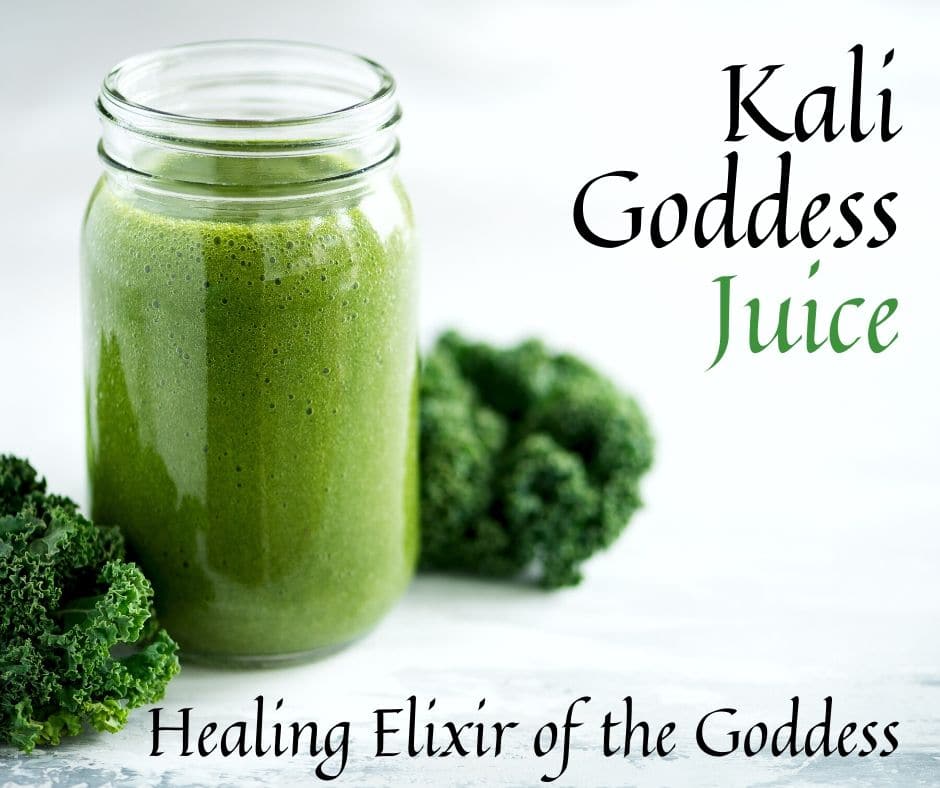
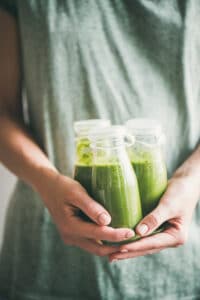
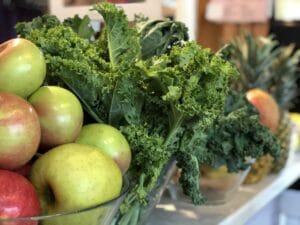
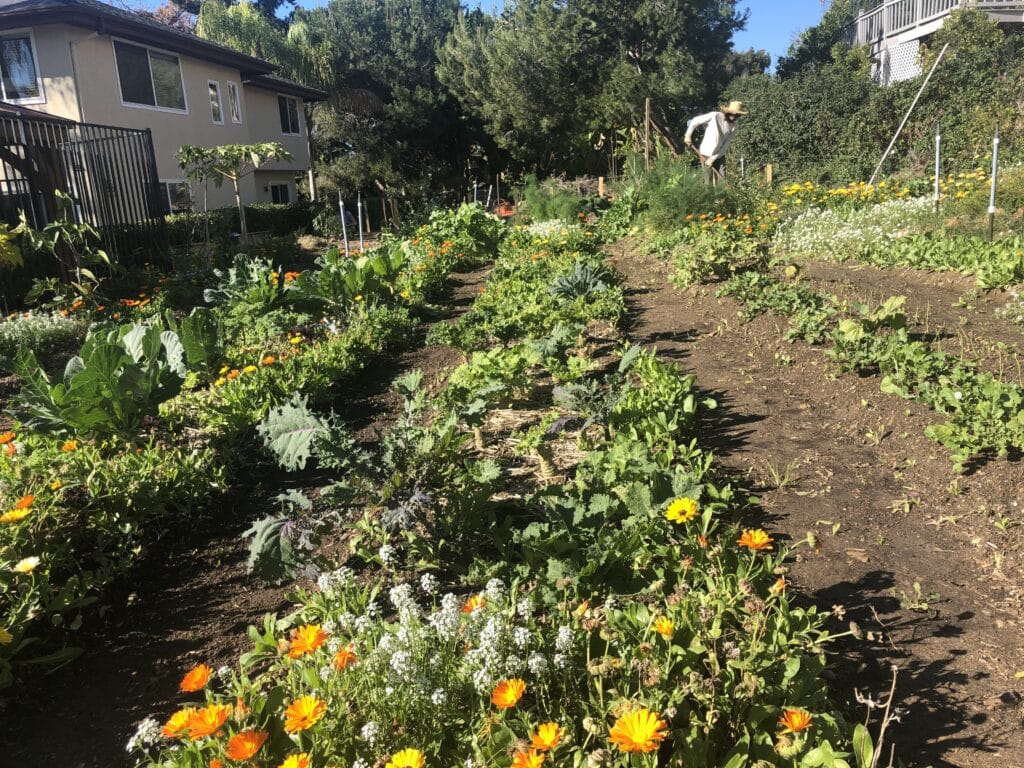
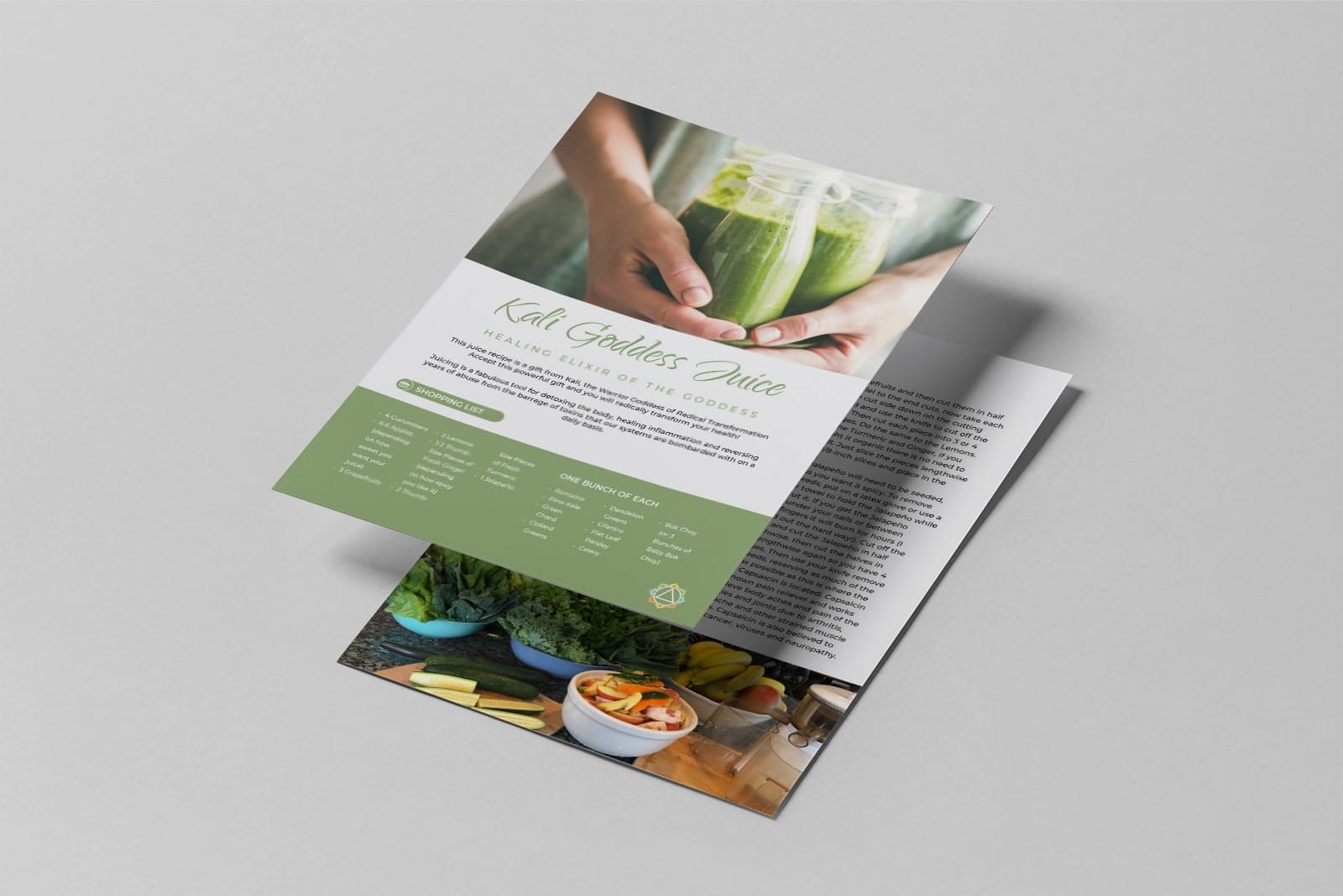
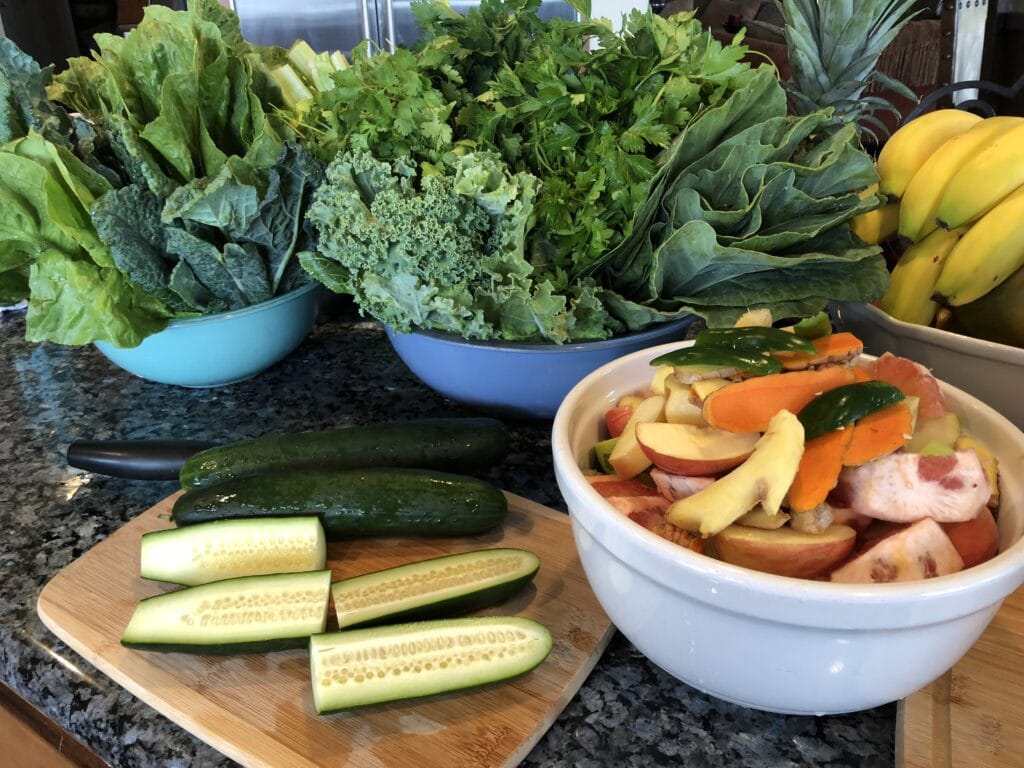
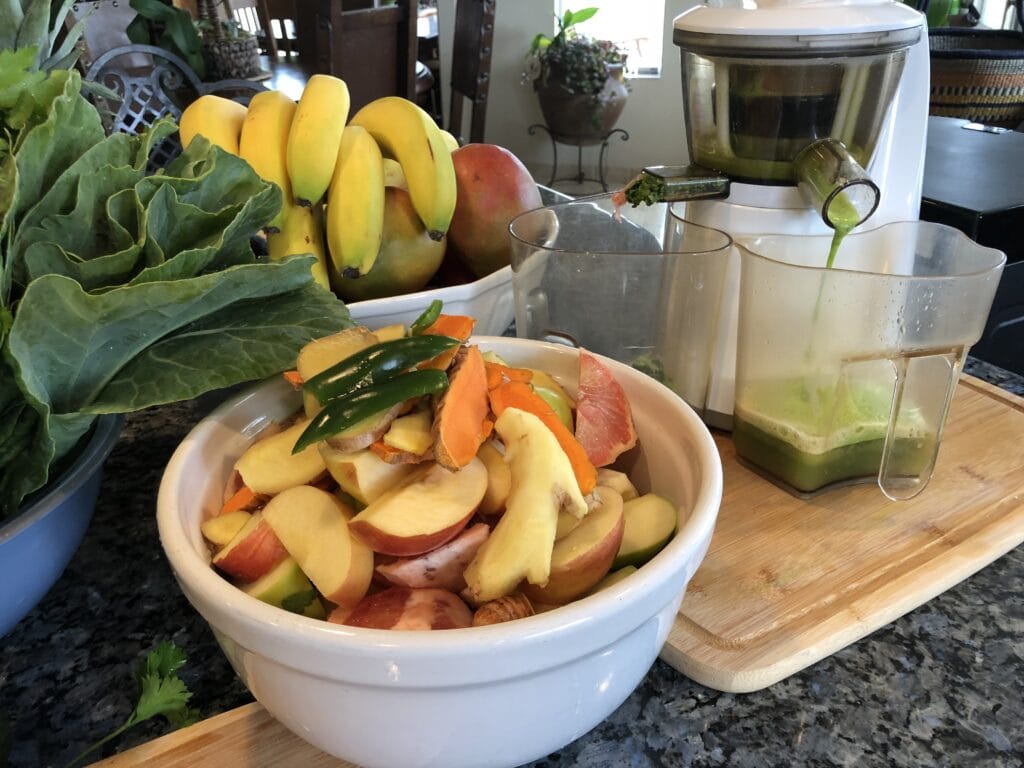
Kali Goddess Juice Detox

This juice recipe is a gift from Kali, the Warrior Goddess of Radical Transformation.


Accept this powerful gift and you will radically transform your health!


Juicing is a fabulous tool for detoxing the body, healing inflammation, and reversing years of abuse from the barrage of toxins that our systems are bombarded with on a daily basis. I personally spent three decades putting all kinds of toxins in my body and, by the time I checked into rehab, my body was breaking down and I was living with daily chronic pain and inflammation. 

After being introduced to the Goddess Kali Ma while on a spiritual seeking journey in Bali shortly after rehab, I began to radically transform my life. I embarked on a journey to heal my body and my life using holistic methods. I believed that healing was possible even though conventional medicine doctors had told me it wasn’t.    

I have tried many different green juices, from juice bars, health food stores, and from recipes I have found throughout the years, but this one is my all-time favorite by far! It’s delicious and packed with tons of nutrients and enzymes and has amazing healing effects on all the systems of the body. 

I was gifted the idea for this juice one day on a shopping trip to the local Jimbo’s Natural Foods Market. I was chatting with the guy in the produce department about juicing and he suggested that I try jalapeño in my green juice. I immediately thought “no way”, I have never been a big fan of jalapeño and to put it in my green juice sounded weird. However, he went on about the health benefits of jalapeño and how good the spicy & sweet tastes are together, so the idea grew on me. I went home and created this recipe and it has been a staple at Villa Kali Ma ever since. 

I personally consumed this juice 3 times a day for the better part of a year, along with a diet free of pesticides, artificial ingredients, food additives, and colorings, etc. Basically, a whole food plant-based diet. Within the first 3 months, all of my body pain had completely disappeared. I have now been completely pain-free for 8 years, after living with chronic pain, sciatica, restless leg syndrome, and degenerative disc disease for at least 6 years prior. 

If you have pain and inflammation or any health issues for that matter, give it a try! Commit to drinking a 6 oz glass 3 times a day and cut down on all inflammatory foods then watch yourself be radically transformed! You won’t get the results if you continue eating foods that are full of toxins or that cause inflammation. You have to be disciplined. However, it’s worth it!!!!

Supply List

  • A Masticating Juicer (Cold Press) – This is a slow juicer that presses the juice out of the pulp. I use a Hurom but mine is old. They run around $350 but last for years with lots of use. There are a lot of good ones on the market now. For a good one, you will spend between $150-$350
  • A Mesh Strainer – For straining out the pulp that makes it through the juicer
  • 12 Small glass Jars with Lids – Order online. Get jars that are single-serving size. You will want to store your juice in individual servings to keep air from getting into the container causing oxidation and degradation of the juice. I go with 4 oz or 6 oz jars because I can’t always finish 8 oz of juice at once and you don’t want any leftover because it will oxidize and lose nutrients and enzymes. 
  • A Cutting Board, a knife, a large Spoon, 3 large bowls, and two 32 oz glass pitchers. 


Our beautiful gardens right here at Villa Kali Ma where we source many of our ingredients!

Kali Goddess Juice Recipe

Follow Along on Our Printable Guide!

Organic Produce Shopping List: 

4 Cucumbers

4-6 Apples (depending on how sweet you want your juice)

3 Grapefruits

2 Lemons

1-2 Thumb-Size Pieces of Fresh Ginger (depending on how spicy you like it)

2 Thumb-Size Pieces of Fresh Turmeric

1 Jalapeño


One bunch of each of the following Greens:

Romaine

Dino Kale

Green Chard

Collard Greens

Dandelion Greens

Cilantro

Flat Leaf Parsley

Celery

Bok Choy (or 3 Bunches of Baby Bok Choy)

Preparation:

Use 1-2 large bowls for the Greens and 1 large bowl for the rest of the ingredients

Fill a sink with Cold Water to wash all of the Fruits and Vegetables. Start by cutting the base off of the Celery, Romaine and Bok Choy, separate the pieces and wash, then place in one of the large bowls.

Cut the long stems off of the bunches of Cilantro, Dandelion, and Parsley (I cut it right at the twist tie) so you are removing most of the stems that don’t have much foliage. 

Cut the stems off of the Chard just under where the leaf starts. Do the same to the Collards.

Then wash all of the rest of the Greens and place them in the bowl. You will have to wedge them into the bowl as shown in the photo. Put the Celery in the back because you will use this last. 

Now wash the rest of the ingredients, removing any stickers. I use a vegetable wash that I buy at the natural foods market to clean off the waxy coating that is sometimes present on Apples and Cucumbers.

Once everything is washed, the greens are ready to go but you will still need to prepare the Fruits, Veggies, and Roots. All of these will go in a separate bowl from the Greens.

Cut Cucumbers in half and then cut each half in half again lengthwise.

Cut the Apples into wedges and cut off the core, make sure no seeds are present as they are toxic. 

Cut the navel and stem off of the Grapefruits and then cut them in half parallel to the end cuts, now take each piece cut side down on the cutting board and use the knife to cut off the peel. Then cut each piece into 3 or 4 wedges. Do the same to the Lemons.

For the Turmeric and Ginger, if you bought it organic there is no need to peel it. Just slice the pieces lengthwise into 1/8-inch slices and place in the bowl.

The Jalapeño will need to be seeded unless you want it extra spicy. To remove the seeds, put on a latex glove, or use a paper towel to hold the Jalapeño while you cut it. If you get the Jalapeño juice under your nails or between your fingers it will burn for hours (I found out the hard way!). Cut off the stem and cut the Jalapeño in half lengthwise, then cut the halves in half lengthwise again so you have 4 wedges. Then use your knife to remove the seeds, reserving as much of the pith as possible as this is where the most Capsaicin is located. Capsaicin is a known pain reliever and works to relieve body aches and pain of the muscles and joints due to arthritis, backache, and other strained muscle issues. Capsaicin is also believed to fight cancer, viruses, and neuropathy. 

Now it’s time to Juice!

Set up your Juicer with your 2 bowls of Greens and your bowl of Fruits and Veggies next to it. Turn on your juicer and begin by putting a wedge of Lemon and a Cucumber through it. Then add a few handfuls of your Greens, then some Ginger, then a couple of pieces of Fruit, then more greens, then a piece of Jalapeño, Cucumber and Fruit and a few more handfuls of greens, and keep alternating this way making sure you don’t run out of Fruits and Veggies before all of your greens are juiced. 

Alternating the Greens with the other ingredients should keep your juicer from getting clogged. Save your Celery for last. This will sometimes clog your juicer, and you don’t want to have to keep stopping and clearing the clog so just juice all of the Celery at the end. 

Several times during your process your juice container will become full. Stop the juicer and reach for your strainer, spoon, and pitcher. Using the strainer over the pitcher, pour the juice through it. Now you will have a bunch of pulp in the strainer. Use the large spoon to press all of the juice out of the remaining pulp into the pitcher. Then rinse your strainer to prepare it for the next time your juice container is full. Repeat this process until all of your ingredients are juiced. 

Now you will have two pitchers of juice, but the ingredients will not be evenly distributed. The next step is to mix the two together, so you will need to either pour the juice back and forth between the two pitchers (if there is room) or you can use one of the big bowls to pour half of the juice from each of the pitchers into the bowl and then pour the remaining juice in the pitchers back and forth to blend them and stir the juice in the bowl and return it to the pitchers. 

Once your juice is well blended, pour it from the pitchers into the glass jars and fill them all the way to the rim. You do not want room for air in your bottles because air will cause oxidation and reduce the healing properties of the juice. Now place the lids tightly onto the jars and store them in the refrigerator. 

Congratulations! You have done it! Now you should have enough juice for 3 days, which is the maximum time the juice will retain its potency. Make sure to finish all of the juice by the end of the third day. Then go shopping again and repeat the process. It is a lot of work, but your health is worth it! Being pain-free is such a blessing and you will receive the blessing if you commit to the process and stay disciplined

Once you have healed, you don’t have to do the daily juicing, you will just need to maintain a healthy, mostly anti-inflammatory diet and the problems won’t come back. I am definitely not anywhere near perfect at maintaining an anti-inflammatory diet. I love french fries, baked goods, pizza, pasta, and pancakes, but I don’t over-indulge. I make sure all of it is organic, plant-based, and mostly gluten-free. I offset any inflammatory foods by drinking some good anti-inflammatory juice a couple of hours later to reduce any inflammation I may have caused. 

I used to be a junk food junkie, but the price I paid was waking up every morning feeling like I had been run over by a truck. Throughout every day I struggled just to get out of a chair, and I felt like I was living in a 90-year-old body when I was only 48! Now I am 56 and feel like I am living in a much younger body. If you have daily body aches and pains or are suffering from any chronic health conditions, I urge you to try the Healing Elixir of the Goddess! 

Accessibility Toolbar

Exit mobile version