
Categories
Mental Health PTSD Treatment

How Childhood Trauma Impacts Adult Mental Health and Relationships

How Childhood Trauma Impacts Adult Mental Health and Relationships

Childhood trauma has far-reaching effects, shaping the course of our lives in significant ways. Depending on several factors, including genetic predisposition, temperament, position in the family, and how young we were when encountering adverse childhood events, we may be burdened with a variety of symptoms.

For women recovering from addiction and mental health disorders, it’s important to recognize childhood trauma effects when they show up within our own personalities and patterns of relating. We will want to invest some amount of personal work healing our inner child, and undergo trauma therapy, in order to restore our true selves and regain control of how we show up in the world with others.

It is not necessary to fight darkness, but rather to turn on a light, the saying goes. It is very similar with traumatization. By restoring the flow of life force within the body, psyche, and spirit, trauma blockages will eventually dissolve, allowing psychological development that was once arrested to proceed. 

The first step is to recognize trauma’s presence by its signature energetics and impacts. In this post, we take a look at how trauma affects adult mental health and relationships.    

The Lasting Impact of Childhood Trauma on Women’s Lives

In order to complete the most basic developmental tasks involved with growing up physically, emotionally, and mentally into a healthy, high-functioning adult, a degree of physical and psychological safety is required. Safety means both that we are nurtured and that we are protected. All humans have needs and boundaries. Children cannot thrive when developmental needs are unmet, nor when boundaries are violated. 

Provided we are sufficiently nurtured and protected, we naturally grow up, learning in a self-directed fashion through exploratory play and interactions with people, animals, and nature. In addition to safety, we need a high amount of autonomy – the chance, permission, and support to grow into our own unique self, in our own unique way. 

For a variety of reasons, many families are not able to provide the right mix of safety and autonomy that is required for children to have a healthy sense of self. In fact, our families may have done very poorly in one or more requirements of meeting needs, protecting boundaries, and supporting autonomy. If our families did a good job of this, that still doesn’t mean that our peers and teachers were able to.  

It’s important to understand that trauma is not in the events themselves, but in the way that a human nervous system responds to certain events. Many relatively common childhood experiences are identified by trauma experts as being traumatogenic, which means that children who are exposed to such adverse events tend to develop recognizable symptoms of trauma and even patterns of personality. Examples of traumatizing childhood events include physical, sexual and emotional abuse, physical and emotional neglect, having a parent who uses substances, witnessing domestic violence in the home, and separation, death of a parent, or divorce.   

What this means is that if you survived such circumstances in your childhood, chances are high that this impacted you in ways that are so ingrained into your personality and way of perceiving the world, that the effect might be invisible to you. Common signs of having been traumatized in childhood include sleep disorders, substance abuse, relationship troubles, intense emotions including fear and anger, spacing out, fatigue, illness, inability to relax, and shame. 

Understanding How Early Experiences Shape Adult Patterns

The key to understanding how untreated trauma from childhood affects life as an adult lies in recognizing trauma’s presence underneath cognitive, emotional, and behavioral patterns. Many mental and behavioral health symptoms can be unmasked as ingenious adaptations to trauma. Symptoms are likely to be mechanisms for coping with stress from being exposed to too many threats in the past. An excess of fear and anger indicates unintegrated experiences of being exposed to impacts which were life-threatening and violating. 

Keep in mind that events can be traumatizing to the human nervous system, brain and body, even when the people who affected us didn’t mean to hurt us. Remember also that many aspects of our culture which the majority of people consider to be normal are considered by some experts in the field to be lightly or even heavily traumatizing.   

We can begin to recognize trauma by getting curious about ourselves. Specifically, we must ditch the idea that we are sick, and ask instead how a symptom is helping us. What is the purpose of our depression? How does our irritability help us? What is anxiety good for?

When we get to know our anxiety, irritability, anger, and depression, as well as our seemingly counterproductive behaviors like substance use, self-sabotage, and low self-compassion, we may come to see that in actual fact, these legacy symptoms once helped us adapt to an environment that was trauma-generating. If we have symptoms of excess fear (anxiety, insomnia, dissociation) and excess anger (depression, irritability, self-harm, etc), that almost certainly means that we have spent some time in an environment that failed to meet our developmental and nurturance needs, violated our natural boundaries, or both. 

Breaking Free from Trauma Bonds and Unhealthy Relationships

It isn’t easy to heal trauma, but it is absolutely possible and certainly worth it. One area of life which can improve significantly through trauma healing is relationships with loved ones. 

If you experienced physical or emotional neglect, physical, sexual, or emotional abuse, or any combination of those in your early years, it is very likely that you have had trouble with founding and maintaining healthy relationships as an adult. You probably unconsciously sought out partners with whom you would experience a bond that resembles the bond you had with the same people who neglected or abused you. 

This may mean that you accept a low level of nurturance, a high level of boundary violation, or both. You may have an enmeshed, codependent relationship, in which you give your partner the love that you actually always needed to receive. You may prefer partners that treat you in a way that matches your own low self-esteem – with some level of neglect, misunderstanding, or disregard.

All of this is terribly common among women, and please hear us that this isn’t your fault. Rather, fraught relationships are unavoidable until trauma is addressed. Until we have healed our trauma, we likely wouldn’t know healthy love if it walked right up to us. Rather, we will tend to fall intensely in love with people who have similar patterns of relating as the people who hurt us the most. 

Nevertheless, each relationship attempt, even when it clearly mimics certain patterns of our childhood, is also a sign that deep inside, we have not given up on trying to get the genuine and appropriate love that we have always wanted and needed. And the good news is that, through trauma healing, we get one very important bonus: a chance at experiencing that love. We get this love when we activate our inner Self (https://ifs-institute.com/resources/articles/larger-self), becoming a source of the parenting, kindness, and even adoration that we always needed. We become the loving person we have always needed to have in our lives.

Learning to love ourselves, to recognize our own value, we attract a higher quality of emotional intelligence in partners, and interact differently with existing love relationships than we used to. Overall, we can expect that we gradually learn to behave with dignity and self-compassion, requiring that others treat us the same.   

Reclaim Your Story with Compassionate Trauma Treatment

If you have a trauma history, you have probably had moments in your life when you wanted to give up on trying to be yourself. Trying to be here in your best potential, in this world, in your skin, has felt too much at times – too painful and too difficult. 

To live openheartedly and authentically in this world, amid the interference of loud and often self-conflicting trauma symptoms; amid emotional instability, self-attack, and demoralizing outcomes; amid escalating substance abuse, relationship problems, and career struggles; it has undoubtedly been a lot for you at times. 

But hear this: trauma healing is possible. The work that it takes is worth it. The path of healing is emotionally intense, it’s true – but nothing you haven’t already been living with every day since the trauma started. There will be psychological pain at times, yes – but no more intense than the pain you already cope with. There is nothing to lose by healing trauma, and a lot to gain. In facing trauma, you risk short term triggering – having to re-experience what you already have experienced, and most likely still re-experience on repeat – for the potential reward of at last healing the wounds in a permanent way. 

You might be surprised, furthermore, to find out how sweet, rewarding, deepening, and meaningful the trauma healing journey is. You might feel silly for not starting the journey earlier, and have to remind yourself that you needed all the time you did, to get to the point of facing it. You might be happy with every aspect of your history, in the end, recognizing how each wounding poison also brought its own magnificent antidote into your life. You just might.

Villa Kali Ma offers trauma-informed treatment for women struggling with substance addiction and mental health disorders. We also run a state-of-the-art trauma treatment center, offering several forms of cutting-edge treatments for helping women address their trauma.    

Categories
Mental Health Women's Mental Health

Understanding Complex PTSD: Signs, Symptoms, and Hope for Healing

Understanding Complex PTSD: Signs, Symptoms, and Hope for Healing

Famously, some cultures have more words for snow than we do in English.”Snow on the ground”, “snow in the sky”, and even “drifting snow” were once purported to have different names in Inuit languages.

Accurate or not, the oft-quoted idea of Inuit peoples having seven words for snow illustrates the fact that there can be many ways of naming and conceptualizing the same phenomenon. It also suggests that those who are directly exposed to something, who see it and work with it every day, and who have good reason and opportunity to pay close attention to it, will naturally perceive distinctions significant enough to call by another name entirely. 

Those of us who work with women to recover from addiction and mental illness have our reasons to pay ongoing attention to the heartbreaking, baffling mystery of psychological trauma. It is no wonder then, that collectively we have discovered new names for trauma’s many different faces, forms and phases. 

Once upon a time, trauma wasn’t even a concept, at least not in its modern form – the word, from the Greek, means simply wound. What was originally observed by psychology pioneers like Jean Martin Charcot and Sigmund Freud, a phenomenon that eventually earned the name “shell shock” around the time of the first world wars, was known of, but only very imprecisely understood. Fortunately for the traumatized among us, as the field of psychology evolved, the term and its subcategories have become more delineated, astute and refined. 

In 2026, we now have more names for trauma than ever before. Acute trauma, complex trauma (C-PTSD), developmental trauma, intrauterine and pre-verbal trauma, trans-generational trauma, vicarious trauma, collective trauma, and religious trauma are categories meriting distinct therapeutic approaches, according to the International Trauma Professionals Associationfor one. Professionals in the trauma field today generally concur that there are many different variants of the phenomenon that Freud long ago referred to as an “hysterical attack”, in keeping with conceptualizations forged by his mentor Charcot.

There is one form of trauma which is very important to be aware of, especially for women. This type of trauma is called complex post traumatic stress disorder, or C-PTSD. C-PTSD first entered the collective awareness through the truly pioneering work of Judith Hermann (https://www.yourcomplextrauma.com/blog/dr-judith-herman-on-complex-ptsd-and-what-survivors-need). Hermann discovered that PTSD was not the only kind of trauma, and that trauma originating from chronic exposure to abusive and neglectful circumstances was widespread. Since then, collective awareness and understanding of this less obvious, but in many ways equally insidious type of trauma and its impacts on human development has grown. 

We at Villa Kali Ma hold that C-PTSD is exceptionally important to be aware of, as women. Many of the women we encounter struggle with C-PTSD symptoms, without knowing that there is a name for the pervasive negative experiences they are enduring. C-PTSD treatment can be a life-changing form of trauma recovery for women. So much so, that we feel every woman should know about the disorder and about the options which are available to her for healing it. In this piece, we share a little bit more about C-PTSD and how it affects women, to that end.

Understanding Complex PTSD and How It Affects Women

Complex post traumatic stress disorder (C-PTSD) is more subtle, as well as more integrated into personality. This means that it feels like “me”. For that reason, it is usually harder to detect than traditional PTSD. C-PTSD feels like water to the fish, meaning that the symptoms have been with a person for so long, that she wouldn’t know that it is always there in the background, informing and affecting her experience. 

Many chronic mental and physical health conditions, such as ADHD, depression, anxiety, and physical health problems like migraines, autoimmune problems, and inflammation, may actually be manifestations of traumatization. Because trauma affects the brain and the nervous system, in turn impacting hormones like cortisol and adrenaline, it affects every aspect of the human experience.

C-PTSD pervades women by impacting their brains and neurology, their very perception of events, influencing cognition and interpretation of what is going on in the moment. Whether we are in a state of high nervous system arousal (irritable, anxious, edgy and on guard), or on the other hand in a kind of nervous collapse (numb, fatigued, spacey and drained), either way our sense of who we are, as well as our read on what is taking place in the moment, is highly skewed. Specifically, our experience is flavored by social or physical survival fear, and deep dread. 

This constant state of low-grade social and/or physical survival fear has widespread influence on our work and relationship lives. Whatever women with C-PTSD encounter in love, family and career, tends to be at least slightly tinged with a background sense of terror and dread. Additionally, acute episodes of severe emotional distress commonly interrupt daily life and make it hard to participate at the same level of capacity as non-traumatized people. 

Recognizing the Signs and Symptoms of Complex Trauma

Here are some common signs of C-PTSD. 

Emotional Flashbacks

For women with C-PTSD, their bodies, minds, and emotions have a tendency to return to bad, scary, dreadful memories on repeat, rather than leaving memories in the past. We aren’t able to process or release those feelings once and for all, and instead are prone to emotional flashbacks. 

An emotional flashback means feeling the old bad feelings even when the old bad situation isn’t actually happening again. For example, no one is actually abandoning us, but we feel just as distressed and fearful as we did back when we really were being abandoned and our lives depended on the person staying with us.  

Flashbacks are often triggered by stimuli in the environment that were coupled with the event itself. For example, a person can be triggered by a certain smell, place, person, or type of situation.

During flashbacks, it feels like a bad thing from the past is happening again, or is still happening. The body perceives danger, and signals this to us with a racing heart, sweating, and shaking. Tunnel vision, muscle tension, and feeling unreal can also be part of the experience. These physical symptoms are signs that the body has mobilized for action, such as running away, fighting off an attacker, or clinging to a protector. It is also common to collapse and go numb after a certain amount of over-activation into stress. Flashbacks are often triggers for relapse in substance abuse, eating disorders, self-harm, and other 

Shame, Guilt, and Low Self-Esteem

Shame is the belief that you are bad, that you don’t deserve love and belonging. Guilt and feelings of worthlessness are close by when there is shame. Women who have C-PTSD may have the classic “doormat” personality style, apologizing for their existence and not consciously aware of their inherent value as beloved members of the family of life. Crippling perfectionism and harsh self-judgment are chronic conditions. For women with C-PTSD, any life event can trigger shame, since the shame is attached to who they believe they are in essence. Shame is one of the tragic legacies of childhood sexual abuse, as well as emotional and physical abuse or neglect. 

Hypervigilance

Hypervigilance means that a person is always on guard, expecting the worst to happen at any moment, and being prepared to take preventative, protective action if needed. The classic example of hypervigilance is a combat veteran with PTSD, who can’t stop seeing danger everywhere, even when the war is over. 

For women with C-PTSD, the danger they’re on guard against may be social or relational rather than physical (though it can also be that). Women with C-PTSD tend to feel like they need to be in control and feel very threatened when facing uncertainty. They also pay close attention to all details in the environment, including facial expressions of their loved ones. Depending what type of danger was experienced – aggression, neglect, abandonment, sexual violation – women will be on the lookout for signs of these interpersonal events at all times, ready to take action to avoid the social or relational danger they are expecting to happen at any moment.   

Substance Abuse, Eating Disorders and Self-Harm

Women with C-PTSD often have a problem with substances, abusing food through overeating or restricting or both, self-harming behaviors like cutting, and suicidal tendencies, feelings and thoughts. This is because the pre-existing condition of chronic stress, fear, dread, and shame is so hard to live with, that it sets a person up for seeking relief through whatever works to block out the feelings, sensations, and thoughts.   

Self-Sabotage

Finally, women with C-PTSD may have a lifelong pattern of self-sabotage. Any time a good thing gets going in their lives, whether it be a loving partner, a good job, or another positive life event, they may be triggered to subconsciously take negative action or act out in such a way that destroys progress made, burns bridges, and returns them to life circumstances that are smaller in scope, less lovely, and more shut down. 

The reason for this is that women with C-PTSD are on the search for basic safety, and are still trying to solve the puzzle, on some level, of what went wrong in the past that so deeply destroyed their intactness. To open up into higher vibrations of love and purposeful life is enormously threatening to the traumatized parts of the personality, that would rather lock a woman up in her own fear prison than risk exposure to new forms of danger (or to risk having to encounter the old forms of danger again).

For more in-depth information about C-PTSD, we highly recommend the work of Dr. Arielle Schwartz

Evidence-Based Treatments for C-PTSD at Villa Kali Ma

C-PTSD responds to several forms of treatment. At Villa Kali Ma, we offer many  forms of trauma treatment in parallel, to help women heal their PTSD in the most holistic and global way. 

EMDR and Brainspotting 

EMDR and Brainspotting are believed to change the way that the brain recalls a memory. Not erasing memories, but changing the amount of activation in the nervous system that takes place when thinking of certain memories. Before this type of trauma treatment, it may be impossible to think of a certain event without re-experiencing the emotions, thoughts and physical sensations of the event, as if they are happening now. EMDR and Brainspotting help the brain to differentiate the present from the past, at least in terms of how it feels to the body and emotions. 

Body Work and Somatic Therapies

There are several wonderful modalities that help women with C-PTSD build feelings of basic safety in the body, improve their here and now orientation, and complete trauma responses. Trauma Tension and Release Exercises (TRE), Somatic Experiencing, massage, and trauma-informed Yoga are some of modalities we offer that help women allow their bodies, brains, and nervous systems to process unfinished business at the level of physiology. 

Internal Family Systems Therapy and Mindfulness and Self-Compassion

Internal Family Systems Therapy (IFS) is a highly transformational psychodynamic therapy that helps a person to heal all the traumatized inner children that live inside the soul of a person who has C-PTSD. IFS changes a woman’s subjective sense of herself, shifting her from a state of chronic shame and low self-worth, to an accurate recognition of her own inherent and unconditional marvelousness. Symptoms like rage and fear transform into more balanced and helpful forms, like boundaries and appropriate caution. 

Mindful Self-Compassion, likewise, is a popular modality that helps women accustomed to treating themselves with severity, harshness and coldness, to activate their inner fountain of self-love and kindness. Both of these powerful approaches are offered at Villa Kali Ma because they are so good at restoring a foundation of softness, love, and self-support. 

Begin Your Healing Journey with Trauma-Informed Care

It’s important for women to receive trauma-informed care. Trauma-informed care means that emphasis is placed on subjective experiences as well as objective measures for safety, control, and empowerment, placing each woman in charge of her own choices in recovery. 

Trauma-informed care insists on respect for all parts of a woman, understanding that each symptom has a role which has, at its origins, a positive intention of helping a woman to cope in challenging circumstances. Rather than viewing negative and even self-destructive behaviors as a problem, trauma-informed care understands that every feature in the ecosystem of the psyche needs to be understood in full, before any changes are suggested. Finally, trauma-informed care means that women are given the body and nervous-system support they need to gradually shift gears out of a mode of perception that feels dangerous, to a perception which feels safe, before they are encouraged to be “positive” or “look on the bright side”. 

At Villa Kali Ma, trauma-informed care is integrated into all of our services, in our several facilities in northern San Diego County. We also offer a stand-alone, trauma treatment facility that administers cutting edge treatments which can be difficult to access outside of such a licensed facility. 

Categories
General

I Am Already All That I Need

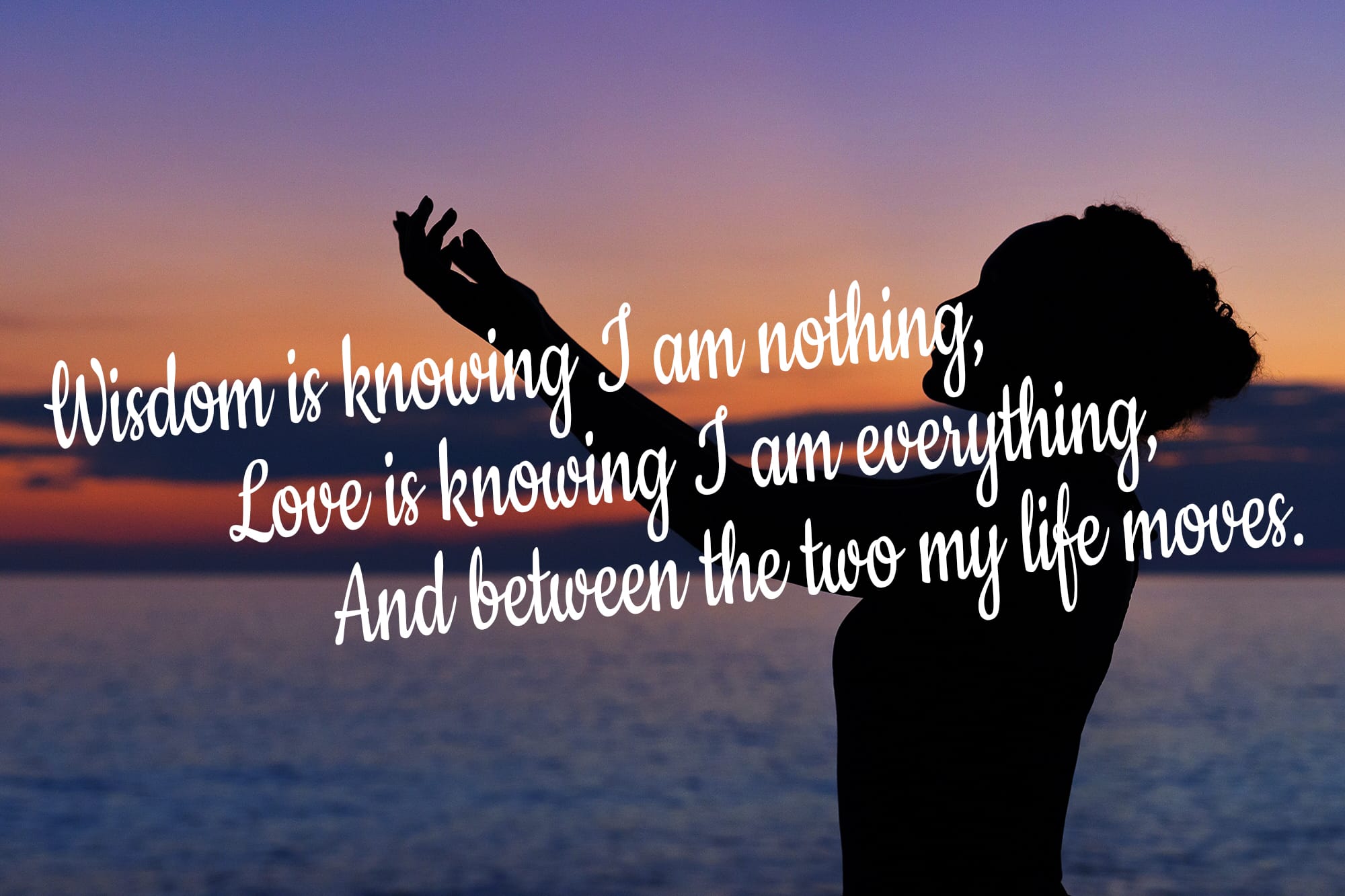
I love this quote by Nisargadatta Maharaj. This is such a great reminder of how beautiful life can be if you live by these principals.

I used to have an attitude or belief that my problems were all that mattered. I was always thinking about my problems, my life, my wants, my needs, my stuff, my lack, my suffering, etc. I was very busy trying to get things to be the way I wanted them.. the way I thought they should be. I was always a victim and something was always happening to me! Everything that happened in life that didn’t fit with my set of personal preferences was a problem, so I had lots of problems. I had an attitude that I deserved a better life and it was not fair when things didn’t go my way. One of my frequently used phrases was “why does this always happen to ME?!!” All my bad choices and circumstances (alcohol, drugs, abusive relationships, etc)  were because somebody did me wrong, either in that instant or at some distant time in the past, and It wasn’t my fault!

Through my process of recovery, I was able to change my attitudes and beliefs and realize that most of my suffering was caused by my own self-importance and misguided sense of what life was all about. Once I started practicing yoga and meditation I started to see everything more clearly. I began to have the insight through the practice of self-inquiry, and I was able to see the truth in each situation and how my attitude about it could change everything! If I practiced having an attitude of gratitude, my life looked much better than if I had an attitude of entitlement. Slowly, I got down off my high horse and began to live more humbly. One of my favorite quotes is from Rick Warren’s book “The Purpose Driven Life” which says:  “Humility is not thinking less of yourself, it’s thinking of yourself less”. I found this to be profoundly true in my own life. I had been thinking about myself and my perceived problems constantly. I was making unimportant things important and leaving behind the most important things; like my children.

Once I began practicing humility, I became willing to see my own neurosis. The more I lived from this place of humility, the more real and honest I became, and the better I felt about myself. I had to stop pretending to be someone I was not and accept myself just the way I was, a train wreck, which would take a long time to clean up and get back on track.

Eventually, through continuing to practice gratitude and humility and by letting go of self-importance and entitlement, I began to see myself in a better light. I began to love the real me. I finally found the love that I had always been seeking, and it was right here inside me. I had been seeking love outside myself for decades, living the life of the “hungry ghost” that Gabor Mate talks about in his book about addiction and trauma. He describes the hungry ghost as “the domain of addiction, where we constantly seek something outside ourselves to curb an insatiable yearning for relief or fulfillment. The aching emptiness is perpetual because the substances, objects or pursuits we hope will soothe it are not what we really need.”

What I learned from my own experience is that what I really needed was to love and accept myself. Love is knowing I am everything…already! There is nothing I need to do, be, acquire, aspire to, perfect, etc. I just needed to be me, and love who I am. So now, years later, the train of my life is flowing pretty smoothly along the tracks to wherever life is taking me. The things I thought mattered most, the things I thought I had to GET in order to be HAPPY, I still don’t have them. Life still happens without concern for my list of preferences. Life is still life but I have changed my attitude about it. Now I practice acceptance and gratitude, which gives me FREEDOM from wishing that what has already happened were different than it is.

Now, instead of thinking about myself all the time, I think about how I can make a difference in the lives of others. How can I help another person find the love inside themselves? How can I help others to find FREEDOM from suffering?  How can I show up in a way that inspires and uplifts everyone I meet? Now I know that life is not about getting…It’s about loving and giving and connecting to others in a meaningful way. Turns out, if you align yourself with love and humility, life is beautiful, and you don’t need anything to make it so.

Wishing you all love and happiness!

Namaste

Click here to read more on the Villa Kali Ma Blog! 

Categories
General

Break the Cycle of Karma

“The Idea of Karma is that You Continue to get The Teachings You Need to Open Your Heart” ~ Pema Chodron

Before my recovery from substance abuse and love addiction (dysfunctional relationship addiction), I always blamed everyone else for all the things going wrong in my life. I was the perpetual victim and everything was happening “to me.”  I always felt like, “Why is this happening to me? Why do all the men in my life cheat on me, lie to me, put me down, call me names and abuse me?” Through my recovery process I came to understand that nothing was happening “to me,” it was all happening “for me.” These lessons kept coming for three decades, until I finally got it.

The great Law of Karma states, “As you sow, so shall you reap.” This applies directly to what I was experiencing, even though I felt I was the victim. My Karma was that I would continue to get the lessons over and over until I learned from them. I was unconsciously choosing to continue this cycle of suffering by not learning from the lessons that were being presented to me. These lessons were trying to teach me that NO relationship, except the one with myself, was going to give me the love that I needed to heal. I was not going to heal my wounds by finding the right man to love me.

Yes, I had been a victim when I was an innocent child, but that was long ago. The situations that I was participating in as an adult were happening because I had not healed from my childhood trauma, which had left me with insecurity, shame, guilt, and lack of self-love. Because I had not healed, I kept getting into relationships that would ultimately cause me great suffering. I would then blame the other person and make myself “right” and them “wrong,” which kept me stuck in that never ending cycle of blaming and justifying.  I could then justify my coping mechanisms, which were self-sabotaging and kept me stuck in the proverbial “vicious cycle.”

The lesson that life was trying to teach me was that I needed to heal from my childhood trauma and open my heart to the love that was buried under the layers of fear. The love that was hidden under the fear was the love for myself. Once I truly faced my fear, I was able to tap into that deep well of love that was there for me. I was able to see clearly that life was not happening “to me,” it was happening “for me.” It was trying to teach me the ultimate lesson. That there is nothing out there to “get” that would provide me with the love and happiness that I was seeking.  All that I needed and wanted was with me all along, all I needed to do is look within.

Looking within is not something that happens overnight. It is a process of healing, forgiveness, self-compassion and self-inquiry. It takes time and perseverance, but it has the biggest reward if you do it! It is the Hero’s Journey. You become the hero of your life when you get tired of being the victim of your life and become willing to face your fears. When you learn to love yourself unconditionally, your whole life heals. You break the cycle of Karma.

Dive deep into your own heart, discover your own true self, and you will find everything you were searching for “out there.”

Peace and Many Blessings,
Kay

“We habitually erect a barrier called blame that keeps us from communicating genuinely with others, and we fortify it with our concepts of who’s right and who’s wrong.” ~ Pema Chodron


Are you or a loved one looking into recovery? Click here to visit our site for more information. 


Categories
General

I Am Not What Happened To Me

“I am not what happened to me, I am what I choose to become.” C.G. Jung


I spend my whole life judging myself by my past and feeling bad about myself. I was never able to change, I just kept repeating the same mistakes over and over. Finally, I discovered the spiritual path of yoga and learned that I am not the things that happened to me. I am so much more than that! I am not the mistakes I made, I am not the failures I experienced, I am a divine creator that has the power to rise above all of those things and heal. Through the practice of meditation and yoga I healed my relationship with myself, which is the most important relationship I will ever have. Through that healing I stepped into my power as spiritual warrior and conquered my addictions and dysfunctional behaviors. I now choose to be happy and healthy.. and I am!


Are you or a loved one looking into recovery? Click here to visit our site for more information. 

Accessibility Toolbar

Exit mobile version